
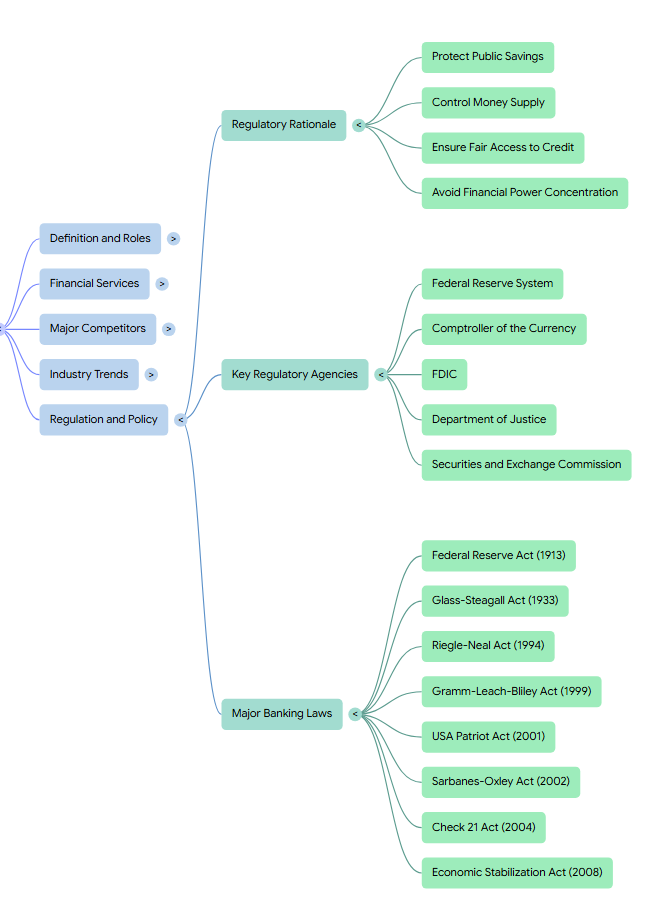
In the larger context of bank management and financial services, the book characterizes regulation and policy as the essential “rules of the game” that dictate how financial firms are chartered, operated, and expanded. The book describes the financial-services sector as one of the most heavily regulated industries in the world, primarily because these institutions are “vested with the public interest”—they manage the payments system, hold the public’s savings, and create money through lending.
The Rationale for Regulation
According to the book, government oversight is necessary to achieve several broad social and economic goals:
- Protecting Public Savings: Since many savers lack the expertise to evaluate a bank’s risk, regulators audit institutions to prevent losses from mismanagement or fraud.
- Controlling the Money Supply: Because financial firms create spendable deposits, policy must ensure that credit growth is consistent with low inflation and high employment.
- Ensuring Fairness: Laws prevent discrimination based on age, race, or religion to ensure equal access to credit.
- Maintaining Stability: Regulation aims to promote public confidence to prevent “runs” on banks, which can cripple the broader economy.
Key Regulatory Agencies and the Dual System
The book emphasizes that the United States operates under a dual banking system, where both federal and state authorities share power. The primary regulators identified by the book include:
- The Federal Reserve System (The Fed): Serves as the “lender of last resort” and the chief conductor of monetary policy.
- Office of the Comptroller of the Currency (OCC): Charters and supervises national banks.
- Federal Deposit Insurance Corporation (FDIC): Insures deposits and acts as the primary federal regulator for state-chartered banks that are not Fed members.
- State Boards or Commissions: Issue charters and supervise state-chartered institutions.
- Department of Justice (DOJ) and SEC: Oversee antitrust issues/mergers and public security offerings, respectively.
Landmark Legislation and Policy Shifts
The book details several pivotal laws that have historically remade the industry:
- The Glass-Steagall Act (1933): Originally separated commercial banking from investment banking and insurance to reduce risk and prevent conflicts of interest.
- Gramm-Leach-Bliley (GLB) Act (1999): Tattered the “walls” created by Glass-Steagall, allowing for the rise of “financial department stores” that offer banking, securities, and insurance under one umbrella.
- Riegle-Neal Act (1994): Repealed long-standing restrictions on interstate branching, leading to true nationwide banking.
- USA Patriot and Bank Secrecy Acts: Enacted to combat money laundering and terrorism by requiring firms to report suspicious customer activity.
- Sarbanes-Oxley Act (2002): Mandated higher standards for corporate auditing and financial reporting to restore public trust after major corporate scandals.
Monetary Policy and International Standards
A central bank’s primary policy job is monetary policy—controlling the supply and cost of money to promote growth and fight inflation. The book explains that the Fed uses three main tools: Open Market Operations (buying/selling securities), the Discount Rate (interest on central bank loans), and Reserve Requirements (mandating minimum liquid assets).
On a global scale, the book highlights the Basel Agreements as historic efforts to harmonize capital standards. Basel I and II require international banks to maintain a minimum cushion of capital (at least 8% of risk-weighted assets) to absorb losses.
The Recent Trend: Re-regulation
While the late 20th century was defined by deregulation, the book notes that the global credit crisis of 2007–2009 shifted the focus back toward tighter oversight. The Emergency Economic Stabilization Act of 2008 permitted the U.S. Treasury to inject capital into banks and authorized the government to purchase “bad” assets to stabilize the system. Ultimately, the book suggests that modern bank management requires constant adaptation to a shifting landscape where policy is increasingly used as a tool to manage systemic risk.
Regulatory Rationale
In the larger context of regulation and policy, the book explains that financial-service firms are among the most heavily regulated industries because they are “vested with the public interest”. They perform critical roles such as managing the payments system, acting as the primary repositories for the public’s savings, and creating money through the extension of credit.
Core Rationales for Regulation
The book identifies several fundamental reasons why governments impose strict rules on financial institutions:
- Protecting Public Savings: Banks are the leading repositories for the savings of individuals and families. Because many savers lack the depth of information or financial expertise to correctly evaluate an institution’s risk, regulators perform audits and examinations to protect the public from losses due to fraud, embezzlement, or mismanagement.
- Controlling the Money Supply: Financial firms have the power to create money in the form of readily spendable deposits by making loans. Because the volume of money created is closely correlated with economic conditions like inflation and job growth, the government must regulate this process to achieve broad economic goals.
- Ensuring Fairness and Equal Opportunity: Policy is designed to ensure that the public has equal access to credit and other vital financial services. Antidiscrimination laws, such as the Equal Credit Opportunity Act, prohibit lenders from denying credit based on irrelevant factors like age, race, or religion.
- Promoting Public Confidence and Stability: Regulation aims to preserve public confidence in the financial system to prevent bank “runs,” which occur when frightened depositors withdraw funds en masse. Such panics can cripple the broader economy, making the central bank’s role as a “lender of last resort” vital for stability.
- Avoiding Concentration of Financial Power: The book notes a historical fear of financial power being held by a few individuals or institutions. Consequently, policy often includes antitrust guidelines, such as those used by the Department of Justice, to prevent mergers that might significantly lessen competition in local markets.
Systemic Risk and the “Safety Net”
A primary focus of modern policy is managing the risk of failure to protect the federal government’s deposit insurance fund. The book explains that without regulation, a “moral hazard” problem arises: government-sponsored insurance might encourage institutions to take on excessive risk, knowing they will be rescued if they fail. Therefore, regulators use capital requirements—often referred to as a “buffer” against risk—to ensure that institutions have a cushion to absorb losses before they impact the insurance fund or the public.
The Separation of Banking and Commerce
Finally, the book highlights a long-standing policy rationale for maintaining “walls” between banking and nonfinancial industrial firms. These legal barriers, such as those in the Bank Holding Company Act, are intended to protect the public’s savings from being used to prop up risky nonfinancial ventures or being depleted by cut-rate loans to affiliated industrial firms. While these rules are often under pressure from “invaders” like major retailers, they remain a cornerstone of regulatory rationale aimed at shielding the financial system’s safety net from outside industrial risks.
Public Savings
In the larger context of regulatory rationale, the book identifies the protection of public savings as one of the most fundamental reasons for the strict government oversight of financial institutions. Because banks and other depository institutions serve as the primary repositories for the savings of individuals and families, their stability is considered vital to the public interest.
The Rationale for Protection
According to the book, the need to protect public savings stems from several key factors:
- Information Asymmetry: Most individual savers lack the financial expertise or the deep access to information required to correctly evaluate the riskiness of a bank or other financial-service provider.
- Catastrophic Impact of Loss: While many deposits are short-term and liquid, banks also hold massive amounts of long-term retirement savings. The loss of these funds due to institutional failure, fraud, or crime would be catastrophic for many households.
- Economic Stability: The financial system’s primary purpose is to encourage savings and transform them into productive investments that fuel economic growth. Protecting these savings ensures that this flow of capital remains uninterrupted and that the payments system used for daily commerce remains functional.
Regulatory Tools and Methods
The book details several methods regulators use to ensure that the public’s money remains safe:
- Audits and Examinations: Regulatory agencies are charged with gathering and evaluating information to assess the true financial condition of firms. Periodic audits are specifically designed to limit losses resulting from mismanagement, embezzlement, or fraud.
- The Federal “Safety Net”: Government agencies act as a backstop by standing ready to loan funds to financial firms facing unexpected shortfalls in spendable reserves, thereby shielding the public’s deposits.
- Deposit Insurance: A central pillar of this protection is government-sponsored deposit insurance, such as that provided by the FDIC, which guarantees the public’s deposits up to a stipulated maximum amount to prevent “bank runs” and maintain public confidence.
- Physical and Operational Security: Regulations even extend to physical security, mandating measures such as cameras and guards to reduce the risk of loss due to theft.
The Role of Capital and Moral Hazard
Within the broader regulatory framework, the book notes that regulators use capital requirements as a “buffer” to protect public savings. Because government-sponsored insurance creates a “moral hazard”—potentially encouraging institutions to take on excessive risk since they know they will be rescued—strict regulation and high capital standards are necessary to ensure the institutions themselves absorb losses before they impact the public or the insurance fund. Ultimately, protecting public savings is viewed as essential for promoting the public confidence necessary for savings to flow into productive investments.
Control Money Supply
In the larger context of regulatory rationale, the book identifies the control of the money supply as a primary reason for the extensive oversight of financial institutions. This rationale stems from the unique power of banks and many of their nearest competitors to create money in the form of readily spendable deposits by making loans and investments.
Economic Impact of Money Creation
According to the book, the volume of money and credit created by the financial system is closely correlated with vital economic conditions. Specifically:
- Macroeconomic Goals: Policy must ensure that the growth of money and credit is consistent with a nation’s broad economic goals, such as maintaining low inflation and achieving high employment.
- Systemic Stability: By controlling the growth of money and credit, regulators and central banks try to ensure the economy grows at an adequate rate while avoiding severe inflationary pressures.
The Role of the Central Bank
The book explains that the responsibility for managing this process typically falls to a central bank, such as the Federal Reserve System in the United States. The Fed’s most important task today is conducting monetary policy, which involves monitoring and controlling the supply and cost of money and credit to promote economic stability.
To influence the money supply, the central bank utilizes three principal policy tools:
- Open Market Operations (OMO): The buying and selling of securities by the central bank to affect the level of legal reserves and, consequently, the growth of deposits and loans.
- The Discount Rate: Setting the interest rate on temporary loans provided by the central bank to depository institutions facing emergencies or reserve shortfalls.
- Reserve Requirements: Mandating that institutions place a percentage of their deposits in legal reserves, which limits the amount of money available for new lending.
Regulatory Perspectives
While this function is a cornerstone of regulatory rationale, the book notes that the fact that financial firms create money is not necessarily a valid excuse for regulating them individually. The book suggests that as long as government policymakers have the means to control the overall national money supply, the specific volume of money created by an individual financial firm should not be a major concern to the public or authorities. However, because these institutions are “vested with the public interest” and manage the payments system, their role in money creation remains a central focus of government policy.
Ensure Fair Access to Credit
In the larger context of regulatory rationale, the book identifies the insurance of equal opportunity and fairness in access to credit as a fundamental reason for the strict oversight of financial institutions. Because credit is an essential ingredient for a household’s standard of living—facilitating access to housing, medical care, and education—the government acts to ensure this vital resource is not denied based on irrelevant personal factors.
The Rationale for Ensuring Fair Access
According to the book, the public has a “keen interest” in an adequate and equitable supply of credit flowing from the financial system. Regulatory authorities argue that discrimination creates significant obstacles to personal well-being and economic growth. Beyond simply preventing bias, this rationale includes the pursuit of social goals, such as ensuring an adequate supply of housing loans for all families and preventing “unfair dealing” in the marketplace.
Key Antidiscrimination Laws and Measures
The book details several pivotal laws designed to implement this regulatory objective:
- Equal Credit Opportunity Act (1974): This legislation prohibits lenders from denying a loan based on a customer’s age, sex, race, national origin, religious affiliation, or because they receive public assistance. It requires lenders to focus strictly on the individual facts of a loan application rather than “lumping their customers into categories” based on group membership.
- Community Reinvestment Act (CRA) (1977): This act forbids “redlining”—the practice of a lender marking out certain neighborhoods as undesirable and refusing to lend to residents within them. Lenders are required to make an “affirmative effort” to serve all segments of their trade territory, and examiners periodically assign a CRA rating that influences the lender’s ability to expand or merge.
- Fair Housing Act: This law specifically prohibits discrimination in the sale, leasing, or financing of housing based on race, color, national origin, religion, or sex.
- Home Mortgage Disclosure Act (HMDA): To aid in detecting discrimination, this act requires mortgage lenders to disclose the areas where they have granted loans as well as the race, sex, and income of all mortgage applicants.
Fairness through Information Disclosure
The book notes that fairness is also promoted through transparency. Disclosure laws like the Consumer Credit Protection Act (Truth in Lending) require lenders to provide the “true cost” of credit via the Annual Percentage Rate (APR) before a contract is signed. This prevents deception and allows consumers to make informed choices, which the book suggests might even eliminate the need for some regulations by fostering more vigorous competition among providers.
The “Lifeline Banking” Controversy
A related and ongoing issue discussed in the book is “lifeline banking,” which asks whether every citizen is entitled to a minimum level of basic financial services. Proponents argue that because financial firms benefit from a government-sponsored “safety net” (like deposit insurance), they have a public responsibility to offer low-cost services to “unbanked” or low-income individuals who might otherwise be forced to use high-cost “fringe” lenders. While controversial for private, profit-making firms, this issue remains a central part of the debate over what constitutes “fair access” in a modern economy.
Avoid Financial Power Concentration
In the larger context of regulatory rationale, the book identifies the avoidance of financial power concentration as a fundamental goal of government oversight. This rationale stems from a long-standing historical fear that having too much financial power held by just a few individuals or institutions could be dangerous to the economy and the public interest.
The Rationale for Preventing Concentration
According to the book, the objective of limiting the concentration of financial power is driven by several factors:
- Historical Precedents: The book notes that the prevention of centralized power is one of the classic historical reasons for regulating the financial sector.
- Protection of Competition: Regulation is intended to ensure that competition in financial services remains strong, which helps provide the public with reasonable prices and an adequate quality and quantity of service.
- Antitrust Concerns: Regulatory policy is designed to avoid mergers and acquisitions that might significantly lessen competition in local markets.
Regulatory Tools and Framework
The book details specific mechanisms and agencies used to prevent excessive concentration:
- Justice Department Oversight: The U.S. Department of Justice (DOJ) is responsible for reviewing and approving proposed mergers and holding company acquisitions to assess their effects on competition.
- The Herfindahl-Hirschman Index (HHI): Regulators use the HHI as a summary measure to evaluate market concentration. This index reflects the number of institutions in a market and the proportion of assets or deposits they control. If a proposed merger increases the HHI beyond certain thresholds, the DOJ may investigate or file suit to block the transaction to prevent the enhancement of market power.
- Market Share Limits: Specific legislation, such as the Riegle-Neal Act, imposes caps to prevent concentration, stating that no single institution can hold more than 10 percent of nationwide deposits or more than 30 percent of deposits in a single state.
Challenges and Shifting Perspectives
While avoiding concentration is a key regulatory goal, the book highlights an ongoing tension with modern industry trends:
- Consolidation Trend: Despite regulations, the industry has seen a massive trend toward consolidation, with the top 100 U.S. banks now holding more than 90 percent of all industry assets.
- Changing Economic Views: Some authorities, such as George Benston, argue that historical reasons for regulation—including the prevention of centralized power—may be less relevant today given the current competitive landscape.
- Efficiency vs. Concentration: Regulators must balance the desire to prevent concentration with the possibility that larger financial firms may be more efficient or stable, potentially benefiting the public through lower production costs.
Key Regulatory Agencies
In the larger context of regulation and policy, The book describes the financial-services sector as one of the most heavily regulated industries in the world because these firms are “vested with the public interest”—they manage the payments system, hold public savings, and create money through credit extension. Regulation is characterized as the “rules of the game” enforced by a complex web of agencies to protect the public and ensure systemic stability.
The Dual Banking System
In the United States, regulatory authority is shared between federal and state governments in what is known as a dual banking system. This structure was designed to allow states closer control over firms within their borders while federal oversight ensures that expanding institutions are treated fairly across state lines.
Primary Federal Regulators
- The Federal Reserve System (The Fed): Serving as the “lender of last resort,” the Fed’s primary task is conducting monetary policy—controlling the supply and cost of money to promote growth and fight inflation. It supervises state-chartered member banks and bank holding companies and acts as the “umbrella supervisor” for financial holding companies (FHCs) [32t, 191, 328].
- Comptroller of the Currency (OCC): A bureau within the U.S. Treasury Department, the OCC charters and supervises national banks. It must approve national bank applications for branch offices, trust powers, and acquisitions, and it has the authority to close insolvent national banks.
- Federal Deposit Insurance Corporation (FDIC): The FDIC insures the deposits of federally supervised depository institutions [32t, 192]. It serves as the primary federal regulator for state-chartered banks that have not joined the Federal Reserve System and is responsible for resolving the failure of insured institutions.
Regulatory Oversight of Nonbank and Market Activities
- Securities and Exchange Commission (SEC): This is the chief federal regulator for security brokers, dealers, and investment banks. It oversees public offerings of debt and equity securities, monitors bank securities affiliates, and investigates issues such as insider trading [32t, 193, 288].
- Department of Justice (DOJ): The DOJ reviews proposed mergers and holding company acquisitions for anti-competitive effects [32t, 193, 642]. It utilizes measures like the Herfindahl-Hirschman Index (HHI) to determine if a merger would significantly reduce competition in a local market.
- State-Level Agencies: These commissions are responsible for chartering and supervising state-chartered depository institutions [32t, 193]. Crucially, insurance companies are unique among major financial providers as they are regulated almost exclusively at the state level by state insurance commissions.
Global and Special-Purpose Agencies
- National Credit Union Administration (NCUA): This agency charters and supervises federal credit unions.
- Office of Thrift Supervision (OTS): A Treasury bureau that charters and supervises federally chartered savings and loan associations and savings banks.
- Bank for International Settlements (BIS): On a global scale, the BIS serves as a forum for central banks and assisted in creating the Basel Agreements, which established common international standards for the capital that banks must hold as a buffer against risk.
Federal Reserve System
In the larger context of key regulatory agencies, the book characterizes the Federal Reserve System (the Fed) as a centerpiece of the U.S. financial system, uniquely tasked with both broad economic oversight and specific institutional supervision,. While other agencies like the Office of the Comptroller of the Currency (OCC) and the Federal Deposit Insurance Corporation (FDIC) focus primarily on the safety and soundness of specific types of banks, the Fed’s reach extends to monetary policy, the payments system, and the oversight of entire financial conglomerates,.
Regulatory Scope and Targets
As a primary member of the U.S. dual banking system, the Fed shares power with other federal and state authorities. According to the book, the Fed’s specific regulatory responsibilities include:
- State-Chartered Member Banks: The Fed is the primary federal supervisor and examiner for state-chartered banks that choose to join the Federal Reserve System,.
- Bank Holding Companies (BHCs): All corporations that own or control one or more banks must register with the Federal Reserve Board and are subject to its periodic examination,.
- Financial Holding Companies (FHCs): Following the Gramm-Leach-Bliley Act of 1999, the Fed was designated the “umbrella supervisor” for FHCs, which combine banking, insurance, and securities firms under common ownership,.
- International Operations: The Fed charters and supervises international banking corporations operating within the U.S. and oversees the activities of U.S. banks in foreign markets,.
The Fed’s Unique Policy Role
Unlike other key regulatory agencies, the Fed’s most critical task is conducting monetary policy,. The book explains that the Fed manages the supply and cost of money and credit to achieve national goals such as low inflation, high employment, and sustainable economic growth,. To accomplish this, it utilizes three principal tools:
- Open Market Operations (OMO): The buying and selling of securities to influence interest rates and the growth of money,.
- The Discount Rate: Setting the interest rate for temporary loans provided to depository institutions,.
- Reserve Requirements: Mandating that institutions hold a percentage of their deposits in legal reserves,.
Service and Stability Functions
Beyond its role as a regulator, the book identifies the Fed as the “lender of last resort,” providing emergency liquidity to depository institutions to preserve public confidence,. This role was highly visible during the credit crisis of 2007–2009, when the Fed stepped in to support failing institutions and opened new credit facilities like the Term Auction Facility (TAF) to stabilize the system,. Additionally, the Fed operates a nationwide network for clearing and collecting checks and provides Fedwire, an electronic funds transfer network used by thousands of financial firms,,.
Comparison with Other Key Regulators
While the Fed supervises holding companies and state member banks, the book notes it works alongside other specialized agencies:
- The OCC: Charters and supervises national banks,.
- The FDIC: Insures deposits and serves as the primary federal regulator for state non-member banks,.
- The SEC and DOJ: Oversee securities offerings and bank mergers for anti-competitive effects, respectively,,.
- State Commissions: Responsible for chartering and supervising all state-licensed institutions,.
Comptroller of the Currency
In the larger context of key regulatory agencies, the book describes the Office of the Comptroller of the Currency (OCC) as a specialized federal bureau within the U.S. Treasury Department that serves as the primary regulator for national banks. While other agencies like the Federal Reserve have broader economic and conglomerate-level oversight, the OCC is specifically focused on the “safety and soundness” of banks that operate under a federal charter.
Historical and Regulatory Foundation
Established during the Civil War under the National Currency and Bank Acts of 1863–64, the OCC is the oldest federal bank regulatory agency in the United States. It was created to set up a system for chartering national banks and to provide a uniform national currency. Today, it remains a pillar of the U.S. dual banking system, where it shares authority with state-level commissions that oversee state-chartered institutions.
Core Responsibilities and Powers
According to the book, the OCC’s authority is extensive regarding the lifecycle and daily operations of national banks:
- Chartering: It is the only federal agency with the power to award charters for new national banks, assessing the need for the institution and the competence of its organizers.
- Examination and Supervision: The OCC regularly examines all national banks to ensure they follow sound management practices and maintain adequate capital. These on-site examinations typically occur at least once every 12 to 18 months.
- Expansion Approval: National banks must obtain OCC approval for significant organizational changes, such as establishing new branch offices, exercising trust powers, or acquiring other businesses.
- Enforcement and Closure: The OCC has the legal authority to close a national bank if it is found to be insolvent or in danger of imposing substantial losses on its depositors.
Interaction with Other Agencies
The OCC operates alongside other key regulators, often requiring coordination to manage the complex financial landscape:
- The Federal Reserve: While the OCC handles the day-to-day supervision of national banks, the Fed acts as the “umbrella supervisor” for the financial holding companies that may own those national banks.
- The FDIC: National banks regulated by the OCC are also required to have their deposits insured by the FDIC. In times of crisis, the OCC may work with the FDIC to arrange for a healthy bank to acquire a failing one, as seen in the 2008 encouraged acquisition of Wachovia by Wells Fargo.
- Interagency Cooperation: In recent years, the OCC has joined with the FDIC and the Office of Thrift Supervision to simplify the regulatory process, such as creating a uniform “Interagency Charter and Federal Deposit Insurance Application”.
Role in Financial Innovation
The book notes that the OCC has adapted its regulatory framework to include newer delivery channels. For instance, it allows for the chartering of “virtual banks” or Internet-only banks, provided they meet the same rigorous safety and security standards as traditional brick-and-mortar national banks. Additionally, it provides specific handbooks and guidelines for high-risk areas like the management of financial derivatives.
FDIC
In the larger context of key regulatory agencies, the book identifies the Federal Deposit Insurance Corporation (FDIC) as a central pillar of the U.S. financial “safety net,” primarily responsible for guaranteeing the public’s deposits and supervising a vast majority of the nation’s banking institutions. Established in 1934 following the massive bank failures of the Great Depression, the FDIC’s presence is intended to maintain public confidence and prevent “bank runs” by ensuring that depositors are protected even if their financial institution fails.
Core Responsibilities and Supervisory Role
Within the U.S. dual banking system, the FDIC shares power with federal and state authorities, but it serves a unique role as the primary federal regulator for state-chartered banks that are not members of the Federal Reserve System. According to the book, its main functions include:
- Deposit Insurance: It guarantees deposits up to a stipulated maximum—historically $100,000, but raised to $250,000 for qualified retirement accounts and temporarily for all accounts during the 2007–2009 credit crisis.
- Examination and Supervision: The FDIC regularly examines the financial condition of the banks under its direct supervision and requires all insured depository institutions to submit periodic reports on their condition.
- Expansion Approvals: All insured depositories must seek FDIC approval to establish new branches, merge with other institutions, or exercise trust powers.
Managing Bank Failures
One of the most critical roles the FDIC plays compared to other agencies is resolving failed institutions. The book explains that when a bank is declared insolvent by its chartering agency, the FDIC typically chooses between two methods:
- Purchase and Assumption: Finding a healthy institution to take over the failed bank’s deposits and “good” assets, which is the most common approach.
- Deposit Payoff: Paying off insured depositors directly and liquidating the failed bank’s remaining assets to pay other creditors.
The Risk-Based Premium System
Unlike many global counterparts that collect funds only after a failure occurs, the FDIC maintains a steady reserve fund—the Deposit Insurance Fund (DIF)—by assessing premiums on insured institutions. Following the FDIC Improvement Act of 1991, the agency moved away from fixed fees to a risk-based premium system. This change was designed to address the “moral hazard” problem by requiring riskier banks to pay higher premiums, thereby encouraging more conservative management and protecting the government’s insurance reserves from excessive private risk-taking.
Key Legislation and Policy Evolution
The book notes that the FDIC’s powers have been significantly shaped by major statutes:
- FDIC Improvement Act (1991): Required “prompt corrective action” when a bank’s capital weakens and mandated that the FDIC be recapitalized through Treasury borrowing if necessary.
- Federal Deposit Insurance Reform Act (2005): Merged separate bank and thrift insurance funds and allowed for future inflation adjustments to the insurance coverage limit.
- Emergency Economic Stabilization Act (2008): Temporarily increased the standard insurance limit to $250,000 to stabilize the financial system during the global credit crisis.
Department of Justice
In the larger context of key regulatory agencies, the book characterizes the Department of Justice (DOJ) as a critical federal authority whose primary mission is to maintain a competitive financial marketplace by enforcing antitrust laws,. While agencies like the Office of the Comptroller of the Currency (OCC) and the Federal Reserve focus on the “safety and soundness” and financial condition of institutions, the DOJ serves as the chief arbiter of whether mergers and acquisitions will harm the public interest by reducing competition,.
Core Regulatory Role and Authority
According to the book, the DOJ’s authority in the banking sector is grounded in the Sherman Antitrust Act (1890), the Clayton Act (1914), and the Bank Merger Act of 1960,. These laws empower the Department to:
- Review and Approve Mergers: It must examine all proposed bank mergers and holding company acquisitions to determine their potential impact on competition,.
- File Legal Challenges: The DOJ has the legal standing to file suit in federal court to block any transaction it believes would result in a monopoly or significantly lessen competition in a local market,.
- Prevent Financial Power Concentration: A fundamental rationale for DOJ oversight is the historical fear that a concentration of financial power in the hands of a few giant institutions could lead to excessive prices and poor service quality for the public,.
The Herfindahl-Hirschman Index (HHI)
The book details a specific summary measure used by the DOJ to evaluate market concentration: the Herfindahl-Hirschman Index (HHI). This index is calculated by summing the squares of the market shares of all firms in a specific area. Based on the postmerger HHI, the DOJ applies different levels of scrutiny:
- Unconcentrated Markets (HHI < 1,000): These transactions generally require no further DOJ review.
- Moderately Concentrated (HHI 1,000–1,800): If the merger increases the HHI by more than 100 points, it may raise significant competitive concerns.
- Highly Concentrated (HHI > 1,800): A merger in this category is presumed to raise significant issues if it increases the HHI by more than 50 to 100 points, often leading to a formal investigation or a lawsuit to block the deal.
Interaction with Other Agencies
The DOJ operates as part of a complex web of agencies within the U.S. dual banking system. The book explains that when a bank applies for a merger, the application is reviewed simultaneously by its principal federal supervisor (the Fed, OCC, or FDIC) and the DOJ.
- Divergent Focus: While bank examiners evaluate the “capital adequacy, asset quality, management, earnings, and liquidity” (CAMELS) of the institutions, DOJ staff economists and attorneys strictly assess the competitive effects in local counties or metropolitan areas,.
- Mitigating Factors: Even if a merger is technically anticompetitive under DOJ guidelines, it may still be approved if the applicants can show significant public benefits, such as rescuing a failing institution that would otherwise collapse,.
- Divestiture: To win DOJ approval in highly concentrated markets, merging firms are often required to divest (sell off) certain branch offices to third-party banks to preserve local competition,.
Securities and Exchange Commission
In the larger context of key regulatory agencies, the book characterizes the Securities and Exchange Commission (SEC) as the chief federal authority responsible for maintaining the integrity of the securities markets. While agencies like the OCC and FDIC focus primarily on the safety and soundness of depository institutions, the SEC’s mission centers on ensuring full disclosure of information, preventing deceptive marketing practices, and overseeing nonbank financial entities.
Core Regulatory Role and Authority
According to the book, the SEC was created by the Securities and Exchange Act of 1934 to prevent the use of deceptive information in the marketing of securities. Its primary responsibilities include:
- Overseeing Public Offerings: The SEC must approve all public offerings of debt and equity securities by banking and thrift companies.
- Supervising Investment Firms: It serves as the primary federal regulator for security brokers, dealers, and investment banks, requiring these firms to submit periodic reports and limiting the amount of debt they can assume.
- Monitoring Bank Affiliates: As banks have expanded into nontraditional services, the SEC monitors bank securities affiliates to ensure they are operating within federal guidelines.
- Investigatory Powers: The agency is tasked with investigating illegal market activities, such as insider trading.
Oversight of Specific Financial Products
The book details how the SEC regulates various investment vehicles that compete with traditional bank products:
- Mutual Funds: Investment companies must register with the SEC, submit regular financial reports, and provide a prospectus to investors detailing the fund’s objectives and performance. Notably, the SEC has worked with the FDIC to ensure the public understands that mutual funds do not carry federal deposit insurance.
- Hedge Funds: While these are among the most lightly regulated institutions, the SEC maintains “broad oversight” of the information they provide if they choose to sell securities to the general public in the open market.
- Derivative Instruments: In the wake of major corporate scandals, the SEC has taken a closer look at the accuracy of research and investment advice provided by firms trading in complex derivatives.
Accounting and Transparency Standards
Within the broader framework of financial reporting, the SEC plays a vital role in ensuring that financial statements are accurate and reliable:
- Gains Trading and Fair Value: The book notes that the SEC, alongside the FASB, has worked to eradicate “gains trading” by requiring banks to reclassify securities they intend to sell into accounts labeled “assets held for sale,” which must be valued at the lower of cost or market.
- Discouraging Deception: The SEC, along with the Federal Reserve, actively discourages “window dressing”—the practice of temporarily manipulating financial statements to make a firm look larger or stronger than it truly is—by penalizing firms that provide misleading information.
Interagency Context and Functional Regulation
The book places the SEC within a complex web of “functional regulation,” where different types of business within a single conglomerate are overseen by specialized agencies. For example, in a massive financial holding company, the Federal Reserve acts as the “umbrella supervisor,” but the SEC remains the direct regulator of the investment banking and brokerage divisions. This requires the SEC to cooperate with other agencies to ensure the public interest is served across the entire financial-services landscape.
Major Banking Laws
According to the book, major banking laws serve as the primary vehicle for implementing government regulation and policy, functioning as the “rules of the game” that shape the behavior, organization, and performance of financial firms. These laws typically emerge as reactive measures to specific economic crises or shifts in the financial landscape, aiming to protect public savings, ensure systemic stability, and promote fair access to credit.
Foundational and Crisis-Response Legislation
The regulatory framework in the United States began with foundational acts that established the current oversight structure:
- National Currency and Bank Acts (1863–64): Passed during the Civil War, these laws established the Office of the Comptroller of the Currency (OCC) and created a system for chartering national banks, effectively forming the U.S. dual banking system.
- The Federal Reserve Act (1913): This law created the Federal Reserve System (the Fed) to serve as a lender of last resort, improve the payments mechanism, and conduct monetary policy.
- The Banking Act of 1933 (Glass-Steagall): In response to thousands of bank failures during the Great Depression, this landmark law created the Federal Deposit Insurance Corporation (FDIC) to restore public trust and mandated the separation of commercial and investment banking to reduce risk.
Social Responsibility and Fairness Laws
During the 1960s and 1970s, policy shifted toward ensuring social graces and morals in the financial sector:
- Consumer Credit Protection Act (Truth in Lending, 1968): Required lenders to fully disclose the “true cost” of credit to consumers.
- Community Reinvestment Act (CRA, 1977): Prohibited “redlining” by requiring lenders to serve all segments of their trade area, regardless of neighborhood income levels.
- Equal Credit Opportunity Act (1974): Outlawed credit discrimination based on factors like age, sex, race, or religion.
Deregulation, Expansion, and Modernization
The late 20th century was defined by a global movement toward deregulation to foster competition:
- DIDMCA (1980) and Garn-St Germain Act (1982): These laws lifted interest-rate ceilings on deposits and expanded the service powers of non-bank thrifts [253, 269–270].
- Riegle-Neal Act (1994): Repealed long-standing restrictions on interstate branching, allowing for true nationwide banking.
- Gramm-Leach-Bliley (GLB) Act (1999): Tattered the “walls” of the Glass-Steagall era by allowing banks, insurance companies, and security firms to affiliate under one corporate umbrella.
Re-regulation in the Face of Modern Crises
Following a series of corporate scandals and global credit turmoils, newer laws have focused on increased surveillance and safety:
- FDIC Improvement Act (1991): Mandated risk-based insurance premiums and “prompt corrective action” by regulators when a bank’s capital weakens.
- USA Patriot and Bank Secrecy Acts: Enacted to combat money laundering and terrorism by requiring firms to report suspicious financial activity.
- Sarbanes-Oxley Act (2002): Required higher standards for corporate auditing and financial reporting to restore investor confidence.
- Emergency Economic Stabilization Act (2008): Passed during the global credit crisis, this act authorized the government to purchase “bad assets” and temporarily increased deposit insurance to $250,000 to stabilize the system.
The book concludes that while the trend for decades was toward freeing firms from rigid boundaries, recent failures emphasize the necessity of functional credit markets, leading to an ongoing debate over the correct balance of free competition versus the need for regulation.
Federal Reserve Act (1913)
According to the book, the Federal Reserve Act (1913) is one of the most important foundational statutes in the history of U.S. banking regulation, serving as a critical response to the instability of the financial system in the late 19th and early 20th centuries.
Historical Context and Creation
The act was passed by the U.S. Congress following a series of severe financial panics. These crises highlighted the need for a more stable and centralized authority to manage the nation’s credit and money conditions. The book notes that it was signed into law just half a century after the National Currency and Bank Acts (1863-64), which had previously established the dual banking system and the Office of the Comptroller of the Currency (OCC).
Principal Roles and Responsibilities
The Federal Reserve Act established the Federal Reserve System (the Fed) with several vital mandates:
- Lender of Last Resort: The Fed was designed to provide temporary, emergency loans to depository institutions facing reserve shortfalls, a role intended to preserve public confidence in the system.
- Payments Mechanism: It created a nationwide network for the clearing and collection of checks, which was later supplemented by electronic funds transfer systems to improve the efficiency of the payments process.
- Monetary Policy: Today, the Fed’s most critical task under the act is managing the supply and cost of money and credit to promote economic stability, high employment, and low inflation.
- Supervision: The act granted the Fed authority to supervise state-chartered banks that choose to join the system (member banks) and, through later amendments, bank holding companies.
Context within Major Banking Laws
Within the larger timeline of banking legislation, the book places the Federal Reserve Act as a bridge between the Civil War-era National Bank Acts and the restrictive Depression-era laws. It set the stage for later significant statutes:
- The Banking Act of 1933 (Glass-Steagall): While the Federal Reserve Act focused on stability through central banking, Glass-Steagall added a new layer of protection by creating the FDIC and separating commercial and investment banking.
- Expansion of Powers: Subsequent laws, such as the Bank Holding Company Act (1956) and the Gramm-Leach-Bliley Act (1999), further refined the Fed’s role, eventually designating it as the “umbrella supervisor” for complex financial conglomerates.
Ultimately, the book characterizes the Federal Reserve Act as the “parent” legislation that created one of the most powerful and influential regulatory institutions in the global financial system.
Glass-Steagall Act (1933)
According to the book, the Glass-Steagall Act (officially the Banking Act of 1933) is one of the most significant landmark statutes in the history of U.S. banking regulation. Enacted as a reactive measure to the failure of more than 9,000 banks during the Great Depression, its primary objective was to restore deteriorating public confidence in the financial system. Within the larger context of major banking laws, it functioned as the “rules of the game” that defined the boundaries of commercial banking for more than 60 years.
Key Provisions and Mandates
The book details several critical features of the Act that fundamentally reshaped the industry:
- Separation of Activities: The Act legally mandated the separation of commercial banking from investment banking and insurance. This separation was intended to reduce the risk of bank failure by preventing banks from engaging in what were considered more speculative activities.
- Investment Restrictions: Under Section 16, national banks were prohibited from investing in stock and from underwriting new issues of corporate stocks and bonds.
- Creation of the FDIC: One of the most important legacies of the Act was the establishment of the Federal Deposit Insurance Corporation (FDIC) to guarantee public deposits, initially up to $2,500.
- Operational Constraints: The legislation also imposed interest rate ceilings on bank deposits and granted federally chartered banks the power to branch throughout a state, provided the state allowed its own banks to do so.
Context within Regulatory History
The book places the Glass-Steagall Act in a chronological line of “parent” legislation that established the current oversight structure. It represents a shift from the foundational National Currency and Bank Acts (1863-64), which created the dual banking system, toward a much stricter and more comprehensive regulatory environment.
For decades, the Act maintained “walls” between banking and other financial-service businesses to protect the safety of the public’s funds. However, the book explains that these long-standing provisions were ultimately “tattered” or overturned by the Gramm-Leach-Bliley Act of 1999. This modern shift allowed for the rise of “financial department stores,” where banking, insurance, and security underwriting can again be affiliated under a single corporate umbrella—effectively reversing the restrictive environment established in 1933. Ultimately, the history of the Glass-Steagall Act illustrates the ongoing struggle between free-market competition and the necessity of regulation for systemic stability.
Riegle-Neal Act (1994)
According to the book, the Riegle-Neal Interstate Banking and Branching Efficiency Act of 1994 is a landmark statute that resolved one of the most controversial subjects in American financial history: interstate bank expansion. Within the larger context of major banking laws, it represents a pivotal shift from a geographically restricted system toward a true nationwide banking landscape.
Overturning Historical Restrictions
The book explains that for decades, U.S. banking was fragmented by laws that prevented banks from crossing state lines. Riegle-Neal effectively repealed the restrictive provisions of the McFadden Act of 1927 and the Douglas Amendment of 1970, which had previously prevented full-service interstate banking nationwide. Before this act, banks wishing to operate in multiple states often had to navigate a patchwork of state laws and form costly, duplicate holding company structures to acquire out-of-state affiliates.
Core Provisions and Mechanisms for Expansion
Signed into law by President Bill Clinton, the act introduced several fundamental changes to how banking organizations could grow:
- Nationwide Acquisitions: Adequately capitalized and managed bank holding companies were permitted to acquire banks anywhere in the United States without needing specific permission from each state.
- Branch Consolidation: Interstate holding companies were allowed to consolidate their various banks acquired across state lines into full-service branch networks.
- Uniform Standards: This law allowed banks to “follow their customers” across the country, significantly enhancing consumer convenience and allowing firms to achieve geographic diversification.
Concentration and Community Protections
While promoting expansion, the book notes that Riegle-Neal also included safeguards to prevent the excessive concentration of financial power:
- Market Share Caps: To address concerns about giant banks dominating the industry, the act stipulated that no single banking company could control more than 10 percent of nationwide deposits or more than 30 percent of deposits in a single state (unless a state waived the latter limit).
- Section 109 (Anti-Deposit Draining): A critical provision, Section 109, prohibits banks from establishing or acquiring branches outside their home states primarily for “deposit production”. Banks are legally expected to help meet the credit needs of the communities they enter, and regulators annually monitor their loan-to-deposit ratios to ensure they are supporting local communities rather than just draining away their savings.
Strategic Context in Banking History
The book places Riegle-Neal in the era of late-20th-century deregulation, alongside the Gramm-Leach-Bliley Act of 1999. While Riegle-Neal tore down geographic “walls,” Gramm-Leach-Bliley would later tear down product “walls” between banking, insurance, and securities. Together, these major laws transformed the industry from a collection of small, local unit banks into a system of large, geographically diverse “financial department stores”. Ultimately, the book characterizes Riegle-Neal as an essential tool for modernization, allowing the industry to diversify risk across different regions and respond to a more mobile and technologically advanced public.
Gramm-Leach-Bliley Act (1999)
According to the book, the Gramm-Leach-Bliley (GLB) Act of 1999 (also known as the Financial Services Modernization Act) is a landmark statute that fundamentally redefined the boundaries of the financial-services industry. Within the larger context of major banking laws, it represents the pinnacle of the late-20th-century deregulation movement, effectively overturning decades of restrictive policies designed to keep different financial sectors separate.
Overturning Historical Barriers
The primary significance of the GLB Act was its repeal of long-standing provisions of the Glass-Steagall Act of 1933 and the Bank Holding Company Act of 1956. For over 60 years, these “walls” had legally separated commercial banking from investment banking and insurance. By tearing down these barriers, the book notes that the GLB Act allowed well-managed and well-capitalized banking companies to affiliate with insurance and securities firms under common ownership. Conversely, it permitted securities and insurance companies to acquire and control banking firms.
The Rise of Financial Holding Companies (FHCs)
To facilitate these new affiliations, the GLB Act created a new organizational structure: the Financial Holding Company (FHC).
- Broad Service Menus: Under the FHC umbrella, a single corporate entity can offer the widest possible range of financial services, including merchant banking, insurance underwriting, and security dealing.
- Convergence: This has led to the rise of “financial department stores” or “universal banks,” providing “one-stop shopping” for the public’s credit, savings, payments, and risk-protection needs.
- Risk Diversification: The book explains that the Act’s purpose was to allow firms to diversify their service offerings, ideally reducing overall business risk by offsetting losses in one sector (like banking) with profits in another (like insurance).
Consumer Protection and Privacy Provisions
While the GLB Act expanded the powers of financial firms, it also introduced significant new rules for consumer protection:
- Customer Privacy: The Act requires financial institutions to disclose their policies regarding the sharing of “nonpublic” personal data with third parties. Customers must be given the right to “opt out” of having their information shared with unaffiliated “outsiders” like telemarketers.
- Insurance Protections: Lenders are prohibited from forcing customers to buy insurance or annuities as a requirement for obtaining a loan. They must also remind consumers that these products are not FDIC-insured.
- ATM Fee Disclosure: The law mandates that fees for using an automated teller machine must be clearly disclosed at the machine site, allowing customers to cancel a transaction before incurring a charge.
Regulatory and Strategic Context
Within the timeline of major banking laws, the book characterizes the GLB Act as the “acceptable activities” counterpart to the Riegle-Neal Act of 1994. While Riegle-Neal tore down geographic “walls” allowing nationwide banking, GLB tore down product “walls”. However, this expansion also led to functional regulation, where different specialized agencies (such as the SEC for securities and state commissions for insurance) oversee different divisions within the same massive financial holding company, requiring unprecedented cooperation among regulators.
Ultimately, the book suggests that while the GLB Act was designed to increase efficiency and competition, it also increased management complexity and raised concerns about the potential for excessive concentration of financial power.
USA Patriot Act (2001)
According to the book, the USA Patriot Act (2001) represents a pivotal shift toward “re-regulation” in the financial-services sector, enacted in the fall of 2001 as a direct response to the September 11 terrorist attacks. Within the larger context of major banking laws, it serves as an amendment to the Bank Secrecy Act of 1970, collectively aiming to combat money laundering and the financing of global terrorism.
Key Provisions and Requirements
The primary function of the USA Patriot Act is to compel financial institutions to assist the government in ferreting out illegal or suspicious financial activities. Key requirements established by the act include:
- Customer Identification: Service providers must establish the identity of any customer opening a new account or changing existing terms, typically by verifying a picture ID and obtaining a Social Security number.
- Terrorist Watchlist Screening: Institutions are required to check customer identities against government-supplied lists of known or suspected terrorist organizations.
- Suspicious Activity Reporting (SAR): If a covered financial firm—including banks, security brokers, and investment advisers—detects activity that appears questionable, it must file a Suspicious Activity Report (SAR) with the Financial Crimes Enforcement Network within the U.S. Treasury Department.
- Customer Identification Plans (CIP): Every federally supervised firm must develop and deploy a CIP, utilizing specialized software and office procedures to spot activities that may facilitate terrorism.
Impact on Financial Firm Management
The book notes that these regulations have effectively turned financial institution employees into “front-line cops,” presenting several management challenges:
- Increased Operating Costs: Firms face significant expenses related to installing screening software, launching employee training programs, and hiring additional accountants and lawyers to ensure compliance.
- Regulatory Complexity and Overreporting: Due to the vagueness of what constitutes “suspicious activity” and the threat of heavy fines, many firms tend to “overreport” by turning in massive amounts of routine data to avoid accusations of negligence.
- Legal Consequences: Governments have demonstrated a commitment to strict enforcement, levying heavy fines against institutions like Western Union, Riggs National Bank, and Arab Bank PLC for failing to file adequate reports on money-laundering or identification activities.
Ethical and Privacy Context
Within the broader discussion of major banking laws, the USA Patriot Act has sparked intense debate regarding the balance between security and personal privacy. Critics argue that monitoring private conversations and financial transactions without warrants violates privacy laws, while proponents and regulators contend that such “secret snooping” is essential for safety in a post-9/11 world. Ultimately, the book characterizes the act as an essential but controversial component of the modern regulatory landscape that mandates transparency to protect the financial system from being used for criminal purposes.
Sarbanes-Oxley Act (2002)
According to The book, the Sarbanes-Oxley Accounting Standards Act of 2002 is a pivotal piece of legislation within the broader framework of major banking laws, representing a significant shift toward “re-regulation” in response to corporate scandals and declining public confidence. It establishes a comprehensive set of “rules of the game” designed to ensure the integrity of the financial system by promoting accurate and objective audits of the financial reports provided by public companies.
Key Provisions and Mandates
The primary function of the act is to enforce transparency and accountability within publicly held corporations. Key requirements established by the act include:
- Establishment of the PCAOB: The act created the Public Company Accounting Oversight Board to enforce professional standards and oversee the practices of the accounting and auditing professions.
- Executive Accountability: CEOs and CFOs must personally certify the accuracy of their institution’s financial reports, and the publication of false or misleading information is strictly prohibited.
- Restriction on Insider Loans: Loans granted to senior management and directors must be offered on the same credit terms that regular customers of comparable risk receive.
- Enhanced Internal Controls: The legislation mandated tougher internal management controls and promoted the power and independence of corporate boards of directors.
- Regulatory Enforcement Power: Federal banking agencies acquired the authority to bar accounting firms from auditing depository institutions if these firms show evidence of negligence or lack of professional qualifications.
Strategic and Management Impacts
The book notes that Sarbanes-Oxley presents several operational challenges and strategic considerations for financial firm management:
- Increased Reporting Costs: The act imposed a heavy and expensive burden of reporting and compliance, which has reportedly encouraged some smaller, publicly held banks to consider converting to tax-exempt Subchapter S status to avoid these requirements.
- Auditor Objectivity: To ensure independence, the act restricts accounting firms from maintaining combined auditing and consulting relationships with the same financial institution.
- Merger and Acquisition Diligence: In the context of selecting a merger partner, acquiring firms must carefully evaluate whether a target institution has fulfilled the auditing and disclosure rules mandated by the act.
- Foundation of Public Trust: Ultimately, the act’s requirements are centered on maintaining the “public trust,” which The book characterizes as the fundamental principle required to attract funds and prevent institutional collapse.
Context within Regulatory Trends
Within the historical context of major banking laws, Sarbanes-Oxley represents a pivot away from the late-20th-century era of deregulation, such as the Gramm-Leach-Bliley Act, toward a period defined by increased government surveillance and safety. Along with other recent statutes like the USA Patriot Act, it serves as an essential tool for protecting the financial system’s safety net and preserving the public confidence necessary for savings to flow into productive investments.
Check 21 Act (2004)
According to the book, the Check Clearing for the 21st Century Act (Check 21), which became effective on October 28, 2004, is a landmark statute that fundamentally modernized the U.S. payments system. Within the larger context of major banking laws, it represents a strategic shift toward increasing efficiency and reducing the operating costs of financial institutions by moving away from labor-intensive paper processing and toward automated electronic systems.
Purpose and Mechanism of the Act
The book explains that the primary objective of Check 21 was to reduce the costly and risky requirement for banks to physically transport millions of paper checks across the country.
- Substitute Checks: The act allows checking-account service providers to replace an original paper check with a “substitute check,” which is a legally recognized image of the front and back of the original.
- Electronic Transfer: These images can be transported electronically at a fraction of the cost of the old paper-check system.
- Legal Status: A substitute check provides the same legal proof of payment as an original check.
Context within Major Banking Laws
Within the historical evolution of banking legislation, the book places Check 21 alongside other early 21st-century statutes—such as the Sarbanes-Oxley Act (2002) and the FACT Act (2003)—that focus on increased surveillance, safety, and operational efficiency.
- Shift to Electronic Payments: Check 21 is a critical legal tool that promotes the ongoing global swing toward electronic image-based payment systems.
- Modernization: It is cited as an example of how the law has been adapted to accommodate technological change, allowing firms to replace older delivery systems with sophisticated electronic ones to reach wider markets and promote cost savings.
- Systemic Stability: In the broader context of regulatory rationale, such laws ensure that the payments system continues to function smoothly and efficiently, even during periods of crisis.
Impact on Institutions and Consumers
The book notes that Check 21 has created both benefits and challenges for different stakeholders:
- Benefits for Institutions: It sharply reduces check-clearing costs and removes the logistical burden of shipping bundles of paper checks.
- Consumer Protections: The act protects depositors by allowing them to request refunds if a substitute check leads to an error that costs them money.
- Consumer Challenges: Because electronic conversion allows funds to be removed from an account almost immediately (often the same day), consumers have lost the “float” time they once relied upon. The book points out that this faster processing may lead to more bounced checks and higher overdraft charges for some customers.
Economic Stabilization Act (2008)
According to the book, the Emergency Economic Stabilization Act of 2008 (often referred to as the “bailout bill”) is a landmark statute enacted as a reactive measure to the global credit crisis of 2007–2009. In the larger context of major banking laws, it represents a significant shift away from the late-20th-century trend of deregulation toward a new era of closer, more extensive government oversight and intervention in the financial-services sector.
Key Provisions and Immediate Impact
The primary objective of the act was to restore stability to global credit markets and prevent a prolonged economic recession. The book details several critical tools the act provided:
- Purchase of “Bad Assets”: The legislation granted the U.S. Treasury the authority to purchase up to $700 billion in “bad” or troubled assets—primarily home mortgages and consumer loans—to free up credit markets.
- Increased Deposit Insurance: To enhance public confidence and prevent bank runs, the act temporarily raised the standard FDIC insurance limit from $100,000 to $250,000 for all eligible deposits.
- Capital Injections: The U.S. Treasury was authorized to inject additional capital into banks and other qualified lenders, often in the form of preferred stock, to bolster their capital cushions and encourage them to continue lending [173, 234, 483n].
Context within Major Banking Laws
The book characterizes this act as part of a historical pattern where major banking laws function as the “rules of the game” that are remade during times of crisis. It places the 2008 legislation in a lineage of other high-impact statutes:
- Shift to Re-regulation: While the 1990s were defined by laws that tore down geographic and product-line “walls” (such as the Riegle-Neal Act and the Gramm-Leach-Bliley Act), the 2008 act emphasizes the necessity of functional credit markets and the safety net.
- Comparison to Historical Precedents: Much like the Banking Act of 1933 (Glass-Steagall) responded to the Great Depression, the 2008 act was a direct response to a massive loss of public trust and the collapse of asset values in the subprime mortgage market.
- Modern Regulatory Strategy: The act reflects a broader 21st-century regulatory trend of using capital as a primary tool for oversight and stability, requiring banks to maintain larger buffers against large and unpredictable losses.
Ultimately, the book suggests that the 2008 act demonstrates that when the financial sector begins to collapse, the broader economy is often crippled along with it, forcing the government to use policy as an emergency tool for survival.
— Linden Lake
This series:
→ Book Review (1 of 5): Bank Management and Financial Services – Definition and Roles
→ Book Review (2 of 5): Bank Management and Financial Services – Financial Services
→ Book Review (3 of 5): Bank Management and Financial Services – Major Competitors
→ Book Review (4 of 5): Bank Management and Financial Services – Industry Trends
→ Book Review (5 of 5): Bank Management and Financial Services – Regulation and Policy
Leave a Reply