
According to The book, the financial-services sector is currently undergoing a “revolution” driven by several powerful trends that are fundamentally remaking the function and form of financial institutions. These trends are transforming traditional banks into “financial department stores” or “universal banks” that offer a wide array of both bank and nonbank services under one roof.
Core Industry Trends
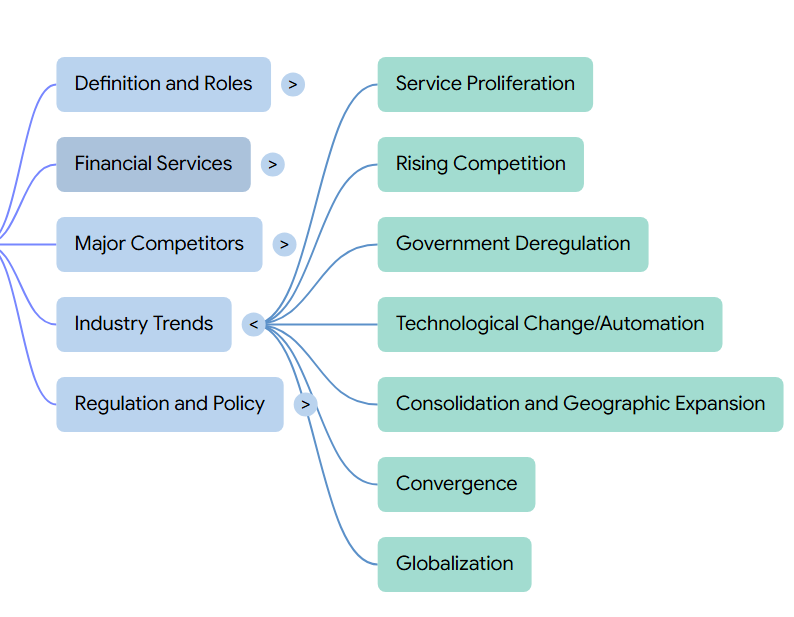
The book identifies several key trends currently reshaping the landscape of bank management and financial services:
- Service Proliferation and Convergence: Financial firms are rapidly expanding their service menus to include nontraditional functions such as insurance, security underwriting, and financial planning. This leads to convergence, where firms from different industries move across traditional boundaries to offer similar products, intensifying competitive rivalry.
- Consolidation and Geographic Expansion: To achieve efficient use of technology and reach new customers, firms are expanding into more distant markets, often through mergers and acquisitions. This has resulted in a declining number of independently owned financial institutions and a rise in the average size of surviving firms—a process known as consolidation.
- Technological Change and Automation: The industry is shifting from labor-intensive delivery to capital-intensive, automated systems, including ATMs, point-of-sale (POS) terminals, and Internet banking. While these advances lower per-unit costs for high-volume transactions, the book notes that they also tend to depersonalize the customer relationship.
- Government Deregulation and Re-regulation: A long period of deregulation—the loosening of government control to allow fairer returns and more service options—has recently been met with a trend toward tighter regulation in the wake of the 2007–2009 credit crisis. This includes government “bailouts,” broadened regulatory powers, and increased capital requirements.
- Globalization: Geographic expansion has extended beyond national borders to a planetary scale, a trend called globalization. This is highlighted by the increasing prominence of nations like China and India in the global financial system.
- Increasing Interest Sensitivity: Managers now face a better-educated, more interest-sensitive customer base whose loyalty is more easily lured away by competitors offering higher returns.
Management and Operational Shifts
The book also highlights significant shifts in how financial firms are managed and operated:
- Dominance of Risk Management: Risk management has become the dominant subject for managers as threats from credit, liquidity, interest rate, and operational risks have grown in complexity.
- Search for Fee Income: There is an ongoing trend toward generating revenue from service fees (noninterest income) to supplement traditional interest income from loans, especially as competition narrows interest rate spreads.
- Emphasis on Ethics: Increased recognition of ethical dilemmas and the consequences of lost public trust (as seen in the collapse of Bear Stearns) has led to an expanded focus on professional ethics within the sector.
- Efficiency and Corporate Governance: As firms grow larger, there is a heightened concern regarding operating efficiency and corporate governance, exploring whether management behavior is aligned with the interests of stockholders.
Service Proliferation
The book describes service proliferation as a central element of the “revolution” currently reshaping the financial-services sector, transforming traditional banks into “financial department stores” or “universal banks“. This trend involves the rapid expansion of the menu of services offered to the public, moving far beyond traditional lending and deposit-taking into nontraditional areas like insurance, security underwriting, and financial planning.
Service Proliferation within the Context of Industry Trends
According to the book, service proliferation is both a result of and a contributor to several other powerful industry trends:
- Convergence: Service proliferation is the primary engine of convergence, where firms from different industries (such as banking, insurance, and securities) move across traditional boundaries to offer similar product lines. This creates “one-stop shopping” for customers but intensifies competitive rivalry.
- Rising Competition: The push to expand service menus is driven by intense competition from nonbank financial firms and even industrial giants (like GE and Wal-Mart) invading traditional banking turf. Proliferation serves as a defensive and offensive strategy to prevent market-share erosion.
- Search for Fee Income: A critical outcome of service proliferation is the opening of new revenue streams through service fees (noninterest income). Managers increasingly prioritize these fees because they are often less sensitive to interest rate fluctuations than traditional loan interest and help offset the narrowing spreads caused by competition.
- Technological Change and Automation: Advances in automation, the Internet, and mobile technology have lowered the per-unit cost of producing and delivering high-volume services. This technology makes it economically viable for firms to manage and market a much broader array of complex products.
- Government Deregulation: Legislation like the Gramm-Leach-Bliley Act in the U.S. has fueled service proliferation by tearing down legal barriers that once separated different types of financial providers, explicitly allowing the commingling of banking, securities, and insurance services.
- Globalization: As financial firms consolidate and expand across national borders, they utilize service proliferation to meet the diverse needs of global corporate and government clients, offering sophisticated tools like risk-management hedging and international trade financing.
Management and Strategic Implications
The book notes that while expanding service menus offers higher profit potential, it also increases the complexity of the financial firm. Managers must now possess a wider array of skills to oversee diverse divisions and ensure that the various service lines are properly coordinated to achieve the organization’s goals of profitability and risk control. Ultimately, service proliferation is viewed as a necessary evolution for survival in a modern, highly competitive, and interest-sensitive marketplace.
Rising Competition
The book identifies rising competition as a fundamental element of the “revolution” currently transforming the financial-services sector. This trend is characterized by an increase in both the level and intensity of rivalry as traditional industry boundaries collapse, forcing banks to compete with a diverse array of non-bank and even non-financial institutions.
Rising Competition within the Context of Industry Trends
The book places rising competition at the center of several interlinked industry forces:
- Service Proliferation and Convergence: As leading financial firms rapidly expand their service menus, they inevitably invade the territories of other institutions. This leads to convergence, where banks, insurance companies, and security firms increasingly offer parallel products, intensifying the battle for customer loyalty.
- Government Deregulation: Competition has been significantly spurred by the loosening of government controls, such as the lifting of interest-rate ceilings and the expansion of service powers for credit unions and savings associations. In the United States, the Gramm-Leach-Bliley Act further accelerated this trend by allowing different types of financial firms to affiliate under common ownership.
- Technological Change and Automation: The shift toward capital-intensive, automated delivery systems—including the Internet, cell phones, and ATMs—allows firms to reach into more distant markets, expanding the geographic scope of competition.
- Globalization: Rivalry is no longer confined to local or national borders; the largest financial firms now compete with one another on every continent.
- Interest Sensitivity: Modern customers are better educated and more interest-sensitive, meaning their loyalty is easily lured away by competitors offering higher returns or lower fees.
The Landscape of Competitors
The book emphasizes that banks no longer dominate the financial system as they once did:
- Financial Competitors: Banks face direct pressure from savings associations, credit unions, money market funds, mutual funds, hedge funds, security brokers, investment banks, and insurance companies [94–100, 148].
- Non-Financial “Invaders”: Major industrial and retailing giants have entered the marketplace to offer traditional banking services. Examples include General Electric (GE), which provides commercial and personal loans; Wal-Mart, which offers in-store money centers for check cashing and bill payments; and auto manufacturers like Ford Motor Company.
Impact and Management Response
The book notes that this intense competition has led to a significant erosion of the banking industry’s market share. In the United States, banks once accounted for over two-thirds of all financial-service assets, but that share had fallen to approximately one-fifth by 2007.
To survive in this environment, the book explains that financial firms have had to become market-driven and sales-oriented. Management is increasingly focused on generating fee income (noninterest revenue) to supplement traditional interest income from loans, which has seen narrowing profit margins due to the pressure of competition. Ultimately, the book describes modern financial institutions as “financial department stores” that must continuously innovate and lower operating costs to remain viable.
Government Deregulation
According to the book, government deregulation—the loosening of government control over the financial-services industry—has been a primary driver of the “revolution” transforming the sector over the past several decades. Within the larger context of industry trends, deregulation acted as a powerful catalyst for rising competition and service proliferation, as it allowed firms to move beyond traditional industry boundaries.
The Role of Deregulation in Reshaping the Industry
The book identifies deregulation as a global phenomenon that began with a focus on allowing fairer returns for the public and expanded service options. Key milestones and impacts discussed include:
- Lifting Interest Rate Ceilings: In the United States, deregulation began significantly with the Depository Institutions Deregulation and Monetary Control Act (DIDMCA) of 1980, which phased out government-imposed interest rate ceilings on deposits, allowing banks to compete for funds using market-driven rates.
- Expanding Service Powers: Legislation such as the Garn-St Germain Depository Institutions Act of 1982 made bank and nonbank depository institutions more alike by allowing thrifts to offer a wider array of consumer and commercial services.
- Tearing Down “Walls”: The Gramm-Leach-Bliley Act (1999) is cited as a landmark deregulatory step that overturned decades of restrictions from the Glass-Steagall era, explicitly permitting the commingling of banking, insurance, and security underwriting services.
- Driving Convergence: By removing legal barriers, deregulation fueled convergence, where firms from different industries began offering parallel product lines, resulting in the rise of “financial department stores” or “universal banks”.
International and Management Implications
The book notes that deregulation has spread planet-wide, with nations like Australia, Great Britain, and Japan recently joining the movement to broaden the legal playing field for international financial-service companies. This global trend toward regulatory arbitrage encouraged firms to migrate to jurisdictions with the fewest restrictions on geographic and service expansion. For managers, deregulation shifted the focus toward a “market-driven” and “sales-oriented” approach, where success depends on pricing services high enough to cover production costs while remaining competitive.
The Shift toward Re-regulation
While deregulation was a dominant trend for decades, the book highlights a recent shift toward tighter regulation in the wake of the 2007–2009 global credit crisis. This new phase, often called “re-regulation,” includes government bailouts, increased capital requirements, and closer surveillance of high-risk activities such as subprime mortgage lending and credit derivatives. Ultimately, the book suggests that the industry is currently struggling to balance the benefits of free-market competition fostered by deregulation with the need for systemic stability and public protection.
Technological Change/Automation
The book identifies technological change and automation as one of the primary forces behind the current “revolution” in the financial-services industry. Within the larger context of industry trends, this shift represents a fundamental transformation from a labor-intensive, variable-cost industry to a capital-intensive, fixed-cost industry.
Drivers of Technological Change
According to the book, financial firms have turned to automation primarily to combat rising operating costs and to improve efficiency. By installing sophisticated electronic systems, institutions can lower the per-unit cost of producing and delivering high-volume services, such as dispensing payments or processing loan applications. This technological progression allows firms to manage and market a much broader array of complex products, which directly supports the trend of service proliferation.
Key Technological Innovations
The book highlights several specific examples of automation that are reshaping service delivery:
- Automated Teller Machines (ATMs) and POS Terminals: These provide 24-hour access to accounts and replace paper-based payment methods with rapid computer entries in retail locations.
- Internet and Mobile Banking: The rise of “virtual banks” and cell phone-based accounts allows customers to manage their finances anywhere, effectively turning a handheld device into a “portable bank”.
- Check 21 and Electronic Imaging: Passed in 2004, the Check 21 Act has allowed the industry to gradually replace paper checks with electronic images, reducing the cost and risk associated with transporting physical documents across the country.
- Debit and Smart Cards: Encoded cards and cell phone sensors allow for instant electronic payments, further reducing the reliance on cash and checks.
Contextual Impact on Industry Trends
Technological change does not act in isolation; the book explains its deep connection to other major industry trends:
- Geographic Expansion and Consolidation: To make efficient use of expensive automation and specialized equipment, financial-service providers require a high volume of sales. This necessity drives firms to expand into more distant markets and increase the number of service units sold, often leading to mergers and acquisitions to achieve the necessary scale.
- Redefining Convenience: In the modern world, “convenience” has shifted from physical location to timely access. Advancing technology has eroded the significance of geography, allowing a customer to request a loan or move funds from hundreds of miles away via online or telephone channels.
- Depersonalization vs. Efficiency: While automation significantly lowers transaction costs, the book notes that it also tends to depersonalize the customer relationship, potentially making it more difficult for a financial-services manager to recognize and get to know individual clients.
- Rising Competition: Technology allows nonfinancial “invaders”—such as giant retailers like Wal-Mart or industrial firms like GE—to offer traditional banking services, check cashing, and electronic bill payments, further intensifying rivalry within the sector.
Ultimately, the book suggests that while traditional brick-and-mortar buildings may be becoming relics, the future of the industry lies in a multichannel approach that combines full-service branches with advanced, automated limited-service facilities to meet diverse public needs.
Consolidation and Geographic Expansion
The book identifies consolidation and geographic expansion as primary forces in the “revolution” currently reshaping the financial-services sector, turning traditional institutions into larger, more complex “financial department stores”. These trends are driven by the necessity of reaching new customers and making efficient use of expensive new technologies.
The Interlinkage of Consolidation and Expansion
According to the book, these two trends are deeply intertwined:
- Need for Scale: To justify the high fixed costs of automation and sophisticated electronic systems, financial-service providers require a high volume of sales. This drives firms to increase the number of service units sold by reaching into more distant markets.
- Mechanisms for Growth: Expansion often occurs through branching activity or the formation of financial holding companies that bring smaller institutions into larger conglomerates. The book notes that acquisitions and mergers have been a major force in this process, allowing firms to buy their way into new markets rather than establishing them from scratch.
Market Impacts and Consolidation Trends
The book highlights significant shifts in the industry structure resulting from these trends:
- Declining Numbers: The number of small, independently owned financial institutions is steadily declining while the average size of survivors is rising. For example, the number of U.S. commercial banks fell from roughly 14,000 in 1980 to fewer than 8,000 by 2008.
- Geographic Reach: In the United States, legislation like the Riegle-Neal Act of 1994 paved the way for true nationwide banking by allowing firms to branch across state lines. The book defines globalization as the extension of this trend to a planetary scale, where the largest firms compete on every continent.
Consequences for Management and Customers
While consolidation and expansion offer potential benefits, they also present challenges identified in the book:
- Depersonalization: The shift toward capital-intensive, automated systems used to manage large, expanded networks tends to depersonalize the customer relationship.
- Efficiency vs. Size: The book questions whether larger firms are inherently more efficient, noting that while economies of scale exist for small and medium-sized firms, they often appear to be exhausted once an institution reaches a relatively modest size.
- Regulatory Scrutiny: Because consolidation can reduce the number of competitors in local markets, regulatory agencies like the U.S. Department of Justice closely monitor mergers to prevent damage to the public interest.
Ultimately, the book suggests that while the “small-fry” community institutions may survive by finding a profitable niche, the dominant trend is toward a landscape of fewer, larger, and more geographically diverse global players.
Convergence
According to The book, convergence is a defining element of the “revolution” currently transforming the financial-services sector, referring to the movement of businesses across traditional industry lines so that firms now offer parallel service menus. This trend has fundamentally blurred the boundaries between previously distinct industries, such as banking, insurance, and securities, making it increasingly difficult for the public to distinguish one type of financial provider from another.
Drivers of Convergence
Within the larger context of industry trends, convergence is fueled by several interlinked forces:
- Service Proliferation: Institutions are rapidly expanding their menus to include nontraditional products—like security underwriting and insurance—to open new revenue streams and meet the demands of an increasingly sophisticated customer base.
- Government Deregulation: A major catalyst was the Gramm-Leach-Bliley Act of 1999, which tore down legal “walls” (such as those established by the Glass-Steagall Act) that had separated banking from other financial-service businesses for decades.
- Rising Competition: As firms invade each other’s “backyards,” competition intensifies, forcing weaker firms to fail or be absorbed by larger, more diverse conglomerates.
The “Financial Department Store” Model
Convergence has led to the rise of “financial department stores” or “universal banks“—massive financial holding companies that unify banking, insurance, and security brokerage services under one corporate umbrella. This model, referred to in Europe as Allfinanz or bancassurance, aims to provide “one-stop shopping” for the public’s credit, savings, payments, and risk-protection needs.
Strategic Impacts and Diversification
The book identifies several strategic implications of this trend:
- Product-Line Diversification: By offering a wide array of services, firms hope to achieve a “diversification effect” where stable revenues from one product line (like insurance) can offset declining profits in another (like traditional lending), thereby reducing the overall risk of failure.
- Economies of Scope: Management frequently pursues convergence to achieve economies of scope, using the same facilities, management, and computer systems to deliver multiple services at a lower joint cost.
- Information Economies: Convergence transforms financial firms into information-gathering powerhouses that can use customer data repeatedly to cross-sell services. However, this also raises significant customer privacy concerns, as sensitive personal information is often shared among a firm’s various bank and nonbank affiliates.
Ultimately, while convergence offers the potential for higher returns and greater stability, the book notes that it also increases management complexity and forces institutions to become more market-driven and sales-oriented to survive in a crowded global marketplace.
Globalization
According to the book, globalization is a central component of the “revolution” currently transforming the financial-services sector, representing the extension of geographic expansion beyond national borders to a planetary scale. Within the larger context of industry trends, it describes a landscape where the largest financial firms now compete for business on every continent.
Globalization within the Context of Industry Trends
The book identifies globalization as being deeply intertwined with several other powerful forces reshaping the industry:
- Geographic Expansion and Consolidation: Globalization is the ultimate endpoint of geographic expansion, where firms reach into increasingly distant markets to expand their customer base and achieve the necessary scale to justify expensive technological investments.
- Government Deregulation: This trend has acted as a primary catalyst for globalization, helping international institutions compete more effectively and capture larger shares of the global market for financial services.
- Technological Change: Advancements in automation and electronic communications have eroded the significance of physical geography, allowing firms to manage accounts and provide credit to customers thousands of miles away.
- Service Proliferation: As firms expand globally, they offer a wider array of sophisticated services—such as risk-management hedging, international trade financing, and security underwriting—to meet the diverse needs of multinational corporate and government clients.
The Global Competitive Landscape
The book emphasizes that the financial system is no longer dominated by local players, but by “heavyweight” international competitors. Prominent examples of firms operating on this global scale include BNP Paribus (France), Deutsche Bank (Germany), HSBC (Great Britain), and Citigroup (United States), all of which compete intensely for corporate and government loans across various continents. Furthermore, the increasing prominence of nations such as China, India, Korea, and Russia is reshaping the geopolitical struggle for global financial leadership.
Management and Regulatory Implications
The book notes that globalization significantly increases the complexity and risk exposure of financial institutions, making risk management the dominant concern for modern managers. Firms must now navigate a variety of international threats, including sovereign risk, currency fluctuations, and varying cultural standards.
From a regulatory perspective, globalization has necessitated unprecedented international cooperation. A primary example is the Basel Agreement, which established common capital standards among leading nations to ensure that international banks maintain a strong capital cushion against global risk and to promote a level playing field for competition. However, the book points out that as firms reach around the globe, unresolved questions remain regarding which nations should regulate their activities and how to coordinate oversight effectively.
— Linden Lake
This series:
→ Book Review (1 of 5): Bank Management and Financial Services – Definition and Roles
→ Book Review (2 of 5): Bank Management and Financial Services – Financial Services
→ Book Review (3 of 5): Bank Management and Financial Services – Major Competitors
→ Book Review (4 of 5): Bank Management and Financial Services – Industry Trends
→ Book Review (5 of 5): Bank Management and Financial Services – Regulation and Policy
Leave a Reply