
The book is the eighth edition of Bank Management and Financial Services by Peter S. Rose and Sylvia C. Hudgins, a comprehensive academic resource detailing the evolution of the financial-services sector. It defines the multifaceted nature of modern banks, exploring their legal foundations, economic roles, and the increasingly blurred lines between them and nonbank competitors like insurance companies and investment firms. The authors outline significant industry trends, such as government deregulation, technological advancements in service delivery, and the rise of global financial conglomerates. Additionally, the material covers the essential functions of the financial system, including risk management, capital intermediation, and the various specialized roles banks play in supporting both private commerce and public policy. Detailed biographies of the authors highlight their extensive expertise in finance, while the table of contents reveals a focus on credit analysis, liquidity management, and international banking. Combined with promotional information for Standard & Poor’s Market Insight, the book serves as a guide for understanding the complex internal and external risks facing today’s financial managers.
Definition and Roles
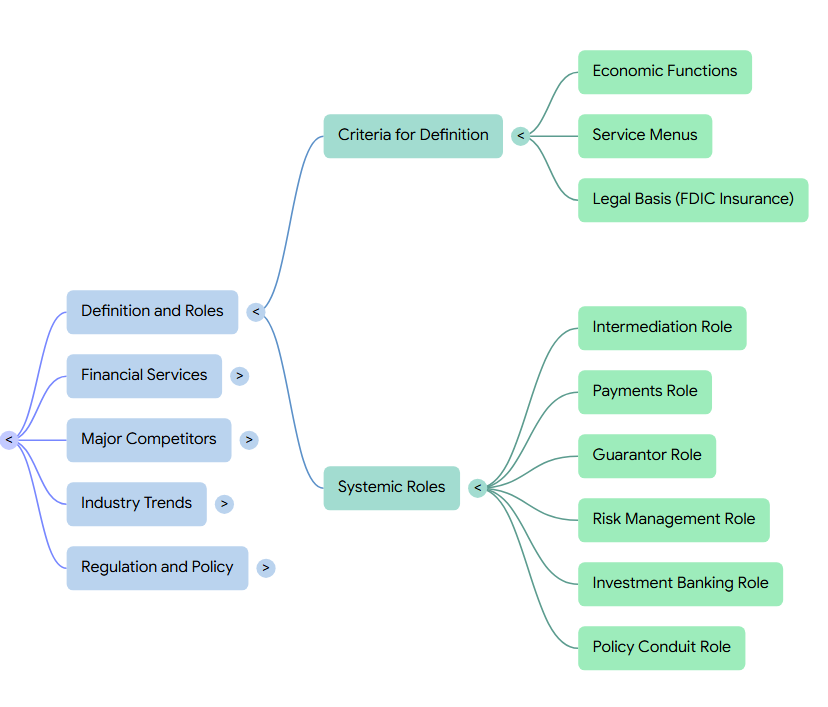
The book defines a bank as a financial institution that can be identified by the economic functions it serves, the services it offers, or the legal basis for its existence. Historically, the legal definition of a bank was any business that both offers deposits subject to withdrawal on demand and makes loans of a commercial or business nature. More recently, the book notes that under U.S. federal law, a bank is defined as any institution that qualifies for deposit insurance provided by the Federal Deposit Insurance Corporation (FDIC). Beyond these legalistic views, banks are often seen as “financial department stores” that provide a massive array of services, including credit, savings, payments, and risk protection.
Within the broader financial system, the book identifies the primary role of financial institutions as encouraging individuals and institutions to save and then transferring those savings to those planning to invest in new projects. This process fuels economic growth, creates jobs, and raises living standards. The book outlines several specific and critical roles that banks and their closest competitors perform in a modern economy:
- The Intermediation Role: This involves acting as a bridge between surplus-spending units (savers) and deficit-spending units (borrowers), transforming savings into credit for investments in equipment, buildings, and goods.
- The Payments Role: Banks facilitate the economy by carrying out payments for goods and services through checks, credit cards, debit cards, and electronic transfers.
- The Guarantor Role: Banks stand behind their customers to pay off debts if the customer is unable to do so, such as through the issuance of letters of credit.
- The Risk Management Role: This includes assisting customers in preparing for potential financial losses to property, persons, or assets.
- The Investment Banking Role: Banks assist corporations and governments in raising new funds and marketing securities to the public.
- The Savings/Investment Advisor Role: Financial firms help customers reach long-range goals for a better life by advising them on how to build and invest their savings.
- The Safekeeping/Certification of Value Role: This role involves safeguarding valuables and certifying their true market value for customers.
- The Agency Role: Banks act as agents on behalf of their customers to manage and protect their property.
- The Policy Role: Financial institutions serve as primary conduits for government policy, particularly monetary policy, intended to stabilize the economy, reduce unemployment, and avoid serious inflation.
In the modern context of bank management, the book emphasizes the “convergence” trend, where different types of financial-service providers increasingly invade each other’s territory. Larger banks now control insurance and security affiliates, while insurers may own banks, leading to overlapping services and a move toward “universal banking” where all financial needs can be met under one roof. This diversification is often pursued to stabilize earnings and reduce overall risk by finding new revenue sources that are not highly correlated with traditional lending.
Criteria for Definition
The book states that a bank can be defined based on three primary criteria: the economic functions it serves, the services it offers to its customers, or the legal basis for its existence.
1. Economic Functions and Services
Banks are often identified by the vital roles they perform in the economy, particularly in financial intermediation—the process of transferring funds from savers (surplus-spending units) to borrowers (deficit-spending units). Because modern banks offer a massive array of services—including credit, savings, payments, and risk protection—they are frequently referred to as “financial department stores“.
2. Legal Basis for Definition
The legal definition of a bank has evolved over time due to regulatory challenges:
- Historical Definition: Traditionally, a bank was legally defined as any business that both offers deposits subject to withdrawal on demand (such as checking accounts) and makes loans of a commercial or business nature.
- Modern U.S. Federal Definition: In the 1980s, after many “nonbank banks” began offering one but not both of the traditional services to escape regulation, the U.S. Congress redefined a bank. Under current federal law, a bank is any institution that qualifies for deposit insurance provided by the Federal Deposit Insurance Corporation (FDIC).
3. Challenges in Definition: Convergence and Competition
Defining a bank has become increasingly difficult due to a trend known as convergence, where different types of financial-service providers (such as credit unions, mutual funds, and insurance companies) have moved into each other’s territory.
- Competitive Overlap: Many nonbank firms, such as Goldman Sachs or Prudential Insurance, now control banks or bank-like firms, offering services that are virtually indistinguishable from traditional banking.
- Retail and Industrial Invaders: Giant retailers and manufacturers like Wal-Mart, General Electric, and Ford Motor Company have also entered the arena, offering loans, credit cards, and savings plans.
4. Diverse Organizational Labels
To illustrate the breadth of the industry, the book lists various types of financial firms that use the label “bank,” each defined by its specific niche or charter:
- Commercial Banks: Sell deposits and make loans to businesses and individuals.
- Investment Banks: Underwrite issues of new securities for corporate customers.
- Universal Banks: Offer virtually all financial services available in the marketplace.
- Community Banks: Smaller, locally focused institutions.
Ultimately, the book suggests that the most functional way to view these institutions in a modern context is through the multiplicity of services they provide, as traditional legal boundaries continue to erode.
Economic Functions
The book states that identifying a bank based on its economic functions is one of the three primary criteria for definition, alongside the services it offers and its legal basis. Within the broader financial system, these economic functions involve encouraging individuals and institutions to save and then transferring those savings to those planning to invest in new projects. This fundamental process fuels economic growth, creates jobs, and raises living standards.
Key Economic Functions as Definitional Criteria
The book outlines several specific economic roles that define the modern bank:
- Financial Intermediation: Acting as a bridge between surplus-spending units (savers) and deficit-spending units (borrowers), transforming savings into credit for investments.
- Payments Role: Carrying out payments for goods and services on behalf of customers through mechanisms like checks and electronic transfers.
- Guarantor Role: Standing behind customers to pay off their debts if they are unable to do so.
- Risk Management Role: Assisting customers in preparing for financial losses to property, persons, or assets.
- Investment Banking Role: Assisting corporations and governments in raising new funds and marketing securities.
- Savings/Investment Advisor Role: Aiding customers in reaching long-range life goals by advising them on building and investing savings.
- Safekeeping/Certification of Value Role: Safeguarding valuables and certifying their true market value for customers.
- Agency Role: Acting as an agent on behalf of customers to manage and protect their property.
- Policy Role: Serving as a conduit for government policy, particularly monetary policy, intended to stabilize the economy.
Theoretical Basis for These Functions
The book explains that these economic functions exist primarily due to imperfections in the financial system. For example, banks provide a valuable service by dividing large-denomination securities into smaller units that are affordable for millions of people. They also satisfy the need for liquidity, allowing customers to convert assets into spending power precisely when needed.
Furthermore, the book highlights informational asymmetry—the fact that some institutions have better information than others—as a reason for these functions, as banks have the expertise to evaluate potential investments that individual savers do not. This leads to the role of delegated monitoring, where a bank acts as an agent for its depositors, monitoring the financial condition of borrowers to ensure funds are recovered.
The Multiplicity of Functions
The book notes that the modern bank has had to adopt a vast array of these roles to remain competitive. This multiplicity of economic functions has led to banks and their closest competitors being labeled “financial department stores” or “full-service financial institutions”. While traditional legal definitions are based on specific services like demand deposits and commercial loans, the book suggests that these functional roles are often a more accurate way to identify these institutions in a modern, converging marketplace.
Service Menus
The book identifies the wide array of services offered to the public as one of the three primary criteria for defining a bank, alongside its economic functions and legal basis. Historically, banks were recognized for a specific menu of services, including checking and debit accounts, credit cards, savings plans, and various types of loans. However, the book emphasizes that these service menus are expanding rapidly to include nontraditional offerings such as investment banking, insurance protection, financial planning, and risk-management services.
The Multiplicity of Services as a Definitional Criterion
As industry boundaries erode through convergence, the book suggests that the most functional way to define a bank is through the multiplicity of services it provides. This diversity has led to banks and their competitors being labeled “financial department stores” or “full-service financial institutions”. In modern context, this trend often moves toward “universal banking,” where a single firm meets all financial needs—including banking, insurance, and security brokerage—under one roof.
Categories of Service Menus
The book categorizes service menus into those offered for centuries and those developed within the past century:
- Centuries-Old Services: These include currency exchange, discounting commercial notes, making business loans, safekeeping of valuables, certification of value, and trust services.
- Modern Services: Over the last hundred years, the menu has grown to include consumer loans, financial advising, cash management, equipment leasing, insurance sales, retirement plans, security brokerage, and mutual fund products.
Organizational Definitions Based on Service Menus
The book notes that dozens of organizations use the label “bank” based on their specific niche or the unique menu of services they provide. For example:
- Commercial Banks: Primarily sell deposits and make loans to businesses and individuals.
- Investment Banks: Focus on underwriting new security issues for corporate customers.
- Merchant Banks: Supply both debt and equity capital to businesses.
- Retail Banks: Serve primarily households and small businesses.
- Wholesale Banks: Large commercial banks that serve corporations and governments.
- Limited-Purpose Banks: Offer a narrow menu of services, such as credit card companies.
Ultimately, the book argues that this service proliferation is a key trend reshaping the industry, as leading financial firms expand their menus to create new revenue sources and remain competitive in an increasingly crowded marketplace.
Legal Basis (FDIC Insurance)
The book identifies the legal basis for an institution’s existence as one of the three primary criteria used to define a bank, alongside the economic functions it serves and the specific menu of services it offers. Historically, the legal definition of a bank was quite specific, referring to any business that both offered deposits subject to withdrawal on demand (such as checking accounts) and made loans of a commercial or business nature.
However, this traditional definition became problematic during the 1980s when many “nonbank banks”—including firms like Sears and J.C. Penney—began offering one of these two services but not both to escape being regulated as a bank. In response to these “banking-market invaders,” the U.S. Congress redefined the term. Under current U.S. federal law, a bank is now defined as any institution that qualifies for deposit insurance administered by the Federal Deposit Insurance Corporation (FDIC).
The book describes this shift to an insurance-based definition as a “clever move” because it identifies a bank not by its specific array of service offerings, but by the government agency that protects its deposits. Today, the term “insured bank” is used to describe institutions that maintain deposits backed by federal insurance plans like the FDIC. Consequently, the vast majority of American depository institutions are classified as “insured” to reassure the public and maintain a reputation for trust.
Within the larger context of definition and roles, using FDIC insurance as a legal basis for definition provides a clear regulatory boundary. This is increasingly important in a modern marketplace where traditional industry walls have “come tumbling down” due to convergence, making it difficult to distinguish banks from other financial-service providers based solely on the functions they perform or the services they sell.
Systemic Roles
In the larger context of defining a bank and its roles, the book identifies several critical systemic functions that financial institutions perform to support and stabilize the global economy. These systemic roles go beyond individual customer service, acting as the fundamental machinery that keeps the financial system functioning and allows governments to influence economic outcomes.
The Policy Role
The book highlights that one of the most vital systemic functions is the policy role. Financial institutions serve as the primary conduits for government economic policy, particularly the monetary policy carried out by central banks. Through this role, banks help the government attempt to stabilize the economy, avoid serious inflation, and reduce unemployment. By regulating the flow of money and credit, these institutions translate central bank actions into changes in market interest rates and credit availability for the public.
The Intermediation Role
Systemically, the financial system’s primary purpose is to encourage individuals and institutions to save and then transfer those savings to those planning to invest in new projects. This intermediation role is essential for economic growth; it fuels spending, results in the creation of more jobs, and raises living standards. The book explains that intermediaries perform the indispensable task of acting as a bridge between “surplus-spending” units (savers) and “deficit-spending” units (borrowers). By doing so, they accelerate growth by expanding the pool of available savings and increasing the productivity of those investments.
The Payments Role
Banks play a central systemic role in the payments system, facilitating trade and commerce by carrying out payments for goods and services on behalf of their customers. The book notes that banks provide the principal means through which everyone makes payments—via checks, credit or debit cards, and electronic transfers. Without this function, the high-volume exchange of goods and services required in a modern economy would be significantly hindered.
The Guarantor and Safekeeping Roles
The book also outlines roles that provide systemic stability and trust:
- The Guarantor Role: Banks stand behind their customers to pay off debts if the customer is unable to do so, such as through letters of credit. This provides a layer of security that allows business transactions to proceed between parties who may not know each other well.
- The Safekeeping/Certification of Value Role: This involves safeguarding valuables and certifying their true market value, which historically provided the foundation for public trust in the financial system.
- Delegated Monitoring: Systemically, banks act as agents for their depositors by monitoring the financial condition of borrowers. This “delegated monitoring” ensures that funds are recovered and reduces the risk exposure for millions of small savers who lack the time or skill to monitor borrowers themselves.
Ultimately, the book suggests that the financial-services sector is so systemically important that if it starts to fall apart, much of the rest of the economy will be crippled along with it. This interdependency is why these roles are heavily regulated to protect the safety of public funds and the stability of the payments system.
Intermediation Role
In the larger context of systemic roles, the book identifies the intermediation role as the primary purpose of the financial system. This role acting as the fundamental machinery that keeps the economy functioning and allows for sustained growth [Source turn on Systemic Roles].
The Mechanism of Intermediation
The book explains that the financial system’s central task is to encourage individuals and institutions to save and then transfer those savings to those planning to invest in new projects. Systemically, this involves acting as a bridge between two distinct groups:
- Surplus-Spending Units: Individuals and institutions whose income exceeds their current expenditures, leaving them with surplus funds to save and invest.
- Deficit-Spending Units: Individuals and institutions whose current expenditures for consumption and investment exceed their receipts, requiring them to raise funds externally.
By bridging these groups, intermediaries accelerate economic growth by expanding the available pool of savings, lowering investment risk through diversification, and increasing the productivity of savings and investment.
Systemic Necessity: Why Intermediaries Exist
The book notes that in a perfectly efficient and competitive financial system, intermediaries might not be needed; however, they are systemically essential because of real-world imperfections:
- Divisibility of Assets: Many high-quality securities, such as U.S. Treasury bonds, are issued in denominations too large for small savers. Intermediaries provide a systemic service by dividing these instruments into smaller, affordable units.
- Liquidity Services: The book highlights that many households and businesses require liquid funds to cover future needs. Intermediaries satisfy this need by offering assets that can be converted into spending power precisely when needed.
- Informational Asymmetry: Because information is limited and costly, intermediaries use their expertise to evaluate potential investments that individual savers cannot.
- Delegated Monitoring: Systemically, banks act as agents for depositors by monitoring the financial condition of borrowers to ensure funds are recovered. This reduces risk exposure for millions of small savers who lack the time or skill to monitor borrowers themselves.
The Consequences of Intermediation Failure
The book emphasizes that the intermediation role is so systemically vital that if the financial-services sector starts to fall apart, much of the rest of the economy will be crippled along with it. When this “machinery” fails and businesses or consumers cannot obtain the credit they need, jobs are lost, tax revenues fall, and economic growth is suppressed. This interdependence is a primary reason why these roles are heavily regulated to protect the stability of the entire financial system [Source turn on Systemic Roles].
Payments Role
The book describes the payments role as a fundamental systemic function that facilitates the entire economy by processing payments for goods and services on behalf of customers. This role is essential to modern living because it provides the necessary infrastructure for commerce and markets to exist. Historically, this was achieved through checking accounts (demand deposits), which significantly improved the efficiency of the payments process by making transactions easier, faster, and safer. In a modern systemic context, this role has expanded to include a wide array of instruments, such as credit cards, debit cards, and electronic accounts accessible through Web sites and mobile devices.
The book emphasizes that the payments role is systemically critical because the entire economy relies on this function; if the financial sector starts to fall apart, the rest of the economy can be crippled, leading to lost jobs and suppressed growth. To safeguard this systemic function, central banks like the Federal Reserve maintain a nationwide network to clear and collect checks and electronic transfers, ensuring that the high-volume exchange of goods and services remains stable and preserves public confidence.
Furthermore, the book notes a systemic shift toward automation and electronic imaging, such as through the Check 21 Act, which promotes electronic payment systems over paper checks. These technological advances significantly lower the per-unit costs associated with high-volume transactions, although they also tend to depersonalize the service. Ultimately, the payments role ensures that individuals and institutions can convert their property or assets into immediately available spending power precisely when needed to facilitate trade and commerce.
Guarantor Role
The book describes the guarantor role as a vital function where a financial institution stands behind its customers to pay off their debts if they are unable to do so. Within the larger context of systemic roles, this function provides a critical layer of security and trust that allows high-volume trade and commerce to proceed between parties who may not know each other well.
Mechanics of the Guarantor Role
The book explains that this role is primarily fulfilled through the issuance of letters of credit or standby letters of credit (SLCs). In a typical standby credit agreement, the issuing bank (the guarantor) provides a commitment to a beneficiary (the lender) on behalf of an account party (the customer). The issuer receives a fee for this service, which generally ranges from 0.5 percent to 1 percent of the total credit amount.
Systemic Importance and Facilitation of Trade
The guarantor role is systemically important because it enables customers—particularly corporations and governments—to borrow more cheaply or fulfill contracts they might otherwise be unable to secure. By using their superior credit standing and reputation for public trust, banks help reduce the information costs for lenders who may be concerned about a borrower’s ability to pay. This function has become increasingly critical due to the global growth of direct finance, where borrowers sell securities directly to investors who require added default protection.
Risk and Regulatory Context
- Contingent Obligations: Legally, a standby credit is a contingent obligation, meaning it is an off-balance-sheet item that only becomes a real liability if the customer defaults.
- Market Concentration: The guarantor role is dominated by larger institutions; over 90 percent of SLCs issued by U.S. banks come from those with at least $1 billion in assets.
- Regulatory Oversight: Because these guarantees can threaten the safety of the financial system if too many are called for collection at once, regulators now require banks to count them as loans when assessing risk exposure to a single customer. Furthermore, international capital agreements (such as Basel I) require banks to hold capital against these contingent agreements as if they were direct loans.
Ultimately, the book suggests that the guarantor role acts as a stabilizer in the financial system, allowing for the expansion of credit and the smooth functioning of markets by shifting default risk from individual lenders to more diversified and sophisticated financial intermediaries.
Risk Management Role
The book defines the risk management role of financial institutions as the essential function of assisting customers in preparing financially for potential losses to property, persons, and financial assets. Within the larger context of systemic roles, this function serves as a stabilizer for the economy by providing the infrastructure necessary for individuals and businesses to protect their wealth and income from unpredictable market forces.
The Mechanism of Risk Management
The book notes that the modern financial firm has shifted toward providing sophisticated financial tools to combat risk exposure, a process sometimes called risk intermediation. This role is systemically important because it allows participants in the economy to unbundle and manage specific risks. Key components include:
- Provision of Hedges: Financial firms act as the primary purveyors of hedges, such as swaps, options, and futures contracts, which help customers protect the value of their assets and the stability of their income.
- Insurance Protection: Banks and their competitors have increasingly become the principal sources for insurance protection, enabling customers to prepare for various financial hazards.
- Risk Arbitrage: Intermediaries engage in risky arbitrage across financial markets, which helps to align prices and distribute risk more efficiently across the entire financial system.
Systemic Benefits: Lowering Risk through Diversification
The book explains that the financial system accelerates economic growth not just by transferring funds, but by lowering the risk of investments through diversification. By pooling a large volume of loans and other assets, intermediaries reduce the risk exposure for individual savers, resulting in increased safety for the public’s funds. This systemic reduction of risk makes investment more productive and fuels job creation and higher living standards.
Delegated Monitoring as Risk Control
A critical systemic aspect of risk management described in the book is delegated monitoring. Because individual depositors often lack the time or expertise to monitor the financial condition of borrowers, they turn this responsibility over to financial intermediaries. The bank acts as an agent for its depositors, monitoring borrowers to ensure that funds are recovered. This systemic role reduces the cost and risk for millions of small savers and signals to the broader marketplace which borrowers are creditworthy.
Systemic Vulnerabilities
While the risk management role is intended to stabilize the system, the book cautions that it can also introduce instability. For example, the rapid growth of complex risk-hedging tools contributed to less stable market conditions during the recent credit crisis. If these risk management functions fail or are mismanaged, the book warns that the rest of the economy can be crippled, leading to business closures and lost jobs. Consequently, this role is a major focus of government policy and regulation intended to avoid serious inflation and economic volatility.
Investment Banking Role
The book defines the investment banking role as the vital function of assisting corporations and governments in raising new funds and marketing securities to the public. Within the larger context of systemic roles, this function serves as a primary engine for capital formation, which is essential for fueling economic growth, creating more jobs, and raising living standards.
Mechanisms of the Investment Banking Role
The book explains that investment bankers act as expert financial advisors, providing critical guidance to corporations and governments on raising capital, entering new markets, and executing mergers or acquisitions. A core systemic service they perform is security underwriting, which involves purchasing new issues of stocks, bonds, and other financial instruments from clients and reselling them to investors in the money and capital markets. This process facilitates the transfer of savings from individuals and institutions (surplus-spending units) to those planning to invest in large-scale new projects (deficit-spending units).
Integration into the Broader Financial System
As the financial-services sector has evolved through a trend known as convergence, many large banking firms have integrated investment banking into their operations to become “financial department stores” or “universal banks”. This convergence allows a single firm to provide one-stop shopping for all financial needs—unifying banking, insurance, and security brokerage services under one roof. The book notes that larger banks often control security affiliates to diversify their revenue streams, finding new sources of fee income that are not always highly correlated with traditional lending.
Systemic Importance and Vulnerability
The book emphasizes that the investment banking role is so systemically vital that if the financial sector starts to fall apart, much of the rest of the economy will be crippled. This extreme interdependency was highlighted during the credit crisis of 2007–2009, when the collapse of best-known investment houses like Bear Stearns and Lehman Brothers demonstrated that even industry giants are vulnerable. Fear that such collapses could result in a meltdown of the entire financial system frequently leads central banks, such as the Federal Reserve, to intervene and arrange buyouts or provide emergency loans to restore public trust.
Regulatory Context
Because investment banking involves substantial risk and is essential to the stability of the global economy, it is a major focus of government regulation. Historically, the Glass-Steagall Act mandated the separation of commercial and investment banking to protect the public’s savings from the higher risks associated with security underwriting. While modern legislation like the Gramm-Leach-Bliley Act has since torn down these regulatory walls, authorities still monitor these roles to prevent unfair competition and to ensure that well-managed institutions maintain the capital necessary to absorb potential losses.
Policy Conduit Role
In the larger context of systemic roles, the book identifies the policy conduit role as a vital function in which financial institutions serve as the primary vehicles for government economic policy. This role is essential for the government’s efforts to regulate the economy and achieve broad social and economic goals.
The Mechanism of the Policy Conduit
Financial institutions act as the “machinery” through which central banks, such as the Federal Reserve, implement monetary policy. The book explains that by regulating the flow of money and credit, these institutions translate central bank actions into tangible changes in the economy, specifically affecting:
- Market Interest Rates: Actions taken by a central bank (such as open market operations) flow through the banking system to influence the interest rates charged to the public.
- Credit Availability: Banks serve as the primary suppliers of credit, and their lending behavior is a direct conduit for policy intended to either stimulate or slow down economic activity.
Primary Objectives of the Policy Role
According to the book, the government relies on this conduit to pursue three major objectives:
- Economic Stabilization: Attempting to level out the fluctuations of the business cycle.
- Inflation Control: Managing the supply of money and credit to avoid serious inflation.
- Employment Goals: Implementing policies intended to reduce unemployment and support job creation.
Systemic Importance and Interdependency
The book emphasizes that this role is a cornerstone of the financial system’s systemic importance. Because financial firms are the primary repositories for savings and the principal source of credit, they are uniquely positioned to serve as these conduits. This creates a high degree of interdependency: the government struggles to stabilize the economy through these providers, and the safety and soundness of the financial sector are critical to ensuring the payments system and credit flow remain efficient even during times of crisis. Consequently, this role is a major reason for the heavy regulation of the industry, as the failure of these institutions to function effectively as policy conduits could cripple the rest of the economy.
— Linden Lake
This series:
→ Book Review (1 of 5): Bank Management and Financial Services – Definition and Roles
→ Book Review (2 of 5): Bank Management and Financial Services – Financial Services
→ Book Review (3 of 5): Bank Management and Financial Services – Major Competitors
→ Book Review (4 of 5): Bank Management and Financial Services – Industry Trends
→ Book Review (5 of 5): Bank Management and Financial Services – Regulation and Policy
Leave a Reply