
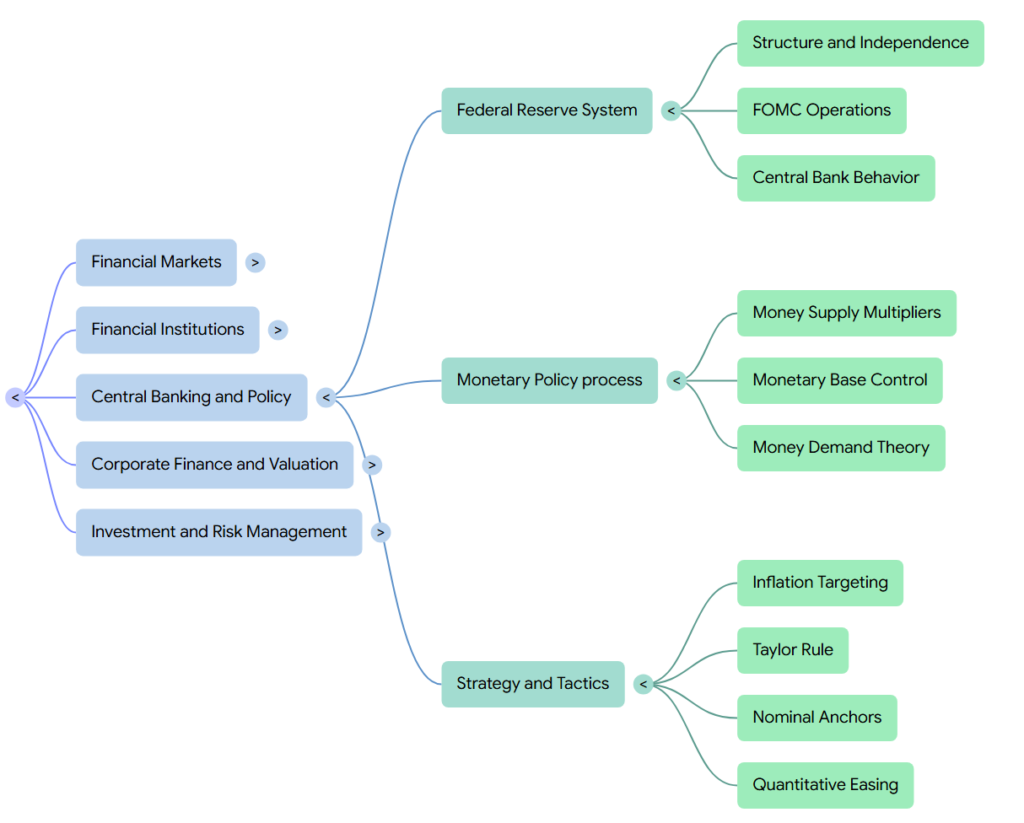
Central banks are the government authorities responsible for the conduct of monetary policy, a critical function that involves managing the money supply and interest rates to promote economic stability and growth. In the broader landscape of financial institutions, central banks act as the “lender of last resort,” providing liquidity to the banking system to avert panics and ensure the smooth operation of payment systems.
Institutional Structure and Independence
The design of central banks varies globally, reflecting different economic philosophies regarding their independence from political pressure.
- The Federal Reserve System (the Fed): Established in 1913 in response to the Panic of 1907, the Fed is a decentralized system consisting of 12 regional Reserve Banks and a central Board of Governors. The Federal Open Market Committee (FOMC) is its primary policymaking body, directing open market operations to influence the federal funds rate.
- The European Central Bank (ECB): Formed in 1999 to manage the euro, it was modeled after the German Bundesbank. Its chief policy group is the Governing Council, and unlike the Fed, it decentralizes the execution of its operations through national central banks.
- Central Bank Independence: The sources define two types of independence: instrument independence (the ability to set policy tools) and goal independence (the ability to set policy objectives). Proponents argue that an independent central bank is essential to resist political pressure for “easy” money that leads to an inflationary bias. Research indicates that more independent central banks generally achieve lower and more stable inflation rates without sacrificing economic growth.
Monetary Policy Mandates and Strategies
Central banks operate under specific legislative directives that shape their policy choices.
- Dual vs. Hierarchical Mandates: The Fed operates under a dual mandate to achieve both price stability and maximum employment (with a third goal of moderate long-term interest rates). In contrast, the ECB has a hierarchical mandate, where its primary goal is price stability, and other objectives are pursued only if they do not compromise that goal.
- Nominal Anchors and Inflation Targeting: Many central banks use a nominal anchor—a variable like the inflation rate—to tie down price expectations and limit the time-inconsistency problem, where policymakers are tempted to pursue short-term expansionary gains at the cost of long-term inflation. Inflation targeting involves the public announcement of a numerical target (typically around 2%) and a commitment to achieving it over the medium term.
- The Taylor Rule: This strategy provides a guide for setting interest rates based on the “gap” between actual and target inflation, and the “gap” between actual and potential output.
The Toolkit of Monetary Policy
Central banks employ both traditional and non-traditional tools to influence the economy.
Conventional Tools
During normal economic periods, central banks rely on three primary instruments:
- Open Market Operations (OMO): The most flexible and frequently used tool, involving the purchase or sale of government securities to adjust the level of reserves in the banking system and influence interest rates.
- Discount Policy: Lending to depository institutions through the discount window. While essential for the lender-of-last-resort role, it carries a market “stigma” that can discourage banks from borrowing.
- Reserve Requirements: Mandating a specific percentage of deposits that banks must hold as cash or in central bank accounts.
Nonconventional Tools and Quantitative Easing (QE)
When interest rates hit the zero lower bound, conventional tools become ineffective, necessitating extraordinary measures.
- Liquidity Provision: Expanding lending facilities (e.g., TAF, TSLF) to non-bank financial institutions and supporting specific markets like commercial paper.
- Quantitative Easing (QE): Large-scale, ongoing purchases of long-term government bonds and mortgage-backed securities (MBS) to lower long-term interest rates and flood the system with reserves.
- Credit Easing: Changing the composition of the central bank’s balance sheet—rather than just its size—to lower credit spreads and improve the functioning of credit markets.
- Forward Guidance: Committing to keep policy rates low for an extended period to lower market expectations of future rates and stimulate current spending.
Transmission Mechanisms to the Real Economy
Monetary policy affects the economy through several “channels” that link financial markets to household and firm behavior.
- Interest-Rate Channel: Traditional view where lower real interest rates reduce the cost of capital, stimulating investment and consumer durable spending.
- Exchange Rate Channel: Expansionary policy lowers domestic interest rates, leading to currency depreciation, which boosts net exports and aggregate demand.
- Equity Price Channel (Tobin’s q): Lower rates raise stock prices, increasing the market value of firms relative to their replacement cost of capital, which encourages further investment.
- The Credit View: This focuses on asymmetric information problems. The bank lending channel suggests that central bank actions increase bank reserves and deposits, raising the quantity of loans available to credit-dependent borrowers. The balance sheet channel highlights how higher asset prices improve firms’ net worth, reducing adverse selection and moral hazard for lenders.
International Policy and the “Trilemma”
In the global context, central banks must navigate the policy trilemma (or “impossible trinity”), which states that a country cannot simultaneously pursue (1) free capital mobility, (2) a fixed exchange rate, and (3) an independent monetary policy. Central banks often use sterilization—offsetting the effects of foreign exchange interventions with open market operations—to prevent international transactions from disrupting domestic liquidity.
Ultimately, the sources describe central banking as a high-stakes “balancing act”. While central banks must remain independent enough to ensure long-term monetary stability, they must also proactively monitor systemic risk and be prepared to use their balance sheets aggressively during crises to prevent a collapse of the financial system.
Federal Reserve System
The Federal Reserve System (the Fed) is the central bank of the United States, established by Congress in 1913 to provide a safer, more flexible, and more stable monetary and financial system. In the larger context of economics and management, the Fed acts as a unique decentralized institution that balances public and private characteristics to perform five general functions: conducting monetary policy, promoting financial system stability, supervising financial institutions, fostering payment system safety, and promoting consumer protection.
Institutional Structure and Governance
The Fed’s structure is designed to diffuse power and insulate the institution from short-term political pressures. It consists of three key entities:
- The Board of Governors: Based in Washington, D.C., this seven-member body is appointed by the President and confirmed by the Senate to serve staggered 14-year terms. The Board provides general guidance for the system and oversees the 12 Reserve Banks.
- Federal Reserve Banks: These 12 regional banks are the “operating arms” of the system, acting as a “bank for banks” in their respective districts. They gather regional economic data and provide services such as check clearing and currency distribution.
- Federal Open Market Committee (FOMC): This is the primary policymaking body, consisting of the seven governors and five Reserve Bank presidents (with the president of the New York Fed serving as a permanent member). The FOMC meets eight times a year to set national monetary policy, specifically by targeting the federal funds rate.
Monetary Policy and the Dual Mandate
The Fed operates under a statutory mandate to promote maximum employment, stable prices, and moderate long-term interest rates. This is often simplified as a “dual mandate” of full employment and low inflation.
- Conventional Tools: Historically, the Fed managed the money supply and interest rates through open market operations (buying/selling government securities), discount window lending (loans to banks), and reserve requirements.
- Abundant Reserves Regime: Since the 2008 financial crisis, the Fed has transitioned to a system of “abundant reserves”. In this environment, it controls short-term rates primarily through administrative rates: Interest on Reserve Balances (IORB), which sets a floor for bank lending, and the Overnight Reverse Repurchase (ON RRP) facility, which provides a floor for non-bank lenders like money market funds.
Nonconventional Policy and Crisis Management
When conventional tools reach their limit (the “zero lower bound”), the Fed employs nonconventional measures to stimulate the economy:
- Quantitative Easing (QE): Large-scale asset purchases of long-term Treasuries and mortgage-backed securities (MBS) intended to lower long-term interest rates and unfreeze credit markets.
- Forward Guidance: The explicit communication of the FOMC’s future policy intentions to influence market expectations and downward pressure long-term rates.
- Emergency Lending: Under Section 13(3) of the Federal Reserve Act, the Fed can provide broad-based liquidity to the financial system in “unusual and exigent circumstances,” a power used extensively during the 2008 crisis and the COVID-19 pandemic.
Independence and Accountability
The Fed is characterized by high instrument independence (the ability to set policy tools) and goal independence (the ability to set specific objectives like the 2% inflation target). Its independence is bolstered by its self-funding nature; it earns income from its securities holdings and remits excess profits to the U.S. Treasury.
While independent, the Fed remains accountable to Congress and the public through semiannual testimonies, published meeting minutes, and economic projections. This independence is considered vital by many economists to prevent a “political business cycle,” where short-term political goals for growth might lead to long-term inflationary biases.
Structure and Independence
The Federal Reserve System is characterized by a unique decentralized structure that combines public and private characteristics, designed by the framers of the Federal Reserve Act of 1913 to diffuse power and prevent centralized control of the economy. This structure was a response to historical American fears of “moneyed interests” and centralized authority, which had led to the demise of earlier central banking experiments in the 19th century.
The Three Key Entities
The sources identify three primary entities that make up the core of the Federal Reserve System:
- The Board of Governors: Headquartered in Washington, D.C., this is an independent federal agency that provides general guidance for the System. It consists of seven members appointed by the President and confirmed by the Senate for staggered 14-year terms. One governor’s term expires every two years to ensure continuity and to limit the President’s ability to control the Board through appointments.
- Federal Reserve Banks: There are 12 regional Districts, each with its own separately incorporated Reserve Bank. These banks are quasi-public institutions owned by the private commercial member banks in their districts. Member banks hold stock in their local Reserve Bank, though this stock is a condition of membership and cannot be traded or sold. The banks gather regional economic data (such as for the Beige Book) and provide services to depository institutions and the U.S. Treasury.
- Federal Open Market Committee (FOMC): This is the System’s principal policymaking body. It is composed of the seven members of the Board of Governors, the president of the New York Fed (a permanent voting member), and four other Reserve Bank presidents who serve on a rotating basis. The FOMC directs open market operations, the Fed’s chief tool for influencing money and credit conditions.
The Nature of Independence
The Federal Reserve is described as having both instrument independence (the ability to set monetary policy tools) and goal independence (the ability to set its own objectives). Its independence is bolstered by several structural features:
- Financial Autonomy: Unlike most government agencies, the Fed is not funded by congressional appropriations. Its operations are financed primarily from interest earned on the government securities it acquires through open market operations. It returns the bulk of its net earnings to the U.S. Treasury annually.
- Insulation from Political Pressure: The 14-year nonrenewable terms for governors are intended to reduce incentives to “curry favor” with the President or Congress for reappointment. Decisions made by the Fed are not subject to approval by the executive or legislative branches.
- Limited Auditing: While the Fed is accountable to Congress, its monetary policy and foreign exchange functions are traditionally exempt from audits by the Government Accountability Office (GAO) to prevent political interference in policy decisions.
Accountability and Checks on Power
Despite its high degree of independence, the Fed remains a “creature of Congress” and is subject to its influence. The legislation that structures the Fed can be changed at any time, and Congress has passed laws like the Humphrey-Hawkins Act to require semiannual testimonies from the Chair to ensure the Fed remains accountable for its policy objectives.
The sources debate whether this independence is beneficial. The case for independence argues that it prevents an inflationary bias caused by shortsighted politicians who might pursue expansionary policies to win elections (the “political business cycle”). The case against independence suggests that it is undemocratic to allow an unelected elite group to control monetary policy without direct public accountability. Additionally, some economists point to the theory of bureaucratic behavior, suggesting the Fed may sometimes act to maximize its own power and prestige rather than strictly in the public interest.
FOMC Operations
The Federal Open Market Committee (FOMC) serves as the “focal point” for policymaking within the Federal Reserve System, acting as the primary body responsible for directing the nation’s monetary policy. In the larger context of the Federal Reserve, the FOMC bridges the central Board of Governors with the regional Reserve Banks to manage the economy through interest rates and credit conditions.
Institutional Structure and Governance
The FOMC is designed to diffuse power across the decentralized System, balancing governmental oversight with regional input.
- Composition: The committee consists of 12 voting members: the seven members of the Board of Governors, the president of the Federal Reserve Bank of New York (permanent member), and four of the remaining 11 Reserve Bank presidents who serve one-year terms on a rotating basis.
- Leadership: By tradition, the Chair of the Board of Governors also chairs the FOMC, and the president of the New York Fed serves as vice chair.
- Meetings: The committee typically meets eight times a year in Washington, D.C.. These sessions involve reviewing the “Beige Book” (regional economic summaries), analyzing Board staff forecasts, and engaging in “go-rounds” where all participants—including non-voting Bank presidents—share their assessments of the national and regional outlook.
The Monetary Policy Mandate
The FOMC’s operations are guided by a statutory “dual mandate” from Congress to promote maximum employment and stable prices.
- 2% Inflation Target: In 2012, the FOMC established a formal long-run goal of 2% inflation (measured by the PCE deflator) to provide a “nominal anchor” for the economy.
- Countercyclical Stance: The FOMC aims to be countercyclical, “easing” policy (lowering rates) to stimulate growth during downturns and “tightening” policy (raising rates) to curb inflation during booms.
Core Operations: Open Market Operations (OMO)
OMO is the FOMC’s principal tool for implementing policy. While the FOMC makes the decisions, the actual execution is delegated to the System Open Market Account (SOMA) Manager at the “Trading Desk” inside the Federal Reserve Bank of New York.
- Mechanism: The Desk buys or sells U.S. Treasury and agency securities through a select group of private financial institutions known as primary dealers.
- Impact on Reserves: An open market purchase increases the reserves of the banking system (expanding the monetary base), which puts downward pressure on interest rates; conversely, an open market sale drains reserves and raises rates.
- Dynamic vs. Defensive: The FOMC authorizes dynamic OMO to change the level of reserves and the policy stance, while the Desk conducts defensive OMO (often using short-term repurchase agreements or “repos”) to offset seasonal or random fluctuations in factors like “float” or public demand for currency.
Evolution: From Scarce to Abundant Reserves
The framework for FOMC operations shifted dramatically following the 2007–2009 financial crisis.
- Pre-Crisis (Scarce Reserves): The FOMC controlled the federal funds rate—the rate banks charge each other for overnight loans—by precisely adjusting the supply of scarce reserves to hit a specific target.
- Post-Crisis (Abundant Reserves): After years of massive asset purchases, reserves became so plentiful that banks no longer needed to borrow them from one another. The FOMC now controls short-term rates using administered rates:
- Interest on Reserve Balances (IORB): The rate paid to banks on their deposits at the Fed, which sets a floor for lending.
- Overnight Reverse Repurchase (ON RRP) Facility: A supplementary tool providing a floor for non-bank lenders like money market funds.
Modern Policy: Nontraditional Tools
When traditional rate-cutting reached the “zero lower bound” at the end of 2008, the FOMC expanded its operational toolkit.
- Quantitative Easing (QE): Formally known as Large-Scale Asset Purchases (LSAPs), this involves the massive purchase of long-term Treasuries and mortgage-backed securities (MBS) to lower long-term interest rates and stimulate the housing market.
- Forward Guidance: The FOMC uses its postmeeting statements and press conferences to signal its future policy intentions, managing market expectations to influence long-term rates.
- Normalization: Since late 2015, the FOMC has periodically engaged in “normalization,” the process of gradually raising interest rates and shrinking the size of its multi-trillion-dollar balance sheet by ceasing the reinvestment of principal repayments.
Central Bank Behavior
In the larger context of the Federal Reserve System, central bank behavior is analyzed through two competing theoretical frameworks: the public interest view and the theory of bureaucratic behavior. While the former assumes that the central bank acts solely to promote the welfare of the public, the latter suggests that central banks, like other bureaucracies, are motivated by a desire to maximize their own power and prestige.
Theories of Central Bank Behavior
- Public Interest View: This perspective holds that the Federal Reserve behaves in a way that serves the public interest by pursuing its statutory “dual mandate” of maximum employment and price stability. In this view, policy adjustments are technical responses to economic shocks designed to achieve the best long-term outcomes for society.
- Theory of Bureaucratic Behavior: This theory suggests that the Fed’s behavior is influenced by incentives to increase its own autonomy and influence. For example, the Fed may vigorously fight to preserve its independence from GAO audits or campaign to bring more banks under its regulatory umbrella to increase its “territory” and prestige. It also suggests that the Fed might avoid conflict with powerful groups, such as the President or Congress, if they threaten to curtail its powers.
Influence of the Federal Reserve Chair
The behavior of the institution is significantly shaped by the individual style and background of its Chair.
- The “Maestro” Style (Greenspan): Former Chair Alan Greenspan was known for a data-driven, informal approach, often relying on obscure statistics rather than formal staff forecasts. He exercised extensive control over FOMC discussions, leading meetings in a formal manner where he would make a policy recommendation early in the discussion. He was also famously obscure in his public communication, viewing transparency with some reluctance.
- The Academic/Analytical Style (Bernanke and Yellen): In contrast, Ben Bernanke and Janet Yellen brought academic rigor to the role, relying heavily on model simulations and staff forecasts. Their FOMC meetings were more democratic and transparent, allowing for “two-handed interventions” and “give and take” among participants. They championed transparency, including the announcement of a formal 2% inflation objective.
Independence and Political Pressure
A central driver of Fed behavior is its high degree of independence, which allows it to take a “long view” of the economy rather than responding to short-term political pressures.
- Avoiding the Political Business Cycle: Independence insulates the Fed from the “political business cycle,” where politicians might pressure a central bank to pursue expansionary policy (lower interest rates) just before an election to win votes, despite the long-term inflationary consequences.
- Self-Funding Autonomy: The Fed’s behavior is uniquely independent because it does not rely on congressional appropriations; it earns its own revenue from security holdings and discount loans.
- Constraints on Independence: Despite this, the Fed is not immune to pressure. Congress can change its governing statutes at any time, and the threat of legislative rollbacks often influences the Fed to stay within a range of policy actions that do not overly antagonize legislators.
Behavior During Economic Crises
The sources highlight that central bank behavior changes radically during periods of financial distress.
- Lender of Last Resort: The Fed acts as a “safety valve” by providing liquidity to the banking system through the discount window to prevent bank panics. During the 2007–2009 crisis, it expanded this role to include non-bank entities under “unusual and exigent circumstances,” lending to firms like Bear Stearns.
- Shift to Nonconventional Policy: When short-term interest rates hit the “zero lower bound,” the Fed’s behavior shifted toward Quantitative Easing (QE) (large-scale asset purchases) and forward guidance (committing to keep rates low for a long period) to manage market expectations and lower long-term rates.
- Abundant Reserves Regime: Post-2008, the Fed transitioned from a regime of scarce reserves to one of abundant reserves, changing its behavior from controlling the federal funds rate via open market operations to using administrative rates like Interest on Reserve Balances (IORB).
Monetary Policy process
The monetary policy process is the management of the money supply and interest rates by a central bank to achieve specific economic objectives, such as maximum employment, stable prices, and moderate long-term interest rates. This process involves a complex interaction between the central bank, commercial banks, and the public to influence the availability and cost of credit, which eventually impacts spending, production, and inflation.
The Decision-Making Framework: The FOMC
In the United States, the primary body responsible for monetary policy is the Federal Open Market Committee (FOMC). The FOMC process typically follows a structured cycle:
- Meeting Frequency: The committee meets eight times a year in Washington, D.C., to assess the state of the economy and determine the stance of policy.
- Data Review: Before each meeting, policymakers review the “Beige Book” (summaries of regional economic conditions) and Board staff forecasts regarding national economic activity and inflation.
- Policy Deliberations: Meetings include “go-rounds” where participants share regional and national outlooks, leading to a vote by the 12 voting members on the federal funds rate target.
- Transparency: Following the meeting, the FOMC issues a public statement explaining its decision and outlook; detailed minutes are released three weeks later.
The Toolkit: Implementation of Policy
Central banks implement policy using several distinct tools to influence legal reserves and market interest rates.
1. Conventional Tools
- Open Market Operations (OMO): The most flexible and frequently used tool, where the Fed buys or sells Treasury securities to adjust the level of reserves in the banking system. Purchases increase reserves and lower rates, while sales drain reserves and raise rates.
- Discount Policy: The Fed acts as the lender of last resort, providing short-term loans to depository institutions through the discount window. This facility serves as a “safety valve” to ensure liquidity during times of stress.
- Reserve Requirements: The Board of Governors sets the percentage of deposits that banks must keep on hand, which influences the money multiplier and the banking system’s ability to expand credit.
2. Modern and Nonconventional Tools
- Interest on Reserve Balances (IORB): Since 2008, the Fed has paid interest on banks’ reserve deposits. In the current “abundant reserves” regime, the IORB serves as a primary tool to set a floor for the federal funds rate.
- Quantitative Easing (QE): When short-term interest rates hit the zero lower bound, the Fed uses large-scale asset purchases of long-term Treasuries and mortgage-backed securities (MBS) to lower long-term interest rates and stimulate the economy.
- Forward Guidance: This involves communicating the future path of interest rates to influence market expectations and long-term borrowing costs.
Strategic Guidelines and Rules
To maintain credibility and anchor inflation expectations, central banks often employ specific strategies:
- Inflation Targeting: A strategy where the central bank publicly announces a numerical medium-term inflation target (e.g., 2%) to increase transparency and accountability.
- The Taylor Rule: A mathematical guideline suggesting where the federal funds rate should be set based on the “inflation gap” and the “output gap”.
- Nominal Anchors: Variables like the inflation rate or money supply used to “tie down” the price level and limit the time-inconsistency problem.
The Transmission Mechanism
Once a policy action is taken, it moves through the economy via various transmission mechanisms:
- Interest-Rate Channel: Changes in the real cost of borrowing affect investment and consumer durable spending.
- Asset Price Channels: Policy affects stock prices, housing values, and exchange rates, which in turn impact household wealth and net exports.
- Credit View: Focuses on how policy changes bank lending activity and firm balance sheets by mitigating asymmetric information problems.
Challenges in the Process
The effectiveness of monetary policy is limited by several factors:
- Policy Lags: There are significant delays in obtaining data (data lag), recognizing shifts in the economy (recognition lag), and seeing the actual effects of policy actions on output and inflation (effectiveness lag).
- The Zero Lower Bound: When nominal interest rates hit zero, conventional policy loses its primary tool, forcing a reliance on more uncertain nonconventional measures.
- Independence: Central banks strive for instrument and goal independence to resist political pressure for “easy money” that can lead to an inflationary bias.
Money Supply Multipliers
The money supply multiplier is a mathematical ratio that relates a given change in the monetary base (high-powered money) to the resulting change in the total money supply. In the larger context of the monetary policy process, this multiplier explains how the central bank, commercial banks, and the public interact to determine the quantity of money circulating in the economy.
The Mechanism of Multiple Deposit Creation
The multiplier process is rooted in multiple deposit creation, where the banking system as a whole can create a multiple increase in deposits from a single dollar of new reserves.
- The Process: When the Federal Reserve provides a bank with new reserves (e.g., through an open market purchase), the bank typically lends out its excess reserves. The borrower then spends these funds, which are eventually redeposited into another bank. That second bank must hold a portion as required reserves and can lend the remainder, initiating a cycle that continues until all reserves are used up to support a much larger volume of deposits.
- Simple vs. Realistic Multipliers: In a simplified model where banks hold no excess reserves and the public holds no currency, the simple deposit multiplier is the reciprocal of the required reserve ratio (). However, a more realistic multiplier account for the behavior of all “three players” in the money supply process: the central bank, banks, and depositors.
The Three Players and Their Influence
The money supply () is determined by the monetary base () and the money multiplier (), expressed as . The multiplier itself is influenced by three key variables:
- The Central Bank (The Fed): It sets the required reserve ratio (). An increase in reduces the multiplier because banks must hold more funds in reserve, leaving less available for multiple deposit expansion.
- Banks: They determine the excess reserves ratio () and the level of borrowed reserves from the Fed. If banks decide to hold more excess reserves—perhaps as insurance against deposit outflows or because the interest rate on reserves is attractive—the multiplier falls because those funds are not being lent out to create new deposits.
- Depositors: They influence the currency ratio (). When the public chooses to hold more currency rather than deposits, the multiplier generally decreases because currency does not undergo multiple expansion like deposits do.
Monetary Policy Tools and the Multiplier
The Federal Reserve uses the multiplier framework to implement its policy objectives:
- Reserve Requirements: While once a potent tool, changes in the required reserve ratio are now infrequent because they impose a “tax” on banks and are difficult to reverse quickly. Raising requirements is a contractionary move that lowers the multiplier, while lowering them is expansionary.
- Open Market Operations (OMO): This is the Fed’s primary tool. By buying or selling government securities, the Fed directly changes the monetary base, which the multiplier then expands into the broader money supply.
- Discount Policy: Acting as the lender of last resort, the Fed provides borrowed reserves to banks, which increases the monetary base and facilitates the multiplier process.
Modern Evolution: The 2008 Crisis and Abundant Reserves
The traditional multiplier model experienced a significant shift following the 2007–2009 financial crisis.
- Skyrocketing Excess Reserves: After 2008, the Fed began paying interest on reserves (IORB), and banks’ excess reserves grew from roughly $2 billion to over $2 trillion.
- Collapse of the Multiplier: Because the excess reserves ratio () became extraordinarily high, the money multiplier plummeted, often falling below 1. This explained why massive increases in the monetary base through Quantitative Easing (QE) did not lead to a proportionately massive surge in the M1 money supply—the “excess” liquidity simply sat idle in banks’ reserve accounts rather than being multiplied through lending.
- New Policy Regime: Consequently, the Fed has transitioned to an “abundant reserves” regime, where it influences short-term interest rates primarily through administrative rates (like IORB) rather than by managing the scarcity of reserves through the multiplier process.
Monetary Base Control
In the larger context of the monetary policy process, control of the monetary base (also known as “high-powered money”) is a fundamental mechanism through which a central bank influences the broader money supply and economic activity. The monetary base () is defined as the sum of currency in circulation () and total reserves in the banking system ().
Mechanisms of Control
The Federal Reserve primarily exercises control over the monetary base through two main channels:
- Open Market Operations (OMO): This is the most flexible and frequently used tool. An open market purchase of government securities increases the monetary base by an amount equal to the purchase, as the Fed pays for the bonds by crediting the reserves of the seller’s bank. Conversely, an open market sale reduces the monetary base by draining reserves from the system.
- Discount Window Lending: When the Fed makes a loan to a financial institution, it directly increases the reserves of that bank, thereby increasing the monetary base. While the Fed sets the discount rate, the actual volume of borrowing is determined by the banks themselves, making this component less directly controllable than OMOs.
Borrowed vs. Nonborrowed Monetary Base
Because the central bank cannot perfectly predict bank borrowing, the monetary base is often divided into two components:
- Nonborrowed Monetary Base (): This component results primarily from open market operations and is under the Fed’s direct and complete control.
- Borrowed Reserves (): This represents the portion of the base created through discount window loans, which is influenced by the Fed but ultimately determined by bank behavior. The relationship is expressed as .
Factors Beyond Central Bank Control
The sources note that several factors can influence the monetary base without central bank initiation, though their effects are generally predictable and can be offset via defensive OMOs:
- Float: Temporary increases in reserves caused by the Fed’s check-clearing process.
- Treasury Deposits at the Fed: When the U.S. Treasury moves funds from commercial banks to its account at the Fed, it causes a reserve outflow and a decrease in the monetary base.
- Shifts into Currency: When the public withdraws cash, reserves fall while currency in circulation rises by the same amount. This changes the composition of the base but leaves the total monetary base unaffected.
The Multiplier Link and Evolution of Policy
Historically, controlling the monetary base was the starting point for determining the total money supply () via the money multiplier (), where . By adjusting the base, the Fed could influence the level of deposits through multiple deposit creation.
However, the role of monetary base control shifted significantly after the 2007–2009 financial crisis:
- Scarce Reserves Regime (Pre-Crisis): The Fed precisely managed a relatively small monetary base to hit a target federal funds rate.
- Abundant Reserves Regime (Post-Crisis): Through Quantitative Easing (QE), the Fed initiated massive large-scale asset purchases, causing the monetary base to skyrocket—from approximately $900 billion in early 2007 to over $8 trillion by 2021.
- Decoupling from Short-term Rates: In this environment, reserves became so abundant that the Fed could no longer influence short-term interest rates by making marginal changes to the monetary base. Instead, it moved to a system of administrative rates, using Interest on Reserve Balances (IORB) and the Overnight Reverse Repurchase (ON RRP) facility to control interest rates regardless of the massive size of the base.
Money Demand Theory
Money demand theory explores the factors that influence the quantity of money individuals and businesses choose to hold, providing a critical foundation for understanding how monetary policy impacts the broader economy. In the larger context of the monetary policy process, the stability and interest-rate sensitivity of money demand determine whether a central bank should target the money supply or interest rates to achieve its macroeconomic goals.
Evolution of Money Demand Theories
- Quantity Theory of Money: Developed by classical economists like Irving Fisher, this theory posits that the demand for money is purely a function of nominal income (). It assumes that institutional and technological features determine the velocity of money, which remains relatively constant in the short run. Crucially, this classical view suggests that interest rates have no effect on the demand for money.
- Keynesian Liquidity Preference Theory: John Maynard Keynes challenged the classical view by introducing three distinct motives for holding money: the transactions motive, the precautionary motive, and the speculative motive. Keynes argued that because money is a store of wealth, its demand is negatively related to the nominal interest rate, which represents the opportunity cost of holding non-interest-bearing money instead of bonds.
- Portfolio Theories: Modern portfolio choice theory expands this analysis, suggesting that money demand is determined by wealth, the expected return on money relative to other assets, risk (such as inflation variability), and the liquidity of alternative assets. For instance, as alternative assets like money market mutual funds become more liquid, the relative demand for traditional money components like M1 falls.
Role in the Monetary Policy Process
The behavior of money demand is central to how central banks implement and transmit policy:
- Determination of Interest Rates: Within the liquidity preference framework, the equilibrium interest rate is determined by the intersection of money supply and money demand. When the Federal Reserve increases the money supply, the resulting liquidity effect typically lowers interest rates, provided the demand for money does not shift simultaneously.
- The Shift from Aggregates to Interest Rates: Historically, if the money demand function were stable, central banks could effectively control the economy by targeting monetary aggregates (the money supply). However, since the 1970s, rapid financial innovation has made the demand for money unstable and unpredictable, leading the Federal Reserve and other central banks to downgrade the focus on the money supply and instead use short-term interest rates (like the federal funds rate) as their primary policy instrument.
- Velocity and Policy Effectiveness: Keynesian theory implies that because money demand is sensitive to interest rates, the velocity of money is not constant but fluctuates significantly. This unpredictability in velocity weakens the direct link between money growth and nominal income, further complicating the use of money supply targets for policy.
Money Demand at the Zero Lower Bound
The monetary policy process faces unique challenges when interest rates hit the zero lower bound, a situation known as a liquidity trap.
- In a liquidity trap, the demand for money becomes completely flat (infinitely elastic), meaning that further increases in the money supply have no effect on interest rates.
- Under these conditions, the self-correcting mechanism of the economy may fail, potentially leading to a deflationary spiral.
- To stimulate demand when conventional interest-rate tools are exhausted, central banks must turn to nonconventional policies, such as quantitative easing (large-scale asset purchases) or forward guidance to raise inflation expectations and lower the real interest rate.
Transmission to the Real Economy
Money demand theory is the “black box” that explains the initial step in the monetary transmission mechanism. By influencing interest rates and asset prices, changes in the balance between money supply and demand eventually affect investment spending, net exports, and consumer durable expenditure, which collectively determine aggregate demand and the level of economic activity.
Strategy and Tactics
In the context of central banking, strategy refers to the long-run framework and objectives guiding monetary policy, while tactics involve the day-to-day choices and settings of policy instruments to achieve those objectives. The sources describe this relationship as a high-stakes balancing act where central banks must manage public expectations while responding to economic shocks.
Monetary Policy Strategy
The core of a central bank’s strategy is its long-term objectives and the framework used to achieve them.
- Primary Goals and Mandates: While central banks may pursue multiple goals—including high employment, economic growth, and financial market stability—price stability (low and stable inflation) is increasingly viewed as the most important long-run objective.
- Hierarchical Mandates: Used by the ECB and the Bank of England, these put price stability first and only pursue other goals if they do not compromise that objective.
- Dual Mandates: The Federal Reserve has a co-equal mandate to promote both maximum employment and stable prices.
- The Nominal Anchor: A successful strategy requires a nominal anchor—a variable like the inflation rate or money supply—to tie down the price level. This anchor is critical for solving the time-inconsistency problem, where policymakers are tempted to pursue short-run expansionary gains that lead to poor long-term inflation outcomes.
- Inflation Targeting: Many central banks have adopted an explicit inflation-targeting strategy. This involves a public announcement of numerical medium-term targets (typically 2%), an institutional commitment to price stability, and high levels of transparency and accountability.
- Credibility: The effectiveness of a strategy depends on its credibility. A credible central bank can lower inflation at a much lower cost in terms of lost output because the public adjusts its expectations downward in response to policy announcements.
Monetary Policy Tactics
Tactics involve the specific actions and instruments used to implement the broader strategy.
- Choice of Policy Instrument: Central banks must choose a policy instrument (or operating instrument) that is observable, controllable, and has a predictable effect on goals.
- Reserve Aggregates vs. Interest Rates: While they could theoretically target reserves, most modern central banks use a short-term interest rate (like the federal funds rate) as their primary tactical tool because it is immediately observable and has a stronger link to inflation goals.
- The Taylor Rule: This serves as a tactical guide for setting the policy rate. It suggests that the federal funds rate should be adjusted based on the inflation gap (actual vs. target inflation) and the output gap (actual vs. potential GDP). While not used as a rigid formula, it provides a benchmark for evaluating whether policy is “in step” with the economy.
- Operating Regimes: Tactics shifted significantly after the 2008 crisis from a scarce reserves regime (precisely managing small reserve amounts) to an abundant reserves regime. In this new environment, the Fed uses administered rates—Interest on Reserve Balances (IORB) and the Overnight Reverse Repurchase (ON RRP) facility—to control short-term rates rather than open market operations alone.
Strategy and Tactics in Extraordinary Times
When conventional tactical tools reach their limit, central banks employ nonconventional tactics:
- Zero Lower Bound (ZLB): When nominal rates hit zero, central banks cannot lower them further to stimulate demand.
- Quantitative Easing (QE): A tactical shift toward large-scale asset purchases of long-term Treasuries and mortgage-backed securities to lower long-term interest rates.
- Forward Guidance: A strategic communication tactic where the central bank commits to keeping rates low for an extended period to manage market expectations and downwardly pressure long-term rates.
International Strategic Constraints
Centrals banks must also navigate the policy trilemma (or “impossible trinity”). This principle states that a country cannot simultaneously pursue (1) free capital mobility, (2) a fixed exchange rate, and (3) an independent monetary policy. Choosing a fixed exchange rate strategy, for instance, requires a central bank to subordinate its domestic monetary tactics to maintaining that peg.
Inflation Targeting
Inflation targeting is a monetary policy strategy characterized by the public announcement of medium-term numerical objectives for inflation and an institutional commitment to price stability as the primary, long-run goal of monetary policy. In the larger context of strategy and tactics, it serves as a framework to manage public expectations, reduce the time-inconsistency problem, and provide a clear nominal anchor for the economy.
Strategic Framework: The Nominal Anchor and Mandates
At the strategic level, inflation targeting is designed to “tie down” the price level by anchoring inflation expectations.
- The Nominal Anchor: Adherence to a specific target range promotes stability by limiting discretionary policy that might otherwise focus on short-term employment gains at the expense of long-term inflation. This helps solve the time-inconsistency problem, where policymakers are tempted to pursue expansionary paths that firms and workers eventually anticipate, leading to higher inflation with no permanent output gains.
- Hierarchical vs. Dual Mandates: Strategically, many central banks (like the ECB and the Bank of England) operate under a hierarchical mandate, where price stability is the absolute priority. In contrast, the Federal Reserve follows a dual mandate of maximum employment and stable prices. However, the sources note that the Fed has moved toward a “flexible inflation targeting” regime, explicitly setting a 2% target on the PCE deflator while still focusing on sustainable employment.
- Constrained Discretion: Inflation targeting is often described as “constrained discretion,” a framework that imposes discipline on policymakers without eliminating the flexibility needed to respond to unforeseen economic shocks.
Tactical Implementation: Instruments and Rules
Tactics involve the day-to-day setting of policy instruments to achieve the long-term strategic target.
- Choice of Instrument: While central banks could theoretically target reserve aggregates, most inflation-targeting regimes use a short-term interest rate (such as the federal funds rate) as their primary tactical tool. Interest rates are immediately observable, measurable, and have a more predictable link to inflation goals than monetary aggregates.
- The Taylor Rule: This serves as a vital tactical guide, suggesting that the policy rate should be set based on the inflation gap (actual vs. target inflation) and the output gap. Central banks use the Taylor principle—raising nominal rates by more than the increase in inflation—to ensure real interest rates rise, which is critical for maintaining the nominal anchor.
- Transparency as a Tactic: Inflation targeters use aggressive communication strategies, such as the Bank of England’s “Inflation Report,” to educate the public and financial markets. This reduces uncertainty and improves private sector planning by making the central bank’s reaction function more predictable.
Advantages and Disadvantages
The sources highlight several trade-offs inherent in this strategy:
- Advantages: It is easily understood by the public, increases accountability (in New Zealand, the governor can be dismissed if targets are missed), and has been associated with significantly reduced inflation expectations and improved macroeconomic performance.
- Disadvantages: Critics point to delayed signaling, as inflation outcomes are only revealed after long lags, and potential rigidity that could lead to excessive output fluctuations if a central bank becomes an “inflation nutter”. However, the sources argue that, in practice, targeters remain flexible and maintain concern for output and employment.
International and Historical Context
- New Zealand (1990): The first to formally adopt the strategy, resulting in a dramatic drop in inflation from above 5% to below 2%, though initially at the cost of a deep recession.
- Canada and the UK: Both followed in the early 1990s, achieving similar success in stabilizing inflation within their target ranges.
- The Global Financial Crisis (2007–2009): The crisis taught that price and output stability do not guarantee financial stability. Consequently, some argue for a higher inflation target (e.g., 4%) to provide more “ammunition” against the zero-lower-bound problem, though central bankers generally resist this to avoid losing credibility.
- Federal Reserve Evolution: The Fed operated for years under an implicit “just do it” strategy before formally adopting a 2% inflation objective in 2012 under Chair Ben Bernanke.
Taylor Rule
The Taylor rule, developed by economist John Taylor, is a formula designed to guide central banks in setting their short-term interest rate targets—specifically the federal funds rate in the United States—to achieve macroeconomic stability. In the larger context of monetary policy, it serves as a bridge between high-level strategy (long-term goals) and day-to-day tactics (instrument setting).
The Tactical Framework: Setting the Policy Rate
Tactics in monetary policy involve choosing a policy instrument that is observable, controllable, and has a predictable effect on economic goals. Most modern central banks have concluded that short-term interest rates are the most effective instrument. The Taylor rule provides a tactical guide for how this rate should be adjusted based on economic conditions:
- The Formula: The rule indicates the federal funds rate should equal the inflation rate plus an “equilibrium” real fed funds rate (consistent with full employment), plus a weighted average of the inflation gap (actual minus target inflation) and the output gap (deviation of real GDP from potential output).
- Standard Weights: Taylor originally proposed equal weights of 0.5 for both gaps and assumed an equilibrium real fed funds rate and an inflation target of 2% each.
- The Taylor Principle: A critical tactical element of the rule is that the coefficient on the inflation gap is positive. This means that if inflation rises by 1 percentage point, the nominal rate should be raised by more than 1 percentage point (e.g., 1.5). This ensures that real interest rates rise, cooling the economy and providing a “nominal anchor” to prevent inflation from spinning out of control.
The Strategic Context: Mandates and Expectations
The Taylor rule aligns with different central bank strategies and mandates:
- Dual Mandate Support: By including both an inflation gap and an output gap, the rule is inherently consistent with the Federal Reserve’s dual mandate to promote both price stability and maximum employment.
- Inflation Targeting: The rule is a vital tool for central banks pursuing inflation targeting. It provides a transparent “reaction function,” allowing the public to understand how the bank will respond to shocks.
- Constrained Discretion: The rule helps solve the time-inconsistency problem. By committing to a rule-like behavior, policymakers resist the temptation to pursue short-run expansionary gains that lead to long-term inflationary biases.
Limitations: Art vs. Science
While the Taylor rule is an influential benchmark, the sources emphasize that it is rarely used on “autopilot” for several tactical reasons:
- Non-Observable Inputs: Key variables like the output gap, potential GDP, and the neutral real rate are not objectively observable and must be estimated, requiring significant judgment.
- Forward-Looking Nature: Because monetary policy affects the economy with long lags, the Fed must forecast future conditions rather than just reacting to current gaps.
- Financial Crises: During extraordinary events like the 2007–2009 crisis, the rule may prescribe negative rates that are impossible to implement due to the zero lower bound. In such times, the Fed must move beyond the Taylor rule to employ nonconventional tools like quantitative easing and forward guidance.
Ultimately, the FOMC uses Taylor rule estimates as a guide or benchmark to inform deliberations. If the proposed policy setting deviates significantly from the rule, it prompts officials to rigorously justify why such a deviation is necessary given the current economic environment.
Nominal Anchors
A nominal anchor is a nominal variable—such as the inflation rate, the money supply, or an exchange rate—that monetary policymakers use to “tie down” the price level and achieve price stability. In the larger context of monetary policy strategy and tactics, the nominal anchor serves as the foundational rule or constraint that guides long-term objectives (strategy) and informs day-to-day policy instrument settings (tactics).
The Strategic Role: Solving Time-Inconsistency
The primary strategic reason for adopting a nominal anchor is to address the time-inconsistency problem.
- Definition of the Problem: Time-inconsistency occurs when policymakers are tempted to deviate from a sound long-run plan (like low inflation) to pursue short-term gains, such as boosting economic output or lowering unemployment.
- The Incentive to “Surprise”: Policymakers may try to implement an unexpectedly expansionary policy to shift the economy along a short-run Phillips curve. However, workers and firms eventually anticipate this behavior and raise wages and prices, leading to higher inflation with no permanent gain in output.
- The Anchor as a Rule: Much like a parenting rule helps adults resist giving in to a child’s tantrum, a nominal anchor provides a formal constraint on discretionary policy, making it harder for central banks to succumb to political pressure for “easy money”.
Tactical Implementation of the Anchor
While the anchor is a strategic objective, it dictates the tactics used by the central bank:
- Choosing the Instrument: Tactics involve selecting a policy instrument (like the federal funds rate) that is measurable, controllable, and has a predictable effect on the anchor variable.
- The Taylor Rule: This serves as a tactical guide for setting interest rates to ensure the nominal anchor is maintained. By following the Taylor principle—raising nominal rates by more than any increase in inflation—policymakers ensure real interest rates rise, which cools the economy and keeps inflation expectations tied to the anchor.
- Managing Expectations: A central bank uses forward guidance as a tactic to signal its commitment to the anchor, influencing long-term interest rates and market behavior by managing public expectations of future policy.
The Requirement of Credibility
For a nominal anchor to be effective, it must have credibility—the public must believe the central bank will actually adhere to it.
- Anchoring Expectations: A credible anchor ties down inflation expectations, leading to smaller fluctuations in actual inflation. This makes the central bank’s policy more efficient, as it can stabilize both inflation and output more effectively after economic shocks.
- Lowering Costs of Disinflation: If a central bank is a credible “inflation fighter,” it can lower the inflation rate at a much lower cost in terms of lost output because the public adjusts its expectations downward immediately.
Evolving Strategic Frameworks
The sources highlight different ways central banks utilize nominal anchors:
- Inflation Targeting: This is an explicit strategy involving the public announcement of medium-term numerical inflation targets (typically 2%) and an institutional commitment to price stability. It increases transparency and accountability.
- Exchange-Rate Targeting: Used primarily by emerging markets or smaller industrialized nations, this involves pegging the domestic currency to that of a low-inflation “anchor country” (like the U.S.) to “import” its inflation performance.
- The Fed’s “Just Do It” Strategy: From the 1980s until 2012, the Federal Reserve operated with an implicit rather than explicit nominal anchor. While successful in controlling inflation through preemptive strikes, it lacked the transparency of formal inflation targeting. The Fed finally moved to an explicit 2% inflation anchor in January 2012.
- Nominal GDP Targeting: A proposed variant where the central bank commits to a target growth rate for nominal GDP (real GDP growth plus inflation), which may provide more flexibility when interest rates hit the zero lower bound.
Quantitative Easing
In the larger framework of central banking, quantitative easing (QE) is a nonconventional monetary policy tool employed when traditional tactics—specifically the manipulation of short-term interest rates—reach their limit at the zero lower bound (ZLB). Within the context of strategy, QE serves to maintain price stability and stimulate economic activity when the self-correcting mechanism of the economy fails. Within the context of tactics, it involves the deliberate expansion and alteration of the central bank’s balance sheet through large-scale asset purchases to influence long-term interest rates and market liquidity.
The Strategic Rationale: Overcoming the Zero Lower Bound
The primary strategic reason for adopting QE is the exhaustion of conventional tools.
- The Liquidity Trap: Strategically, when nominal interest rates hit zero, they cannot be lowered further because individuals would choose to hold cash rather than bonds with negative returns. In this “liquidity trap,” conventional expansionary policy loses its effectiveness.
- Shift in Focus: While “qualitative easing” focuses on managing interest rates, QE shifts the strategic focus to the size and composition of the balance sheet. By purchasing longer-term securities, the Fed aims to lower intermediate and long-term interest rates, which are more relevant for investment projects and consumer durables.
- Signaling and Expectations: QE is often paired with forward guidance as a strategic “management of expectations”. By increasing the balance sheet, the central bank signals a credible commitment to keeping rates low for an extended period, which helps anchor long-term inflation expectations and lowers real interest rates.
Tactical Implementation and Tools
QE is implemented through three primary tactical channels: liquidity provision, large-scale asset purchases (LSAPs), and commitment to future actions.
- Asset Purchases: The Fed tactical toolkit expanded to include massive purchases of U.S. Treasury securities and Agency Mortgage-Backed Securities (MBS). Between 2007 and 2014, the Fed’s assets rose from approximately $800 billion to over $4 trillion.
- Credit Easing vs. QE: A key tactical nuance noted by former Chair Ben Bernanke is the distinction between pure QE and credit easing. While QE focuses strictly on expanding the size of the balance sheet to increase the monetary base, credit easing focuses on altering the composition of the balance sheet (buying private assets like MBS) to lower credit spreads and improve the functioning of specific stressed market segments.
- Operation Twist: Another tactical variation used in 2011 involved “Operation Twist,” where the Fed sold short-term securities and bought an equivalent amount of long-term bonds to flatten the yield curve without increasing the overall size of the balance sheet.
The Tactical Shift to an Abundant Reserves Regime
The massive scale of QE fundamentally altered the tactical landscape of monetary policy implementation.
- From Scarce to Abundant Reserves: Before the 2008 crisis, the Fed operated in a “scarce reserves” regime, where small open market operations could precisely target the federal funds rate. QE flooded the system with reserves—increasing them from 2% of Fed liabilities in 2007 to over 40% by 2021—making reserves “abundant”.
- Administrative Rate Control: In this new regime, banks no longer need to borrow from one another, so the Fed can no longer control rates by adjusting reserve supply. Instead, it uses administrative rates—such as Interest on Reserve Balances (IORB) and the Overnight Reverse Repurchase (ON RRP) facility—to set a floor for market interest rates.
International Strategic Perspectives
- Bank of Japan (BOJ): The BOJ was the first to strategically introduce QE in 2001 to combat deflation. They eventually moved to “Quantitative and Qualitative Monetary Easing” (QQE) and yield curve control, where they threatened to buy unlimited bonds to keep the 10-year yield at approximately 0%.
- European Central Bank (ECB): The ECB strategically relied more on targeted long-term refinancing operations (TLTROs)—providing cheap loans to banks to encourage lending—before eventually embracing large-scale security purchases (QE) to combat the Eurozone crisis.
Risks and Tactical Limitations
The sources note several strategic concerns regarding the prolonged use of QE:
- The Multiplier Collapse: Tactically, QE did not lead to a proportionate surge in the M1 money supply because most of the newly created monetary base flowed into excess reserves rather than into bank lending, causing the money multiplier to plummet below 1.
- Market Distortions: Aggressive asset purchases can be viewed as “capital allocation decisions” that disintermediate the private banking sector.
- Balance Sheet Risk: Unprecedented “printing of money” to expand the balance sheet has raised concerns about long-term debt sustainability, potential future inflation, and the “exit strategy” (normalization) required to shrink the balance sheet without disrupting markets.
— Linden Lake
This series:
→ Domain Overview (1 of 5): Financial Markets
→ Domain Overview (2 of 5): Financial Institutions
→ Domain Overview (3 of 5): Central Banking and Policy
→ Domain Overview (4 of 5): Corporate Finance and Valuation
→ Domain Overview (5 of 5): Investment and Risk Management
→ Domain Mapping Methodology
Leave a Reply