
Financial institutions (FIs) serve as the backbone of the global economy, performing the essential function of financial intermediation by channeling funds from “lender-savers” (those with surplus funds) to “borrower-spenders” (those with productive investment opportunities). Without these institutions, financial markets would be unable to move the trillions of dollars necessary to support business profits, infrastructure, and personal consumption.
Classification of Financial Institutions
The sources broadly categorize financial institutions into three main groups based on their primary sources and uses of funds:
- Depository Institutions (Banks): These are the most common FIs and include commercial banks, savings and loan associations, mutual savings banks, and credit unions. They raise funds through deposits and primarily issue loans.
- Contractual Savings Institutions: These include insurance companies (life and property-casualty) and pension funds. They acquire funds at periodic intervals via contracts and invest them in long-term securities like bonds and stocks.
- Investment Intermediaries: This group comprises finance companies, mutual funds, money market mutual funds, and hedge funds. They raise funds by selling shares or issuing debt and invest in diversified portfolios or specific lending sectors.
The sources also distinguish investment banks as a specialized type of intermediary that does not take deposits but rather assists corporations in raising capital by underwriting securities and facilitating mergers and acquisitions.
The “Specialness” of Financial Institutions
In a frictionless world, individuals could manage their own portfolios, but FIs exist because real-world markets are imperfect. Their “specialness” arises from several unique functions:
- Information Production and Delegated Monitoring: FIs reduce asymmetric information problems (adverse selection and moral hazard). They act as “delegated monitors” for small savers, using their expertise to screen and monitor borrowers more efficiently than individuals can.
- Maturity Transformation: FIs “borrow short” (accepting short-term deposits) and “lend long” (making long-term loans). This allows them to provide liquidity to savers while offering stable, long-term credit to borrowers.
- Liquidity and Price Risk Reduction: FIs provide savers with highly liquid claims (like checking accounts) while holding relatively illiquid assets (like mortgages).
- Denomination Intermediation: They pool small amounts of savings from many individuals to make large-scale loans or investments.
Management and Risk Mitigation
Modern financial institutions are described as being in the risk management business. The primary management framework is Asset-Liability Management (ALM), which treats the bank’s portfolio as an integrated whole to stabilize net interest margins and protect net worth.
- Interest Rate Risk: Managed through GAP analysis (measuring the difference between rate-sensitive assets and liabilities) and duration gap analysis (measuring price sensitivity to rate changes).
- Liquidity Risk: Managed by maintaining a liquid asset buffer (LAB) and ensuring the ability to meet unexpected deposit outflows or funding withdrawals.
- Credit Risk: Managed through rigorous screening, monitoring, collateral requirements, and the use of credit derivatives.
The Regulatory Framework
Because the failure of large FIs can trigger systemic risk and damage the broader economy, they are subject to intensive regulation.
- Central Bank Oversight: In the U.S., the Federal Reserve serves as the primary regulator, acting as the lender of last resort to provide liquidity during crises and conducting monetary policy to maintain economic stability.
- Basel Accords: Internationally, the Bank for International Settlements (BIS) sets capital adequacy standards. Basel III, developed after the 2008 crisis, introduced stricter capital requirements (CET1), leverage ratios, and specific liquidity ratios like the Liquidity Coverage Ratio (LCR) and Net Stable Funding Ratio (NSFR).
- Safety Nets: Measures such as FDIC deposit insurance help prevent bank panics by guaranteeing depositor funds up to $250,000.
Evolution and Emerging Trends
The banking landscape has shifted significantly over recent decades:
- Convergence and “Financial Department Stores”: Regulatory barriers have blurred, allowing institutions to offer a “full set” of services (banking, insurance, and securities) under financial holding companies.
- Shadow Banking: Much traditional bank lending has moved to the shadow banking system, where non-bank entities engage in securitization—pooling loans and selling them as marketable securities (the originate-to-distribute model).
- Fintech Revolution: New technologies are increasingly challenging traditional FIs by automating functions in payments, lending, and credit scoring.
Banking Management
Banking management is defined as the art of making loans to customers while simultaneously accepting deposits and managing these transactions effectively on the balance sheet. In the larger context of financial institutions, bank management focuses on maximizing the value of the firm while balancing the complex trade-offs between profitability and risk. While specific institutional charters may vary (e.g., commercial banks, savings banks, or investment banks), the fundamental risks and the methods used to manage them are largely similar across the sector.
The Four Primary Pillars of Bank Management
According to the sources, a bank manager has four primary concerns that form the foundation of sound operations:
- Liquidity Management: Ensuring the bank has enough ready cash to pay depositors when withdrawals (deposit outflows) occur.
- Asset Management: Pursuing an acceptably low level of risk by acquiring assets with low default rates and maintaining a diversified portfolio.
- Liability Management: Proactively acquiring funds at a low cost rather than treating liabilities as fixed.
- Capital Adequacy Management: Deciding the amount of capital to maintain and the best ways to acquire it to prevent failure and meet regulatory standards.
Asset-Liability Management (ALM) and the ALCO
The Asset-Liability Committee (ALCO) is frequently cited as the most important executive committee in a bank. ALM is the coordinated and integrated decision-making process used to control a bank’s sensitivity to market interest rates and limit losses to net income or equity.
- Maturity Transformation: Banks perform the critical economic function of “borrowing short” (liquid deposits) and “lending long” (illiquid loans). This creates a natural “gap” that must be managed to ensure continuous liquidity.
- Interest Rate Risk: Managers use GAP analysis to measure the sensitivity of profits to rate changes and duration analysis to examine the sensitivity of the bank’s total net worth.
- Strategic ALM: Modern best practice is moving toward “Strategic ALM,” a proactive approach that integrates asset origination with liability raising to design a coherent balance sheet structure.
The “3D Optimization” Challenge
Bank management today faces a three-dimensional (3D) optimization problem, requiring them to meet the competing but equivalent needs of three primary stakeholders:
- Regulators: Adhering to capital, liquidity, and leverage ratio requirements (such as those in Basel III).
- Shareholders: Delivering a sustainable target rate of return on equity (ROE).
- Customers: Maintaining a competitive franchise by providing necessary loan and deposit products.
Risk Management and the “Three Lines of Defense”
Management must identify, monitor, and control various risks, including credit, liquidity, market, operational, and reputational risk. A key organizational trend is the use of the three lines of defense:
- First Line: Business units and Treasury/ALM that originate positions and “defend” the balance sheet daily.
- Second Line: The Risk Management department, which provides independent oversight, validates models, and ensures adherence to the Risk Appetite Statement (RAS).
- Third Line: Internal Audit, providing independent assurance.
The Shift in Business Models
The sources highlight a significant shift in banking management from the traditional “originate-to-hold” model to the “originate-to-distribute” (OTD) model.
- Securitization: By pooling loans and selling them as asset-backed securities (ABS), banks can move assets off the balance sheet, freeing up capital to make more loans.
- Flaws in OTD: The financial crisis revealed that OTD can separate loan origination from ownership, potentially leading lenders to be less concerned about the quality of the assets they create.
Regulatory Oversight: CAMELS and Basel
Financial institutions are subject to intensive supervision. Regulators use the CAMELS rating system to assess capital adequacy, asset quality, management, earnings, liquidity, and sensitivity to market risk.
- Basel Accords: Management must navigate the evolving Basel framework (Basel I through IV), which sets international standards for minimum capital ratios and liquidity buffers like the Liquidity Coverage Ratio (LCR) and Net Stable Funding Ratio (NSFR).
Ethical Principles and Judgment
Ultimately, the sources emphasize that bank management is as much an art as a science. While technical models are vital, successful management requires common sense, judgment, and personal integrity. The “first principle” of good banking is stated simply: to have principles. Decisions should be made not only for profit but with consideration for the impact on customers and the community.
Balance Sheet Analysis
Balance sheet analysis is the foundational exercise of banking management, providing a “road map” of a financial firm’s past, present, and potential future. In the larger context of banking, the balance sheet—formally known as the Report of Condition—is not merely an accounting statement but the primary tool for managing the maturity transformation process that defines the industry.
The Fundamental Identity and Framework
The core of bank balance sheet analysis is the accounting identity where Total Assets = Total Liabilities + Capital. This structure reflects a bank’s sources of funds (liabilities and capital) and the uses of funds (assets):
- Assets (Financial Outputs): Dominated by the loan portfolio (the largest and highest-earning asset), followed by investment securities (secondary reserves for income and liquidity) and cash/primary reserves (vault cash and central bank deposits).
- Liabilities (Financial Inputs): Primarily composed of deposits (demand, savings, and time) and nondeposit borrowings (federal funds, repos, and FHLB advances).
- Capital (The Buffer): The owners’ equity stake that acts as a cushion to absorb unexpected losses, preventing insolvency.
The Four Pillars of Balance Sheet Management
Sound banking management revolves around four primary balance sheet concerns:
- Liquidity Management: Ensuring enough ready cash exists to meet deposit outflows and loan demands.
- Asset Management: Acquiring high-quality assets with low default rates while diversifying the portfolio.
- Liability Management: Proactively seeking low-cost sources of funds rather than treating liabilities as fixed.
- Capital Adequacy Management: Deciding on the optimal level of capital to satisfy regulators while maximizing returns to shareholders.
Analytical Frameworks and Performance Metrics
Management uses the balance sheet to assess the institution’s health through several lenses:
- Profitability Ratios (DuPont Analysis): Analysts decompose Return on Equity (ROE) into Return on Assets (ROA) and the Equity Multiplier (EM). ROA measures operating efficiency, while the EM measures financial leverage—how many dollars of assets are supported by each dollar of equity.
- Interest Rate Risk Analysis:
- Gap Analysis: Measures the difference between rate-sensitive assets (RSA) and rate-sensitive liabilities (RSL). A negative gap (liability sensitivity) indicates profits will fall if interest rates rise.
- Duration Analysis: Focuses on price sensitivity by comparing the weighted average duration of the entire asset portfolio against the duration of liabilities.
- Liquidity Risk Metrics: Management tracks the loan-to-deposit ratio, the concentration of core deposits versus volatile wholesale funding, and the size of the liquid asset buffer (HQLA).
- Off-Balance-Sheet (OBS) Items: Modern analysis must include OBS activities—such as loan commitments, credit derivatives, and standby letters of credit—which generate fee income but expose the bank to significant contingent liabilities.
The Context of Asset-Liability Management (ALM)
Balance sheet analysis has evolved from a reactive accounting exercise into a proactive, Strategic ALM discipline. The Asset-Liability Committee (ALCO) is viewed as the “beating heart” of the bank, tasked with solving the “3D Optimization” problem: simultaneously meeting the needs of regulators (capital/liquidity ratios), shareholders (ROE targets), and customers (loan/deposit products).
Ultimately, the sources emphasize that “the balance sheet is everything”. A broken balance sheet is the most common cause of bank failure, and successful management requires constant balance sheet steering to ensure the bank remains a viable going concern throughout the economic cycle.
Liquidity and Reserves
In the context of banking management, liquidity is considered the “water of life,” representing a bank’s ability to meet all payment obligations as they fall due under all market conditions. Because banks engage in maturity transformation—funding long-term, illiquid assets like mortgages with short-term, liquid liabilities like deposits—they operate under a fundamental assumption of continuous liquidity. Failure to manage this risk is often the primary cause of bank failure, as even a solvent bank can be forced into liquidation if it cannot meet immediate cash demands.
The Role of Reserves in Liquidity Management
Reserves are a bank’s most liquid assets and serve as the first line of defense against deposit outflows.
- Legal (Required) Reserves: Regulators mandate that banks hold a specific fraction of their transaction deposits as vault cash or in accounts at the Central Bank. In the U.S., this is governed by Regulation D, which uses Lagged Reserve Accounting (LRA); a 14-day base computation period determines the reserves that must be held during a subsequent maintenance period starting 30 days later.
- Excess Reserves: These are funds held beyond the legal requirement. While they provide “insurance” against unexpected outflows, they carry a high opportunity cost because they typically earn lower interest than loans or securities.
- Secondary Reserves: Management often holds a buffer of highly liquid, low-risk securities, such as U.S. Treasury bills, which can be converted to cash quickly with minimal price risk.
Management Strategies: Stored vs. Purchased Liquidity
Bank managers balance liquidity needs using two primary approaches:
- Stored Liquidity Management: This involves liquidating assets, such as selling secondary reserves, to meet outflows. While safe, this shrinks the bank’s balance sheet and reduces potential earnings.
- Purchased Liquidity Management: Larger banks often borrow immediately available funds in the wholesale markets, such as the Federal funds market, repurchase agreements (repos), or by issuing negotiable CDs. This allows the bank to maintain its asset size but exposes it to refinancing risk if market confidence erodes and lenders refuse to “roll over” the funding.
Modern Regulatory Framework and Metrics
Following the 2007–2009 financial crisis, the Basel III accord introduced standardized metrics to ensure banks maintain robust liquidity profiles.
- Liquidity Coverage Ratio (LCR): Requires banks to hold enough High-Quality Liquid Assets (HQLA) to survive an acute 30-day stress scenario. HQLA are categorized into Level 1 (cash and sovereign debt) and Level 2 (high-rated corporate or covered bonds subject to “haircuts”).
- Net Stable Funding Ratio (NSFR): A longer-term metric (one-year horizon) designed to ensure that illiquid assets are funded with reliable, stable sources of financing rather than volatile short-term wholesale debt.
- Loan-to-Deposit Ratio (LTD): A baseline management metric where a ratio above 100% signals a potentially risky reliance on wholesale funding to support asset growth.
Governance and Contingency Planning
Effective liquidity management is a board-level responsibility, typically delegated to the Asset-Liability Committee (ALCO). Management must solve a “3D optimization” problem, simultaneously meeting the needs of regulators (liquidity ratios), shareholders (target ROE), and customers (product availability).
A critical component of this governance is the Contingency Funding Plan (CFP), a formal written plan describing specific actions management will take to address liquidity shortfalls during emergency stress events, such as a credit rating downgrade or a market-wide liquidity freeze. In extreme cases, banks may rely on the Central Bank as the Lender of Last Resort through the discount window, though using this facility often carries a market stigma.
Asset and Liability Management (ALM)
Asset-Liability Management (ALM) is the coordinated and integrated decision-making process used to manage a bank’s entire balance sheet, with the primary goal of achieving adequate profitability while maintaining acceptable risk levels. In the larger context of banking management, ALM has evolved from a reactive risk-mitigation tool into a proactive, strategy-level discipline that acts as the “beating heart” of the institution.
The Core Mission and Definition
The fundamental act of banking involves maturity transformation—the practice of taking in short-term liquid liabilities (deposits) to fund long-term illiquid assets (loans). This creates a natural mismatch, or “gap,” that exposes the bank to significant interest-rate and liquidity risks. ALM serves as the process of modeling and changing the volumes and composition of these balance-sheet and off-balance-sheet items to meet goals under various macro-environments.
The Four Pillars of ALM Responsibility
The sources categorize the full scope of modern ALM tasks into four primary areas:
- ALM Risk Management: Identifying, measuring, and managing interest-rate risk, liquidity risk, and foreign exchange (FX) risk to ensure the bank remains within internal and external (regulatory) limits.
- Balance Sheet Structure Steering: Designing the shape of the balance sheet through debt issuance, securitization, and asset origination to maintain sufficient capital adequacy.
- Price Benchmarking: Providing a pricing benchmark for business lines through Funds Transfer Pricing (FTP), which ensures that product pricing accounts for the cost of liquidity and risk.
- Resource Allocation: Allocating scarce resources—such as liquidity and capital—between business lines and providing transparency to stakeholders about available limits.
Analytical Frameworks and Methods
Bankers use several technical tools to manage these pillars:
- Gap Analysis: A static measure comparing the amount of assets and liabilities that reprice within specific “maturity buckets”. A negative gap (liability sensitivity) indicates profits will fall if interest rates rise.
- Duration Gap Management: A more sophisticated measure that examines the price sensitivity of the market value of the bank’s total assets and liabilities to changes in interest rates. It targets the Economic Value of Equity (EVE) rather than just short-term earnings.
- Funds Transfer Pricing (FTP): An internal mechanism where Treasury acts as an internal “bank,” charging business lines for funds used and crediting them for funds raised. This separates the commercial margin (earned by business lines) from the Treasury margin (earned from managing the aggregate mismatch).
Evolution: From Reactive to Strategic ALM
Historically, ALM was a reactive process where the balance sheet was “risk managed” after business units had already originated the assets and liabilities.
- Traditional ALM: Focused on “minimum intervention” or simply closing gaps after they appeared.
- Strategic ALM: Best practice in the post-Basel III era, this approach is proactive and integrates asset origination with liability raising from the start. It aims to solve a “3D Optimization” problem, simultaneously meeting the competing needs of regulators (capital/liquidity ratios), shareholders (Return on Equity targets), and customers (product demand).
Governance and the Role of ALCO
The Asset-Liability Committee (ALCO) is the central governing body for ALM. It is typically chaired by the CFO and includes the CEO, CRO, and heads of major business lines. The ALCO is mandated to act as the primary risk committee responsible for the long-term viability and robustness of the balance sheet, ensuring it remains solvent even under stressed “gone concern” scenarios.
Credit Risk Management
In the larger context of banking management, credit risk management is the process of identifying, measuring, monitoring, and controlling the risk that a borrower or counterparty will fail to meet their obligations. As the primary risk in banking, it is central to the bank’s business model of maturity transformation—funding long-term loans with short-term deposits. Effective management is vital because excessive defaults can erode a bank’s capital base, potentially leading to insolvency.
The Core Credit Process
Banking management typically divides the credit process into three functional areas guided by a board-approved written loan policy:
- Business Development and Credit Analysis: This involves screening applicants to reduce the adverse selection problem, where those most likely to default are the ones most eager to obtain loans. Managers often use the “Cs of Credit“—Character, Capacity, Cash (or Capital), Collateral, Conditions, and Control—to evaluate a borrower’s willingness and ability to repay.
- Credit Execution and Administration: This focuses on proper documentation, perfecting security interests in collateral, and adhering to loan covenants (provisions that restrict risky activities) to reduce moral hazard.
- Credit Review: Managers must perform periodic audits of the loan portfolio to identify “criticized” or “adversely classified” loans before they become uncollectible.
Credit Culture and Governance
A bank’s credit culture refers to the fundamental principles driving its lending activity. Management philosophies generally fall into three categories:
- Values-Driven: Focuses on long-term stability and conservative underwriting.
- Current-Profit Driven: Focuses on short-term earnings and high-yield, high-risk borrowers.
- Market-Share Driven: Focuses on aggressive growth and volume, often at the expense of quality.
Within the bank’s Asset-Liability Management (ALM) framework, the Credit Risk Committee is responsible for overseeing limits and approvals. Modern best practice places the Credit Committee in a “dotted line” reporting relationship to the Asset-Liability Committee (ALCO) to ensure that credit policies (like geographic or industry concentrations) are reviewed for their total impact on the balance sheet.
Portfolio Management and Risk Mitigation
To manage aggregate credit risk, banking managers use several quantitative and strategic tools:
- Diversification: By spreading loans across different industries and geographic regions, banks reduce idiosyncratic (firm-specific) risk.
- Concentration Limits: External limits are set on the maximum exposure a bank can have to a single borrower or sector, often defined as a percentage of capital.
- Migration Analysis: Managers track internal or agency ratings to identify if pools of loans are deteriorating faster than historical norms.
- Loan Sales and Securitization: These allow banks to move from an “originate-to-hold” model to an “originate-to-distribute (OTD)” model, where loans are packaged into Asset-Backed Securities (ABS) and sold to investors to free up capital and liquidity. However, the OTD model can create a principal-agent problem if originators lack “skin in the game” and ignore long-term credit quality.
- Credit Derivatives: Tools like Credit Default Swaps (CDS) allow banks to “unbundle” and transfer credit risk to third parties (like insurance companies) while maintaining the underlying customer relationship.
Regulatory Framework: Basel and CAMELS
Regulators supervise credit risk through capital requirements and performance ratings:
- Basel Accords: Banks must hold a minimum level of capital (8% under Basel I) against risk-weighted assets (RWA). Basel II and III introduced more sensitive Internal Ratings-Based (IRB) approaches, where banks use their own estimates of Probability of Default (PD) and Loss Given Default (LGD) to determine capital charges.
- CAMELS Rating: Examiners assign a score (1 to 5) for Asset Quality (A), which reflects the volume of problem loans and the adequacy of the bank’s allowance for loan and lease losses (ALLL).
- IFRS 9 / CECL: Modern accounting standards now require banks to recognize Expected Credit Losses (ECL) at the time of loan origination rather than waiting for an actual default event.
Structure and Innovation
The structure and innovation of financial institutions are deeply intertwined, with changes in one often driving evolution in the other. Financial institutions (FIs) serve as the essential backbone of the economy by facilitating financial intermediation, channeling funds from lender-savers to borrower-spenders to improve economic efficiency. The sources describe a landscape where traditional organizational structures are being reshaped by technological advancements, regulatory shifts, and the rise of a parallel “shadow” banking system.
The Structure of Financial Institutions
The sources classify financial institutions into three main functional categories based on their sources and uses of funds:
- Depository Institutions (Banks): These include commercial banks, savings and loan associations, mutual savings banks, and credit unions, all of which raise funds primarily through deposits.
- Contractual Savings Institutions: This group comprises insurance companies and pension funds, which acquire funds at periodic intervals via contracts and typically invest in long-term securities.
- Investment Intermediaries: This category includes finance companies, mutual funds, and money market mutual funds.
Within the banking sector specifically, the United States maintains a unique dual banking system, where institutions can be either state-chartered or federally chartered. Organizational forms vary from simple unit banks (operating from a single office) to complex branching organizations and bank holding companies (BHCs). A significant structural evolution occurred with the Financial Services Modernization Act of 1999, which allowed for Financial Holding Companies (FHCs) that can offer a “full set” of financial services, including banking, securities, and insurance under one corporate umbrella—a trend known as universal banking.
Drivers and Types of Financial Innovation
Innovation in the financial sector is driven by three primary motivations: responses to changes in demand (such as increased interest-rate risk), responses to changes in supply (advancements in information technology), and the desire to avoid costly regulations (often called “loophole mining“).
1. Fintech and Digital Transformation
The emergence of Fintech refers to technology-driven innovation in the design and delivery of financial products. Key technological innovations include:
- Automation: The shift from labor-intensive “bricks” to capital-intensive “clicks,” including ATMs, mobile banking apps, and robo-advisors that provide automated investment recommendations.
- Big Data and AI: The use of machine learning and alternative data (e.g., social media activity) to enhance credit scoring and lending decisions for those with thin credit files.
- Distributed Ledger Technology (DLT): Blockchain is being explored for its potential to reform financial record-keeping, speed up settlement processes, and facilitate cryptocurrencies.
2. Securitization and the Shadow Banking System
One of the most impactful innovations is securitization, the process of bundling illiquid assets (like mortgages or auto loans) into marketable securities. This has fueled the transition from a traditional “originate-to-hold” banking model to an “originate-to-distribute” (OTD) model. This process is a building block of the shadow banking system, where non-bank entities—such as SIVs (Structured Investment Vehicles) and hedge funds—perform bank-like functions without being subject to the same regulatory oversight or having access to a central bank safety net.
Structural Evolution: Consolidation and Convergence
Driven by competition and innovation, the financial services industry has experienced two dominant trends:
- Consolidation: The number of independent FIs has declined sharply as institutions merge to achieve economies of scale and economies of scope. In the U.S., the number of commercial banks fell from approximately 14,000 in 1980 to fewer than 5,000 in recent years, with assets increasingly concentrated in a handful of giant “too-big-to-fail” institutions.
- Convergence: Industry boundaries have blurred as different types of firms offer overlapping services. For example, investment banks have converted to BHCs, and retail giants like Walmart have attempted to enter the financial space, forcing traditional banks to innovate to retain their franchises.
While these innovations can lower costs and expand access to credit, the sources note that they can also introduce systemic risk. The 2007–2009 financial crisis highlighted how complex, opaque innovative products (like subprime MBS and CDOs) and misaligned incentives in the OTD model can lead to catastrophic market failures.
Shadow Banking System
The shadow banking system represents a structural shift in financial intermediation where traditional bank lending is replaced by lending via the securities markets, involving a network of specialized, non-depository financial institutions. In the larger context of financial structure and innovation, this system decomposes the traditional banking process—where asset transformation occurs “under one roof”—into a multi-stage “originate-to-distribute” (OTD) model.
Structural Decomposition of Banking
Unlike traditional banks that fund long-term loans with short-term deposits and hold those loans to maturity, the shadow banking system unbundles the credit intermediation process into discrete steps performed by different entities:
- Loan Origination: Conducted by mortgage brokers or finance companies.
- Servicing: Entities collect interest and principal payments for a fee.
- Bundling/Securitization: Loans are pooled by an arranger and transferred to Special Purpose Vehicles (SPVs) or Structured Investment Vehicles (SIVs), which are structured to be bankruptcy-remote from the originator.
- Distribution: Investment banks design and sell securities (like Asset-Backed Securities or CDOs) backed by these loan pools to investors such as money market mutual funds (MMMFs) or pension funds.
Drivers of Innovation: Technology and Regulation
The growth of shadow banking has been fueled by two primary forces: technological advancement and regulatory avoidance.
- Information Technology: Improvements in telecommunications and data mining (such as the development of FICO scores) lowered the costs of acquiring information and processing transactions. This allowed non-bank entities to accurately evaluate credit risk for assets like subprime mortgages, making it possible to bundle them into marketable securities.
- “Loophole Mining”: The shadow system often evolves to bypass costly regulations imposed on traditional banks, such as reserve requirements and deposit rate ceilings (e.g., Regulation Q). By operating outside these constraints, shadow banks can often provide credit more cheaply and efficiently than regulated banks.
- Regulatory Arbitrage: Financial firms used the shadow system for regulatory arbitrage, moving assets into the “trading book” or off-balance-sheet vehicles to lower the amount of required regulatory capital compared to holding the same loans in the “banking book”.
Systemic Risk and the “Run on Shadow Banking”
While shadow banking increases credit availability and allows for risk-sharing, it introduces unique systemic vulnerabilities because it lacks the government safety nets—such as FDIC insurance and access to the central bank’s discount window—afforded to traditional banks.
- Funding Fragility: Shadow banks rely heavily on short-term wholesale funding, particularly repurchase agreements (repos) and Asset-Backed Commercial Paper (ABCP).
- The 2007–2009 Crisis: When doubts arose regarding the quality of underlying subprime collateral, lenders in the repo market demanded higher haircuts, triggering a “run” on the shadow banking system. As liquidity dried up, many SIVs were forced to draw on backup credit lines from sponsoring banks, effectively “re-intermediating” the risk back onto the traditional banking sector’s balance sheets.
- Transparency Issues: The complexity of structured products (like and ) made it nearly impossible for market participants to value assets or identify counterparty exposures, leading to a total breakdown in market confidence.
Modern Evolution and Oversight
In the aftermath of the global financial crisis, the Dodd-Frank Act and Basel III introduced measures to address the shadow banking sector. The Financial Stability Oversight Council (FSOC) was empowered to designate nonbank firms as Systemically Important Financial Institutions (SIFIs), bringing them under the supervision of the Federal Reserve. Concurrently, the “Fintech revolution” is further evolving the shadow landscape through peer-to-person (P2P) lending and decentralized finance (DeFi), which continue the trend of disintermediation by connecting savers and borrowers directly through digital platforms.
Financial Intermediation
Financial intermediation is the essential economic process by which institutional “middlemen” channel funds from lender-savers (primarily households) to borrower-spenders (businesses and governments). In the larger context of financial structure, this indirect finance remains the primary route for moving funds globally, as the cost and complexity of direct lending often freeze small savers out of securities markets.
Structural Foundations of Intermediation
Financial institutions (FIs) exist because they solve fundamental market imperfections that individuals cannot manage alone:
- Transaction Costs: FIs exploit economies of scale to reduce the time and money spent on legal and administrative requirements for loans.
- Asymmetric Information: They mitigate adverse selection (screening out bad risks before a loan) and moral hazard (monitoring borrowers after a loan).
- Delegated Monitoring: Savers appoint FIs as experts to monitor borrowers on their behalf, a role that individual households lack the resources or skills to perform.
- Asset Transformation: FIs perform maturity transformation, turning short-term liquid liabilities (like deposits) into long-term illiquid assets (like mortgages).
Structural Evolution: Consolidation and Convergence
The structure of the financial services industry has shifted from rigid separation toward a universal banking model.
- Convergence: Boundaries between commercial banking, investment banking, and insurance have blurred, leading to the rise of Financial Holding Companies (FHCs) that act as “financial department stores”.
- Consolidation: Intense competition and the need for scale have led to fewer but much larger institutions, with assets concentrated in “too-big-to-fail” firms.
- 3D Optimization: Modern bank management faces a three-dimensional optimization challenge, balancing the competing needs of regulators (capital/liquidity ratios), shareholders (Return on Equity), and customers (product demand).
Innovation and the “Silent Revolution”
Innovation in intermediation is driven by responses to interest-rate risk, advancements in information technology, and regulatory arbitrage (loophole mining).
- The Originate-to-Distribute (OTD) Model: A critical innovation where banks no longer hold loans to maturity but package them into securitizations to sell to investors. This process unbundles the credit cycle, often involving a chain of specialized “shadow” banks.
- Shadow Banking: This system performs traditional bank-like functions through the securities markets without the government safety nets (like deposit insurance) afforded to regulated banks.
- Fintech and Digitalization: The meeting of finance and technology has introduced robo-advisors, mobile banking, and Big Data analytics, allowing for more objective, machine-learning-based credit scoring.
Disintermediation vs. Reintermediation
Advances in technology are currently challenging the traditional roles of intermediaries:
- Disintermediation: Platforms like peer-to-peer (P2P) lending and crowdfunding allow borrowers and lenders to bypass traditional banks entirely.
- Decentralized Finance (DeFi): This trend aims to eliminate intermediaries through Distributed Ledger Technology (DLT) and blockchain, providing secure, peer-to-peer ways to track ownership of financial assets.
- Reintermediation: As traditional middlemen are cut out, new technology-based intermediaries (like P2P platforms) arise to provide the necessary screening and processing services in a more automated, low-cost fashion.
Industry Consolidation
Industry consolidation is a dominant and ongoing trend reshaping the global financial landscape, characterized by a declining number of independent firms and a corresponding increase in the size and market share of a handful of giant institutions. In the larger context of structure and innovation, consolidation is both a response to and a driver of fundamental changes in how financial services are produced and delivered.
Structural Drivers of Consolidation
The transformation from a highly fragmented system of thousands of small, local banks to a more concentrated, nationwide model has been propelled by significant legislative and economic shifts:
- Dismantling Regulatory Barriers: Historically, U.S. banking structure was defined by restrictions on interstate branching (McFadden Act), which kept banks small and localized. The Riegle-Neal Act (1994) finally permitted full-service nationwide banking, triggering a wave of “megamergers” as large banks sought to follow their mobile customers and diversify geographically.
- Convergence through Deregulation: The Gramm-Leach-Bliley Act (1999) repealed Glass-Steagall barriers, allowing commercial banks, investment banks, and insurance companies to affiliate under Financial Holding Companies (FHCs). This structural “convergence” accelerated consolidation as firms sought to become “financial department stores” offering one-stop shopping.
- The “Too Big to Fail” (TBTF) Phenomenon: Consolidation has created a tiered structure where the largest systemically important financial institutions (SIFIs) control the vast majority of assets. For example, by 2013, the five largest U.S. banks increased their share of total assets to nearly 47%, while the share for banks under $10 billion plummeted.
The Role of Innovation in Spurring Consolidation
Innovation—technological, financial, and organizational—acts as a primary catalyst for the consolidation trend:
- Technological Scale Requirements: Modern banking is increasingly capital-intensive and less labor-intensive. Exploiting advanced technology like global satellite systems, big data, and machine learning requires massive up-front investments that only larger firms can easily afford. This creates powerful economies of scale, where the unit cost of producing services falls as the volume of output increases.
- Economies of Scope: Information technology increases “synergies” between business lines, allowing one resource (like customer data) to be used for multiple products (loans, insurance, investments). This encourages firms to consolidate different types of financial providers into a single, more efficient complex organization.
- Strategic Responses to Competition: The rise of Fintech and non-bank competitors (like Apple, Google, or Amazon) has forced traditional institutions to consolidate to remain competitive. Mergers are often used to rapidly acquire new technological capabilities or “bolt-on” specialized skills that would be too slow or costly to build in-house.
Impacts on Industry Performance and Viability
While consolidation aims for greater efficiency, the results are often complex:
- Cost vs. Revenue Synergies: The primary motive for many mergers is cost cutting through the elimination of redundant back-office functions and branch networks. However, “revenue synergies”—the ability to cross-sell more products to an expanded customer base—are often more difficult to achieve in practice.
- The Survival of the “Small Fry”: Despite the trend toward bigness, smaller community banks persist by focusing on relationship banking, utilizing “soft” information that standardized large-bank models often miss.
- Systemic Fragility: A critical concern is that consolidation concentrates risk. The failure of one massive, interconnected institution can trigger a domino effect that threatens the entire global financial system, as seen during the 2008 crisis.
Ultimately, the sources describe a “silent revolution” where consolidation and innovation feed into one another: innovation requires the scale that consolidation provides, while the competitive pressures of innovation force firms to continue consolidating to survive.
Fintech and Automation
In the larger context of financial structure and innovation, Fintech refers to technology-driven innovation in the design and delivery of financial services and products. While the term is modern, the sources emphasize that the financial industry has historically been an early adopter of advanced technology, from the invention of writing for transaction verification to the development of the telegraph for distance banking.
Automation of Banking Services
Automation has shifted banking from a labor-intensive “bricks” model toward a capital-intensive “clicks” model.
- Self-Service and Convenience: Starting with the Automated Teller Machine (ATM) in 1967, automation has evolved to allow customers to open accounts, transfer funds, and apply for loans without human interaction.
- Robo-Advisors: Automation has extended into wealth management through robo-advisors—online platforms that use algorithmic rules and historical data to provide automated asset allocation, portfolio optimization, and rebalancing at a lower cost than traditional human advisors.
- Robotic Process Automation (RPA): In the back office, software “robots” replicate human actions to automate routine tasks like accounts-payable processing or hiring, improving operational efficiency.
Big Data and Advanced Analytics
The availability of Big Data—vast datasets characterized by high volume, velocity, and variety—has enabled the “fourth industrial revolution” in finance.
- Machine Learning (ML): Financial institutions use ML to extract knowledge from data patterns without explicit programming. This is applied to detect credit card fraud and to automate lending decisions by analyzing “soft data” like social media and online shopping habits.
- Natural Language Processing (NLP): NLP algorithms analyze millions of pages of annual reports and transcripts to identify trends and quantify news sentiment far faster than human analysts.
- Algorithmic and High-Frequency Trading (HFT): Computers now execute large institutional orders by slicing them into smaller pieces to reduce price impact, often operating on ultra-high-speed networks to profit from intraday mispricings.
Structural Evolution and Disintermediation
The meeting of finance and technology is radically reshaping the structure of the financial system:
- Disintermediation: Technology allows individuals to interact directly, bypassing traditional banks through Peer-to-Peer (P2P) lending and crowdfunding platforms. This trend toward the elimination of intermediaries is often referred to as Decentralized Finance (DeFi).
- Virtual and Challenger Banks: “Neo-banks” and “challenger banks” operate entirely online without physical branches, competing against traditional incumbents by offering lower fees and simpler digital interfaces.
- Open Banking: Through Application Programming Interfaces (APIs), banks can give third-party providers access to customer data (with consent), fostering competition and enabling a wider range of integrated financial services.
- Blockchain and Distributed Ledger Technology (DLT): These provide secure, decentralized records of transactions, potentially speeding up clearing and settlement while reducing the need for a trusted central administrator.
Drivers and Challenges
Innovation is often driven by a desire to avoid burdensome rules, a process known as “loophole mining” or regulatory arbitrage.
- Regulatory Responses: Regulators have responded with RegTech—the application of technology to manage compliance, reporting, and fraud detection. Some authorities use “sandboxes” to allow firms to test innovative models in a safe space without immediate regulatory consequences.
- Systemic Risk: While automation increases efficiency, it can also magnify errors and increase systemic fragility, as seen in “flash crashes” where algorithmic traders withdrew liquidity simultaneously.
- Consolidation: The high up-front investment required for modern information technology platforms has become a major driver of industry consolidation, as firms seek the economies of scale necessary to afford such systems.
Financial Regulation
Financial regulation serves as a critical set of “guard rails” designed to shape banking behavior, ensure the stability of the global financial system, and align corporate interests with those of society. Because financial institutions (FIs) perform essential functions—such as channeling funds between savers and borrowers, facilitating payments, and managing risk—their failure can impose severe negative externalities on the broader economy.
The Rationale for Regulation
The primary economic justification for regulation is the presence of asymmetric information, which manifests in two forms:
- Adverse Selection: Before a transaction, “bad” credit risks are often the most eager to seek loans, making it difficult for lenders to choose wisely without rigorous screening.
- Moral Hazard: After a transaction, borrowers may have incentives to engage in risky activities at the lender’s expense. Furthermore, the existence of a government safety net (like deposit insurance) can encourage FIs to take on excessive risk, knowing that “Heads, I win; tails, the taxpayer loses”.
Core Objectives of Financial Regulation
Sources identify several fundamental goals that drive the regulatory framework:
- Safety and Soundness: Protecting depositors and the insurance fund by ensuring FIs remain solvent through capital and liquidity requirements.
- Monetary Stability: Providing a conduit for the Federal Reserve to control the money supply and influence interest rates to achieve goals like low inflation and high employment.
- Consumer and Investor Protection: Shielding vulnerable consumers from predatory lending and ensuring equal access to credit through laws like the Community Reinvestment Act (CRA).
- Integrity of the Payments System: Ensuring that the mechanisms for transferring funds remain reliable and predictable.
- Efficiency and Competition: Balancing the need for stable institutions with the desire for a competitive marketplace that drives down costs for consumers.
The Regulatory Toolkit: Mechanisms and Supervision
Regulators employ a multifaceted approach to oversee the industry:
- Capital Requirements (Basel Accords): FIs must maintain a minimum level of equity capital, such as Common Equity Tier 1 (CET1), as a cushion against unexpected losses. The Basel III framework significantly tightened these standards, requiring higher quality capital and introducing capital conservation buffers.
- Liquidity Standards: Modern regulations require FIs to hold enough High-Quality Liquid Assets (HQLA) to survive a 30-day stress scenario (Liquidity Coverage Ratio – LCR) and maintain stable funding over a one-year horizon (Net Stable Funding Ratio – NSFR).
- Prompt Corrective Action (PCA): Mandated by the FDICIA of 1991, this requires regulators to intervene progressively—from restricting dividends to seizing the institution—as a bank’s capital ratios fall.
- Supervisory Ratings (CAMELS): Regulators assign scores from 1 to 5 based on Capital adequacy, Asset quality, Management, Earnings, Liquidity, and Sensitivity to market risk to determine the intensity of future oversight.
- Stress Testing: Large institutions must undergo annual simulations (like CCAR and DFAST) to prove they have sufficient capital to withstand severe economic downturns.
Major Legislative Frameworks
The regulatory landscape has been shaped by shifts between deregulation and re-regulation:
- Glass-Steagall Act (1933): Created the FDIC and separated commercial banking from investment banking to prevent speculative risks from endangering deposits.
- Gramm-Leach-Bliley Act (1999): Repealed the separation barriers of Glass-Steagall, allowing for the rise of Financial Holding Companies (FHCs) and “universal banking”.
- Dodd-Frank Wall Street Reform Act (2010): The most comprehensive reform since the Great Depression, it established the Financial Stability Oversight Council (FSOC) to monitor systemic risk, created the Consumer Financial Protection Bureau (CFPB), and introduced the Volcker Rule to ban proprietary trading by banks.
Emerging Challenges and Dynamics
The “silent revolution” in finance continues to present new hurdles for regulators:
- Shadow Banking: Increased regulation on traditional banks has incentivized the growth of a less-regulated shadow banking system, where credit intermediation occurs through opaque securitization and wholesale funding markets.
- Regulatory Arbitrage: FIs often engage in “loophole mining”, moving operations to less-burdened jurisdictions or using financial engineering to reduce required capital without lowering actual risk.
- Reference Rate Reform: The global transition from LIBOR to transaction-based rates like SOFR aims to restore integrity to benchmark interest rates following past manipulation scandals.
Ultimately, regulation remains a delicate balancing act. While it is necessary to curb the “animal spirits” of the market, excessively onerous rules can stifle the financial innovation and lending appetite required for long-term economic growth.
Basel Accords (I, II, III, IV)
The Basel Accords are a series of internationally recognized guidelines for bank regulatory capital, published by the Basel Committee on Banking Supervision (BCBS), a forum of central banks and regulators that meets under the auspices of the Bank for International Settlements (BIS). While these accords carry no direct legislative weight, they serve as the global “ground rules” that national authorities implement into law to ensure stability and public confidence in the financial system.
Basel I: The Risk-Based Foundation (1988)
Basel I was the first major international attempt to set risk-based standards for capital adequacy.
- Key Requirement: It established a minimum total-capital-to-risk-weighted-assets ratio of 8%.
- Capital Tiers: Capital was divided into Tier 1 (core), mainly composed of common equity and retained earnings, and Tier 2 (supplemental), which included items like subordinated debt and loan loss reserves.
- Market Risk Amendment (1996): This update required banks to hold additional capital for the market risks associated with their trading books, revaluing those positions daily through marking-to-market.
- Limitations: Critics noted its “one size fits all” approach and arbitrary risk weights, which encouraged regulatory arbitrage—a practice where banks kept high-risk assets on their books because they required the same capital as low-risk ones in the same category.
Basel II: The Three-Pillar Framework (2004–2006)
Basel II aimed to align capital requirements more closely with the actual risks banks face through three mutually reinforcing pillars:
- Pillar 1 (Minimum Capital): Expanded risk categories to include operational risk. It allowed sophisticated banks to use their own Internal Ratings-Based (IRB) models to estimate parameters like Probability of Default (PD).
- Pillar 2 (Supervisory Review): Focused on the Internal Capital Adequacy Assessment Process (ICAAP), where regulators evaluate a bank’s internal risk management and may require capital above the Pillar 1 minimums.
- Pillar 3 (Market Discipline): Mandated public disclosures to allow market participants to assess a bank’s risk profile and capital adequacy.
- Basel 2.5 (2009): An interim set of reforms post-financial crisis that introduced stressed VaR and increased capital for correlation-dependent instruments like CDOs.
Basel III: Capital Quality and Liquidity (2010–2017)
Basel III was the comprehensive response to the Global Financial Crisis, designed to strengthen the resilience of individual banks and the whole sector.
- Enhanced Capital: It raised the required quantity and quality of capital, placing a primary focus on Common Equity Tier 1 (CET1).
- Macroprudential Buffers: Introduced the Capital Conservation Buffer (2.5%) and the Countercyclical Buffer (0–2.5%) to be built up in good times and drawn down during stress.
- Liquidity Standards: Established two mandatory metrics: the Liquidity Coverage Ratio (LCR), ensuring enough liquid assets to survive a 30-day stress event, and the Net Stable Funding Ratio (NSFR), requiring stable funding for illiquid assets over a one-year horizon.
- Leverage Ratio: A non-risk-based backstop of 3% to limit the buildup of excessive on- and off-balance sheet leverage.
“Basel IV”: Finalizing the Post-Crisis Reforms (2017)
Formally titled the 2017 Basel III reforms, this package aims to restore credibility in RWA calculations and improve comparability across banks.
- Key Revisions: It enhances the standardized approaches for credit and operational risk and restricts the use of Advanced IRB for certain asset classes (e.g., exposures to large corporates and other banks).
- Output Floor: It introduces an aggregate output floor of 72.5%, meaning a bank’s total risk-weighted assets as calculated by internal models cannot be lower than 72.5% of the assets calculated using standardized methods.
Larger Context of Financial Regulation
The Basel Accords function as macroprudential tools designed to mitigate systemic risk and protect the real economy from output losses caused by financial sector distress. By standardizing requirements, the accords promote harmonization, ensuring that internationally active banks compete on a “level playing field” and reducing incentives for firms to migrate to jurisdictions with laxer standards. However, national authorities retain discretion; in the U.S., legislation like the Dodd-Frank Act often incorporates Basel standards while adding unique domestic constraints, such as the Volcker Rule and a complete removal of reliance on external credit ratings.
Dodd-Frank Act
The Dodd-Frank Wall Street Reform and Consumer Protection Act (Dodd-Frank), signed into law on July 21, 2010, represents the most comprehensive overhaul of financial regulation in the United States since the Great Depression. Enacted as a direct response to the 2008 global financial crisis (GFC), its primary objectives are to promote U.S. financial stability, increase accountability and transparency, protect taxpayers by ending bailouts, and shield consumers from abusive financial practices.
The Macroprudential Framework: Monitoring Systemic Risk
In the larger context of financial regulation, Dodd-Frank moved beyond the traditional “microprudential” focus on individual institutions toward a “macroprudential” approach that identifies risks across the entire financial system.
- Financial Stability Oversight Council (FSOC): This new interagency body, chaired by the Treasury Secretary, is tasked with identifying emerging threats to stability and coordinating the various federal and state regulators.
- Systemically Important Financial Institutions (SIFIs): The FSOC identifies large, interconnected firms (including nonbank financial companies like large insurers) whose failure could threaten the system. These SIFIs are subject to heightened prudential standards, including stricter capital and liquidity requirements, and must prepare “living wills”—resolution plans detailing how they would be wound down in a crisis.
- Office of Financial Research (OFR): Established to support the FSOC by improving the quality, transparency, and accessibility of financial data.
Targeting Market Abuses and Institutional Risks
The Act introduced specific mandates to curtail the risky behaviors that contributed to the 2008 collapse:
- The Volcker Rule: Named after former Fed Chair Paul Volcker, this provision prohibits deposit-taking banks from engaging in proprietary trading (trading for their own profit) and severely restricts their investments in hedge funds or private equity firms.
- Derivatives Reform: To increase transparency and reduce counterparty risk, the Act requires standardized over-the-counter (OTC) derivatives (such as credit default swaps) to be traded on electronic exchanges and cleared through central clearinghouses.
- Credit Risk Retention (“Skin in the Game”): Securitizers are generally required to retain at least 5% of the credit risk of the assets they package, discouraging the “originate-to-distribute” model’s tendency toward lax underwriting.
- Mortgage Standards: The Act created national underwriting standards for residential mortgages, requiring lenders to verify a borrower’s “ability to repay”.
Consumer and Investor Protection
A central pillar of the legislation is the creation of the Consumer Financial Protection Bureau (CFPB).
- CFPB: An independent entity within the Federal Reserve, it regulates consumer products like mortgages, credit cards, and payday loans to ensure terms are transparent and predatory practices are curbed.
- Credit Rating Agencies: To address conflicts of interest, the Act established the Office of Credit Ratings at the SEC to oversee agencies, mandated transparency in methodologies, and increased their legal liability. Notably, it also discontinued the regulatory use of external credit ratings, putting it in some tension with the international Basel framework.
- Corporate Governance: Dodd-Frank introduced nonbinding shareholder votes on executive compensation (“Say on Pay”) and “clawback” provisions to recoup bonuses based on erroneous financial results.
The Resolution of “Too Big to Fail”
The Act attempts to end the cycle of taxpayer-funded bailouts through new liquidation powers:
- Orderly Liquidation Authority: This gives the FDIC the power to seize and dismantle a failing large financial institution in an orderly manner, imposing losses on shareholders and creditors rather than taxpayers.
- Orderly Liquidation Fund: A fund designed to pay for the liquidation process, with costs ultimately recovered through assessments on the financial industry.
Impacts, Evolution, and Rollbacks
While aimed at stability, Dodd-Frank has faced significant criticism and adjustment:
- Compliance Burden: Smaller community banks often protest that the Act’s complex regulations impose high “deadweight” costs, making it harder for them to compete and contributing to industry consolidation.
- Market Liquidity: Critics argue that the Volcker Rule reduces the ability of banks to provide liquidity in secondary markets.
- The 2018 Rollback: In response to these concerns, the Economic Growth, Regulatory Relief, and Consumer Protection Act of 2018 significantly weakened Dodd-Frank by raising the SIFI asset threshold from $50 billion to $250 billion and exempting smaller banks from the Volcker Rule and mandatory stress tests.
Ultimately, the sources describe Dodd-Frank as a set of “guard rails” that permanently changed the relationship between the government and financial firms, shifting the regulatory landscape from one of institutional separation to one of system-wide oversight.
Asymmetric Information
Asymmetric information—a situation where one party in a transaction possesses more or better information than the other—serves as a fundamental economic rationale for the heavy regulation of the financial system. Without regulatory intervention, these informational imbalances lead to market failures, systemic instability, and the exploitation of less-informed participants.
The Two Primary Problems of Asymmetry
The sources categorize the challenges created by asymmetric information into two distinct phases of a financial transaction:
- Adverse Selection (The “Before” Problem): This occurs before a transaction is entered into. In credit markets, the “bad” risks (those most likely to default) are often the most eager to seek out loans, while “good” risks may be driven out if lenders, unable to distinguish between the two, charge an average interest rate that is too high for conservative borrowers. This is often referred to as the “Lemons Problem,” where a lack of transparency causes a market to function poorly or collapse entirely.
- Moral Hazard (The “After” Problem): This arises after a transaction takes place. It is the risk that a borrower will engage in activities that are undesirable from the lender’s perspective because they make it less likely the loan will be repaid. For example, a firm might use borrowed funds for highly speculative projects rather than the intended purpose, knowing the lender bears the downside risk.
Regulation as a Mitigant for Asymmetry
Financial regulation is designed to bridge this information gap through several key mechanisms:
- Mandatory Disclosure and Transparency: Governments require firms to reveal honest information to the public through independent audits and standardized accounting principles. Major legislation, such as the Securities Act of 1933 and the Sarbanes-Oxley Act, aims to improve the quality of information available to investors to reduce adverse selection.
- Chartering and Examination: To prevent “crooks” or overambitious entrepreneurs from controlling financial institutions (adverse selection), regulators use chartering as a screening process. Ongoing on-site examinations (monitoring) then ensure firms adhere to safe practices and do not engage in excessive risk-taking (moral hazard).
- Capital Requirements: By forcing institutions to maintain a minimum level of equity capital, regulators ensure owners have enough “skin in the game”. This serves as a buffer against losses and reduces the incentive for managers to take excessive risks at the expense of depositors or taxpayers.
- Restrictions on Assets and Activities: To limit moral hazard, regulators restrict banks from holding highly volatile assets, such as common stock, or engaging in speculative trading. The Volcker Rule is a modern example of such a restriction.
The Paradox of the Government Safety Net
While regulation aims to solve asymmetric information problems, it can inadvertently create new ones. Deposit insurance (e.g., FDIC) is designed to prevent bank runs caused by depositors’ inability to judge the quality of a bank’s private loans (an asymmetric info problem). However, because depositors feel fully protected, they lose the incentive to monitor their bank’s behavior. This creates a massive moral hazard where banks may take on excessive risk, knowing that “Heads, I win; tails, the taxpayer loses”.
Systemic Risk and the Financial Crisis
The 2007–2009 Global Financial Crisis is cited as a massive failure in managing asymmetric information. The complexity of structured products (like CDOs) made it impossible for even sophisticated investors to value assets or determine who owned them. This “structural opacity” led to a total breakdown in lending when the bubble burst, as no one knew which institutions were truly solvent. Post-crisis reforms like the Dodd-Frank Act focused heavily on increasing transparency in these “dark” or over-the-counter markets to prevent a recurrence.
The Role of Financial Intermediaries
Financial institutions like banks exist largely because they are experts at solving asymmetric information problems. They act as “delegated monitors” for small savers, using their expertise to screen and monitor borrowers more efficiently than individuals can. By holding nontraded private loans, they avoid the free-rider problem, where other investors might profit from their information-gathering efforts without paying for them.
Government Safety Nets
Government safety nets are a core component of financial regulation designed to promote stability, protect the public’s savings, and prevent the “contagion effect” of financial panics. In the larger context of financial markets, these safety nets solve a fundamental problem of asymmetric information: because depositors lack detailed information about the quality of a bank’s private loans, they may rush to withdraw funds at the first sign of trouble, potentially causing a bank run that can destroy even healthy institutions.
Primary Forms of Government Safety Nets
The sources identify several distinct mechanisms through which governments provide this protection:
- Deposit Insurance: The most common form is insurance provided by agencies like the Federal Deposit Insurance Corporation (FDIC) in the U.S., which currently guarantees deposits up to $250,000 per account. This ensures that depositors do not need to “run” to the bank to be first in line, as their funds are protected even if the institution fails. Similar protection exists for credit unions through the National Credit Union Share Insurance Fund (NCUSIF).
- Lender of Last Resort (LOLR): Central banks, such as the Federal Reserve, function as a safety valve by providing liquidity to solvent but illiquid institutions through the discount window. During the 2007–2009 crisis, the Fed expanded this role, using its emergency authority under Section 13(3) of the Federal Reserve Act to provide liquidity to nondepository institutions in “unusual and exigent circumstances”.
- Direct Bailouts and Guarantees: For institutions deemed too large or interconnected to fail, the government may provide capital injections (e.g., through the Troubled Asset Relief Program (TARP)), purchase “toxic” assets, or guarantee debt to prevent a systemic collapse.
- Other Guaranty Programs: Protection extends to other sectors, including the Securities Investor Protection Corporation (SIPC) for brokerage firm failures and the Pension Benefit Guaranty Corporation (PBGC) for private pension plans.
The “Too Big to Fail” (TBTF) Dilemma
A major challenge in financial regulation is the too-big-to-fail problem, where regulators are reluctant to close large, complex institutions because their failure could precipitate a global financial crisis.
- Implicit Guarantees: This policy creates a de facto 100% guarantee for all creditors of these firms, which provides them with a funding advantage over smaller banks because they are perceived as safer.
- Systemic Risk: The sources note that as the financial industry consolidates, more institutions fall into this category, increasing the potential for systemic risk if the government safety net is overextended to new activities like securities underwriting or insurance.
Drawbacks and Unintended Consequences
While vital for stability, safety nets introduce significant market distortions:
- Moral Hazard: This is the most serious drawback. Because depositors and creditors feel protected, they no longer impose “market discipline” by monitoring the bank’s risk-taking. Consequently, financial institutions have an incentive to take on excessive risk, essentially betting that “Heads, I win; tails, the taxpayer loses”.
- Adverse Selection: Safety nets may attract risk-loving entrepreneurs or even dishonest individuals to the financial industry because they know they can engage in speculative activities with government-backed funds.
Regulation as a Counter-Balance
To mitigate the moral hazard and adverse selection created by the safety net, the government imposes complementary regulations:
- Capital Requirements: By mandating a minimum level of equity capital, regulators ensure owners have “skin in the game,” which acts as a cushion for losses and reduces the incentive for excessive risk-taking.
- Prompt Corrective Action (PCA): This requires regulators to intervene progressively as a bank’s capital falls, with mandatory closure or receivership once an institution becomes “critically undercapitalized”.
- Supervision and Examination: Regulators use tools like the CAMELS rating system to monitor institutions for capital adequacy, asset quality, and management quality.
- Dodd-Frank Reforms: Modern U.S. regulation has added further layers, such as requiring “living wills” (resolution plans) for large firms and creating the Financial Stability Oversight Council (FSOC) to monitor systemic risk across the entire economy.
Financial Crises
A financial crisis occurs when information flows in financial markets experience a particularly large disruption, causing financial frictions to increase sharply and financial markets to stop functioning, which leads to a collapse in economic activity. In the context of financial institutions, these crises often stem from a breakdown in the intermediation process, where banks and other entities are no longer able to efficiently channel funds from savers to those with productive investment opportunities.
Dynamics and Stages of a Crisis
Financial crises in advanced economies typically unfold in three stages:
- Initial Phase (Initiation): Crises often begin with a credit boom and bust, where financial liberalization or innovation leads to a lending spree that eventually outstrips the ability of institutions and regulators to monitor risk. Alternatively, an asset-price boom and bust (such as a housing or stock market bubble) can occur, where prices rise far above fundamental values and then crash, causing a deterioration in financial institutions’ balance sheets.
- Banking Crisis: As balance sheets worsen, some institutions become insolvent and go out of business. Due to asymmetric information, depositors—unable to distinguish between healthy and insolvent banks—may withdraw their funds en masse, triggering a bank run or a full-scale bank panic. This is often characterized by a contagion effect, where the failure of one institution hastens the failure of others.
- Debt Deflation: If the downturn leads to a sharp decline in the price level, the real value of liabilities rises while asset values remain unchanged, further eroding the net worth of firms and households. This stage was a defining feature of the Great Depression.
Vulnerabilities of Financial Institutions
The sources highlight several structural reasons why financial institutions are central to these crises:
- Maturity Transformation: Banks perform the essential but risky function of “borrowing short” (liquid deposits) to “lend long” (illiquid loans like mortgages). This creates an inherent liquidity risk, as institutions must assume a continuous ability to roll over funding.
- Leverage: Financial institutions often operate with very high leverage ratios, sometimes as high as 31:1 (as in the case of Lehman Brothers). This means even a minor decline in asset values can wipe out an institution’s capital base.
- The Shadow Banking System: This network of non-bank financial institutions (e.g., hedge funds, SIVs) performs bank-like functions but lacks the government safety nets—such as deposit insurance—afforded to traditional banks. During the 2007–2009 crisis, the shadow banking system experienced its own version of a bank run when short-term wholesale funding, like repurchase agreements (repos), dried up.
The Global Financial Crisis (2007–2009)
The most recent major crisis was triggered by the mismanagement of financial innovations in the subprime mortgage market. Key factors included:
- The Originate-to-Distribute (OTD) Model: Lenders originated mortgages with the intent to quickly sell them through securitization. This separated loan origination from ownership, reducing the incentive for lenders to conduct rigorous due diligence on borrowers.
- Complex Structured Products: Mortgage-backed securities (MBS) were bundled into complex Collateralized Debt Obligations (CDOs), which were often difficult to value and hid underlying risks.
- Agency and Incentive Failures: Credit-rating agencies faced conflicts of interest, providing inflated ratings to these complex products while advising the clients who structured them. Furthermore, compensation plans focused on short-term profits encouraged excessive risk-taking.
Crises in Emerging Market Economies
Emerging market crises follow a different pattern, often involving “Twin Crises”—simultaneous currency and financial crises. These are frequently triggered by severe fiscal imbalances or the mismanagement of financial liberalization, leading to a speculative attack on the national currency. Because these nations often have many debt contracts denominated in foreign currencies (currency mismatch), a sharp devaluation of the domestic currency causes the real burden of debt to skyrocket, devastating firm and bank balance sheets.
Regulatory and Institutional Safeguards
To mitigate these risks, modern financial systems employ several mechanisms:
- Lender of Last Resort: Central banks provide emergency liquidity to solvent but illiquid institutions through the discount window.
- Deposit Insurance: Systems like the FDIC protect depositors (currently up to $250,000), short-circuiting the incentive for bank runs.
- Capital and Liquidity Standards: International frameworks like Basel III mandate that banks hold higher-quality capital buffers and maintain specific liquidity ratios (LCR and NSFR) to survive stress events.
- Macroprudential Supervision: The Dodd-Frank Act shifted the focus toward identifying systemic risks across the entire financial system rather than just individual institutions. This includes annual stress tests (such as CCAR) to ensure large banks can weather severe economic downturns.
Dynamics of Crises
The dynamics of financial crises, as described in the sources, involve a sequence of events where financial frictions—barriers created by asymmetric information—increase so sharply that financial markets stop functioning, leading to a collapse in economic activity. While the specific triggers may vary between advanced and emerging market economies, the underlying progression generally moves from initial imbalances to institutional failures and, in severe cases, broader economic contraction.
Dynamics in Advanced Economies
Financial crises in advanced economies typically unfold in three distinct stages:
- Stage One: Initial Phase: Crises are often initiated by credit booms and busts following financial liberalization or innovation. Lenders often lack the expertise or incentives to manage risks in new products, leading to overly risky lending. This is frequently accompanied by an asset-price boom and bust (a bubble), where prices rise above fundamental values and then crash, causing a deterioration in financial institutions’ balance sheets. A general increase in uncertainty, often following the failure of a major firm like Lehman Brothers, further increases financial frictions.
- Stage Two: Banking Crisis: As balance sheets worsen, some institutions become insolvent. Due to asymmetric information, depositors may be unable to distinguish healthy banks from insolvent ones, leading to a bank run or full-scale bank panic. The resulting loss of “information capital” (expertise in screening borrowers) causes a further contraction in lending.
- Stage Three: Debt Deflation: In the most severe cases, such as the Great Depression, a sharp, unanticipated decline in the price level occurs. This increases the real burden of debt for borrowers, further lowering their net worth and worsening adverse selection and moral hazard problems for lenders.
Dynamics in Emerging Market Economies
Emerging market crises follow a similar but more complex path, often involving “Twin Crises” where a currency crisis and a financial crisis occur simultaneously.
- Initiation: These crises usually start through the mismanagement of financial liberalization/globalization or severe fiscal imbalances. In the latter case, governments may force domestic banks to purchase government debt; when investors lose confidence, debt prices plummet, creating a “hole” in bank balance sheets.
- Currency Crisis: Deteriorating bank balance sheets make it difficult for a government to defend its currency by raising interest rates, as doing so would further weaken the banks. This often leads to a speculative attack and a sharp devaluation of the domestic currency.
- Full-Fledged Financial Crisis: Because many emerging market firms have debt denominated in foreign currencies (e.g., U.S. dollars)—a condition known as currency mismatch—a devaluation causes the real value of their debt to skyrocket. This collapses firm net worth, worsens asymmetric information problems, and leads to a total collapse of lending and economic activity.
Key Drivers and Feedback Loops
The sources emphasize several critical mechanisms that propel these dynamics:
- Asymmetric Information: The root of the crisis is the inability of lenders to accurately screen and monitor borrowers, leading to adverse selection (taking on too many bad risks) and moral hazard (borrowers taking excessive risks with borrowed funds).
- Deleveraging and Fire Sales: When institutions experience losses, they are forced to sell assets to maintain capital ratios. This mass selling leads to fire sales, which cause asset prices to decline further, exporting risk even to healthy institutions in a contagion effect.
- Shadow Banking and Funding Fragility: Modern crises often involve the shadow banking system, which relies on short-term wholesale funding like repurchase agreements (repos). When confidence is lost, these “repo runs” (where lenders demand higher haircuts or refuse to roll over funding) can freeze credit markets overnight.
- The “3D Optimization” Failure: In the lead-up to a crisis, management may fail to balance the competing needs of regulators, shareholders, and customers, often prioritizing short-term profit-driven strategies or aggressive market-share growth that cannot be sustained during a market correction.
Great Depression
The sources characterize the Great Depression of 1929–1933 as the “mother of all financial crises” and the most severe economic contraction in United States history. In the larger context of financial crises, it serves as the primary historical example of how a series of systemic shocks—including an asset-price collapse, multiple bank panics, and debt deflation—can lead to a total breakdown of the financial intermediation process.
The Dynamics of the Great Depression
Advanced economy financial crises generally unfold in stages, and the Great Depression followed this sequence to a devastating degree:
- Stage One: The Initiation (Stock Market Crash): In 1928 and 1929, U.S. stock prices doubled due to what officials viewed as excessive speculation. The Federal Reserve tightened monetary policy to raise interest rates and curb the boom, but the market crashed in October 1929, losing 40% of its value by year-end.
- Stage Two: Banking Crises and Asymmetric Information: A severe drought in the Midwest led to agricultural defaults, which weakened bank balance sheets. This triggered a series of bank panics from 1930 to 1933. More than one-third of U.S. commercial banks failed during this period, with over 9,000 banks suspending operations. These failures destroyed “information capital,” making it nearly impossible for lenders to screen or monitor borrowers, which caused commercial loans to fall by half and investment spending to collapse by 90%.
- Stage Three: Debt Deflation: A sharp, unanticipated 25% decline in the price level set in. This increased the real burden of debt for firms and households, further eroding their net worth and worsening adverse selection and moral hazard problems for the remaining lenders.
The Role of the Federal Reserve
The sources note that the Federal Reserve’s failure to act decisively was a critical factor in the crisis’s depth. During the 1930–1933 period, the Fed “sat idly by” while bank panics decimated the financial system, failing in its intended role as the lender of last resort. Modern central banking, including the Fed’s aggressive responses to the 1987 crash and the 2008 crisis, is largely based on the lessons learned from these policy errors.
Regulatory and Policy Outcomes
The Great Depression fundamentally reshaped the U.S. regulatory landscape, leading to a “flurry” of new laws designed to restore public confidence:
- The Banking Act of 1933 (Glass-Steagall): This mandated the separation of commercial and investment banking to prevent speculative risks from endangering deposits.
- Federal Deposit Insurance Corporation (FDIC): Established in 1934 to provide a government safety net, the FDIC effectively deterred bank panics by guaranteeing depositor funds.
- Securities Oversight: The Securities Act of 1933 and the Securities Exchange Act of 1934 were passed to improve market transparency and reduce asymmetric information.
Comparison with the 2007–2009 Global Financial Crisis (GFC)
The GFC is frequently compared to the Great Depression because it was the most severe synchronized downturn since that era. Both crises featured:
- Bubbles and Crashes: While the Depression was triggered by a stock market crash, the GFC was rooted in a housing price bubble and the collapse of the subprime mortgage market.
- Flight to Quality: In both instances, terrified investors fled risky assets for the safety of U.S. Treasury securities, driving interest rates on those instruments toward zero.
- Systemic Failure: In both cases, the collapse of major institutions (like the Bank of the United States in 1930 and Lehman Brothers in 2008) caused a massive spike in uncertainty and a freeze in credit markets.
However, the GFC did not result in a second Great Depression, largely because the Federal Reserve acted as a “spender of last resort,” providing massive liquidity through programs like Quantitative Easing (QE) and emergency lending facilities that were not utilized in the 1930s.
2007-2009 Global Crisis
The 2007–2009 Global Financial Crisis (GFC), often referred to as the “Great Recession,” was the most severe economic disruption since the Great Depression of the 1930s. According to the sources, it represented a classic sequence of financial instability where a credit boom and bust in the U.S. residential housing market triggered a massive disruption in information flows, causing financial frictions to rise and the global intermediation process to collapse.
The Dynamics of the Crisis
The sources categorize the GFC as following the typical three-stage progression of a financial crisis in an advanced economy:
- Stage One: Initiation: The seeds were sown through a decade-long housing boom fueled by subprime mortgage lending. This was exacerbated by low interest rate policies from 2002 to 2005 and a “global savings glut” that kept credit cheap. Financial innovation—specifically securitization and collateralized debt obligations (CDOs)—allowed banks to move from an “originate-to-hold” to an “originate-to-distribute” (OTD) model. This unbundling of risk created a principal-agent problem where originators had little incentive to perform due diligence, leading to a massive decline in underwriting standards.
- Stage Two: Banking Crisis and the “Run on Shadow Banking”: When house prices stopped rising in 2006 and began to decline, subprime borrowers defaulted. The value of mortgage-backed securities (MBS) plummeted, eroding bank capital. This led to a crisis of transparency; because of the complexity of products like and , no one knew which institutions were truly solvent. Liquidity dried up in the repo market as lenders demanded massive haircuts, forcing “fire sales” of assets. The defining moment was the September 2008 bankruptcy of Lehman Brothers, which caused a global panic and the near-meltdown of the financial system.
- Stage Three: Debt Deflation and Global Contagion: The crisis quickly became a global contagion. In the UK, Northern Rock failed after its wholesale funding dried up. In Europe, the crisis morphed into a sovereign debt crisis, as governments like Greece, Ireland, and Spain took on massive private bank debts, leading to fears of sovereign default.
Causes and Institutional Failures
Beyond the housing bubble, the sources identify several systemic failures:
- Regulatory Arbitrage: Banks used the shadow banking system (SIVs and SPVs) to move assets off-balance sheet, allowing them to hold less capital than they would have in the “banking book”.
- Inaccurate Credit Ratings: Agencies like Moody’s and S&P awarded AAA ratings to complex CDO tranches that were actually “junk,” miscalculating the correlation of defaults during a market crash.
- Flawed Models: Market participants suffered from the “Grossman-Stiglitz Paradox,” where they assumed market prices were efficient and thus stopped performing independent due diligence.
Government and Central Bank Response
The response was unprecedented in scale and scope compared to previous crises:
- Emergency Liquidity: The Federal Reserve acted as the “lender of last resort,” providing more than $1.5 trillion in loans through traditional and non-conventional facilities like the Term Auction Facility (TAF) and the Commercial Paper Funding Facility (CPFF).
- Bailouts and Stimulus: The U.S. government implemented the Troubled Asset Relief Program (TARP), a $700 billion fund to recapitalize banks and purchase “toxic assets”.
- Unconventional Monetary Policy: Once the federal funds rate hit the “zero bound,” the Fed engaged in Quantitative Easing (QE)—buying trillions of dollars in long-term Treasuries and agency MBS to lower long-term rates.
Long-term Regulatory Consequences
To prevent a recurrence, the regulatory landscape was permanently altered:
- Dodd-Frank Act (2010): This introduced the Volcker Rule to ban proprietary trading, created the Financial Stability Oversight Council (FSOC) to monitor Systemically Important Financial Institutions (SIFIs), and mandated the clearing of derivatives.
- Basel III: Internationally, regulators tightened capital definitions (focusing on CET1), introduced liquidity ratios (LCR and NSFR), and imposed stress tests to ensure banks can survive severe economic shocks.
- Reference Rate Reform: The LIBOR scandal uncovered during the crisis eventually led to the retirement of LIBOR in favor of the Secured Overnight Financing Rate (SOFR), based on more robust repo market data.
Sovereign Debt Crises
A sovereign debt crisis occurs when a national government is either unable or unwilling to meet its debt obligations, typically resulting in a default or a forced restructuring of its bonds. In the larger context of financial crises, these events represent a critical breakdown in the intermediation process, where a loss of market confidence causes interest rates to spiral to unsustainable levels, often leading to severe economic contractions.
The Interaction Between Banking and Sovereign Crises
The sources emphasize that sovereign debt crises are rarely isolated events; they are frequently the final stage of a morphing financial crisis.
- Contagion from Banking to Sovereign: What starts as a banking crisis often turns into a sovereign debt crisis as governments take on massive private debts to prevent a financial meltdown. In Ireland and Spain, for instance, public debt became bloated because the governments were forced to guarantee or bail out their banking sectors.
- The Doom Loop: Conversely, a sovereign crisis can devastate the banking system. When a government’s creditworthiness is questioned, the value of the government bonds held on bank balance sheets plummets, creating a “hole” in their capital and causing them to stop lending, which further chokes the economy.
Key Triggers and Indicators
While every crisis is unique, the sources identify common macroeconomic and political drivers:
- Fiscal Imbalances: Chronic budget deficits and unsustainable debt-to-GDP ratios are primary indicators. For example, prior to its 2010 crisis, Greece had a deficit of nearly 13%, far exceeding the European Union’s 3% limit.
- Currency Mismatch: Emerging markets often borrow in “hard” foreign currencies (like the U.S. dollar). If their domestic currency devalues, the real burden of that debt skyrockets because it takes more local currency to pay back the same amount of dollars.
- External Shocks: A sudden rise in international interest rates or a slump in key commodity prices (such as oil in the case of Russia in 1998) can trigger a default in countries dependent on those revenues.
Dynamics of Contagion
Sovereign crises are notoriously contagious, spreading through trade and financial links.
- The “Greek Drama”: The 2010 Greek crisis spread to other “peripheral” Eurozone nations (Portugal, Ireland, Italy, and Spain—collectively known as the PIIGS). Investors, fearing these nations shared similar fiscal weaknesses, began selling their bonds, which drove interest rates to double-digit levels.
- Market Indicators: Market participants use credit spreads and Credit Default Swaps (CDS) to gauge default risk. During a crisis, the cost of insuring sovereign debt via CDS spikes, and the yield spread between a risky sovereign and a safe haven (like German Bunds or U.S. Treasuries) widens dramatically.
The “Special Case” of the Eurozone
The Eurozone presents a unique challenge because its member states share a common currency but maintain independent fiscal policies. Unlike the U.S., an individual Eurozone country cannot print its own money to “inflate away” its debt. This lack of monetary flexibility means default is a more tangible risk, as seen in the 2012 Greek default, which involved the largest sovereign debt restructuring in world history, with a write-down of over $100 billion.
Historical Precedents and Resolutions
The sources highlight several landmark crises:
- International Debt Crisis (1982): Triggered when Mexico announced it could not service its loans, eventually affecting over 20 developing nations. It was largely resolved through Brady Bonds, which restructured nonperforming bank loans into marketable securities.
- Argentina (2001–2002): A crisis rooted in severe fiscal imbalances and an overvalued pegged currency, leading to a default on $130 billion of debt.
- Russian Default (1998): Russia defaulted on its domestic ruble debt due to falling oil prices and political instability, causing a global “flight to quality”.
Resolution Strategies
Governments and international bodies manage these crises through several mechanisms:
- Rescheduling vs. Repudiation: Most modern crises involve rescheduling (delaying payments) or restructuring rather than repudiation (outright cancellation), as countries fear being permanently cut off from global credit markets.
- Austerity: International lenders, such as the IMF, often require “austerity measures”—deep cuts in government spending and tax increases—as a condition for bailout packages.
- Lender of Last Resort: Central banks or international agencies provide emergency liquidity to stabilize markets. A turning point in the Eurozone crisis was the 2012 speech by Mario Draghi, who stated the ECB was ready to do “whatever it takes” to save the euro.
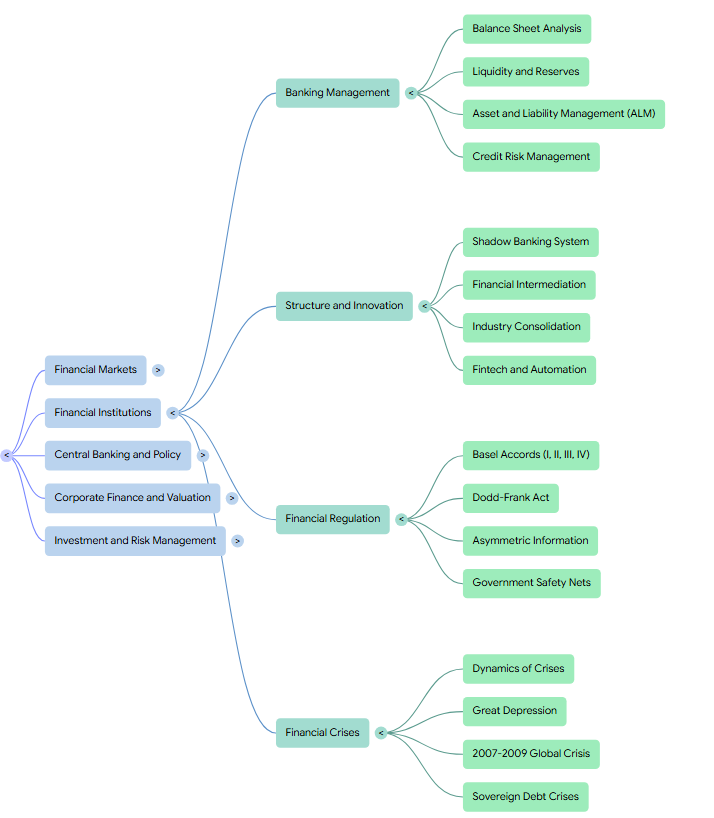
— Linden Lake
This series:
→ Domain Overview (1 of 5): Financial Markets
→ Domain Overview (2 of 5): Financial Institutions
→ Domain Overview (3 of 5): Central Banking and Policy
→ Domain Overview (4 of 5): Corporate Finance and Valuation
→ Domain Overview (5 of 5): Investment and Risk Management
→ Domain Mapping Methodology
Leave a Reply