
In real estate finance and investments, a property’s physical characteristics represent only half of its value; the other half is dictated by the abstract legal rights and interests that govern its ownership, use, and transfer. As outlined in the book, legal concepts serve as the foundation of risk management in real estate transactions, directly impacting the safety of a lender’s collateral and the predictability of an investor’s return.
The book details these legal concepts across several core areas, defining how property rights are classified, transferred, and utilized as security for debt.
1. Realty, Personalty, and the Statute of Frauds
The legal system distinguishes fundamentally between two types of property:
- Realty (Real Estate): Comprises the land and all things permanently attached to it, such as buildings and structures.
- Personalty (Personal Property): Comprises all intangibles and movable items, such as automobiles, stocks, and bank accounts.
- Fixtures: Items that were once personal property but have become real property by virtue of being permanently attached to a building (such as a furnace or a built-in dishwasher). Because fixtures can create legal ambiguity during a sale, real estate contracts conventionally include a detailed list to specify exactly which fixtures are being conveyed.
Because real estate transactions involve high economic stakes, English common law established the Statute of Frauds in 1677. This rule, which remains a cornerstone of property law today, dictates that all contracts for the sale or transfer of real estate must be in writing and signed to be legally enforceable. Conversely, oral contracts involving personal property may still be legally binding.
2. Property Rights and the Division of “Estates”
An investor does not merely buy physical land; they purchase a bundle of property rights, which include the rights to control, occupy, develop, improve, pledge, lease, and sell the real estate. An estate in real property describes the legal extent to which these rights and interests are owned. These estates are classified by rights and duration:
- Estates in Possession vs. Not in Possession: An estate in possession provides the owner with an immediate right to occupy and enjoy the property. An estate not in possession represents a future estate (such as a reversion, which returns the property to the grantor or their heirs, or a remainder, which passes the future interest to a third party). Both reversions and remainders are legally recognized interests that can be sold or mortgaged.
- Freehold vs. Leasehold: A freehold estate connotes actual ownership and is of indefinite duration, with a fee simple estate representing the most complete form of ownership possible. A leasehold estate (e.g., an estate for years) connotes only a possessory right to use property owned by another for a specified period.
- Leased Fee Estates: When an owner leases a property, they convey a leasehold estate to the tenant while retaining a leased fee estate. The value of this leased fee estate is tied to the expected rental payments plus the value of the property when the lease expires and the reversionary interest is realized.
The book emphasizes that the ability to legally partition these rights allows different parties (users, equity investors, and lenders) to claim the specific benefits that best suit their financial needs, often maximizing the overall value of the property.
3. Title, Deeds, and Title Assurance
Before purchasing or lending against real estate, buyers and lenders must have title assurance—an independent verification that the seller actually owns and can convey the property free of unexpected encumbrances.
- Title and Deeds: Title is the abstract concept linking an owner to a specific property. Title is officially conveyed from a grantor to a grantee via a written instrument called a deed. To be viable for financing, a property must have a marketable title, meaning it is “free from reasonable doubt” and reasonably free from potential litigation so a prudent purchaser or lender will accept it.
- Deeds of Conveyance: A general warranty deed offers the buyer the most comprehensive protection, as the grantor warrants that the title is clear of all unlisted encumbrances and promises to compensate the grantee for any losses from superior future claims. Qualified deeds, such as special warranty deeds, bargain and sale deeds, or quitclaim deeds, offer significantly fewer protections and limit the grantor’s liability.
- Methods of Title Assurance: The book outlines three primary methods:
- Deed Warranties: Relying strictly on the personal covenants of the seller.
- Abstract and Opinion Method: An attorney conducts a historical search of public records and drafts a professional opinion on the title’s validity.
- Title Insurance: A policy that indemnifies the holder against financial loss due to hidden title defects or undiscovered hazards. Because an attorney’s opinion only covers negligent record searches, title insurance has become the preferred industry standard and is universally required for mortgages traded in the secondary market.
- Recording Acts and Liens: States utilize recording acts to register all property transactions, which provides constructive notice to the public and establishes a clear priority of claims. One common “cloud” on a title is a mechanics’ lien, which gives unpaid contractors, workers, or material suppliers the right to attach a lien to a property they improved and foreclose on it to recover what they are owed.
4. Legal Instruments of Finance: Notes and Mortgages
When real estate is financed, two distinct legal documents are executed simultaneously to define the obligations of the borrower and lender:
- The Promissory Note: Serves as the unambiguous evidence of the debt. It outlines the loan amount, interest rate, payment terms, maturity date, and default penalties. The book emphasizes the critical distinction between recourse financing (where the borrower is personally liable for the debt, allowing the lender to sue and seize other personal assets upon default) and nonrecourse financing (where a nonrecourse clause releases the borrower from personal liability, limiting the lender’s recovery strictly to foreclosing on the secured property).
- The Mortgage Instrument: A separate document in which the borrower (mortgagor) pledges the real property as security for the obligation defined in the note to the lender (mortgagee). In a default, unless nonrecourse provisions exist, the mortgagee has dual recourse: they can sue on the note and foreclose on the mortgage simultaneously.
- Mortgage Covenants: Binding promises within the mortgage (such as paying property taxes, maintaining hazard insurance, and preventing physical waste) designed to preserve the collateral’s value. Breaching these covenants, even if monthly loan payments are kept current, constitutes a technical default and permits the lender to exercise an acceleration clause, demanding immediate repayment of the entire outstanding loan balance.
- Transfer of Mortgage Liabilities: When a property is sold, the new buyer can assume the mortgage (assumption of mortgage), shifting primary responsibility for the debt to the buyer, though the seller remains liable as a surety unless formally released by the lender. Alternatively, the buyer can take title “subject to” the mortgage, meaning the buyer assumes no personal liability on the note but will make payments to protect their equity, leaving the original seller entirely liable if a default occurs.
5. Foreclosure, Workouts, and Bankruptcy
When defaults cannot be resolved, the legal rights of both parties dictate how the property is liquidated or restructured:
- Workouts: Before embarking on foreclosure, lenders and borrowers often negotiate a workout agreement. Workouts can involve restructuring the loan terms, executing a short sale (selling the property for less than the loan balance with lender approval), or a voluntary conveyance. A voluntary conveyance, often called a deed in lieu of foreclosure, transfers title directly to the lender to save time and expense, though it has the major disadvantage of not cutting off subordinate (junior) liens on the property.
- Foreclosure: If a workout is not possible, the lender can seek judicial foreclosure, obtaining a court decree to force a public sale of the property. Foreclosure successfully cuts off the claims of junior lienholders, provided they were properly made parties to the foreclosure suit.
- Deed of Trust: Used in some jurisdictions instead of a standard mortgage, a deed of trust involves three parties. The borrower conveys title to a neutral third-party trustee, who holds it as security for the lender (beneficiary) and possesses the power of sale in the event of default.
- Bankruptcy: Filings under Chapters 7, 11, or 13 of the Bankruptcy Code significantly impact secured lenders. A Chapter 11 filing, for instance, is a court-supervised reorganization that can tie up a lender’s secured collateral for years, preventing immediate foreclosure even on a debtor’s personal residence if it interferes with the reorganization plan.
6. Limitations on Property Rights
Even a complete fee simple estate is subject to legal limitations on ownership:
- Government Restrictions: Emanate from the police power of the state to protect public health, safety, and welfare. These are implemented locally through zoning ordinances (allowable uses, height limits, parking ratios) and building codes, as well as eminent domain and government control over water or mineral rights.
- Private Deed Restrictions: Property owners can voluntarily write deed restrictions (restrictive covenants) into deeds to limit the future use of a property by all subsequent owners. These are frequently used by developers of subdivisions to enforce aesthetic conformity, building sizes, and materials, thereby preserving neighborhood quality and protecting property values.
Property Classifications
Under English common law, which serves as the basis for property law in the United States, the legal system classifies “things” into two primary categories: realty (real estate) and personalty (personal property).
Realty vs. Personalty
- Realty (Real Estate): Comprises the land and all things permanently attached to it, such as buildings, sidewalks, and other immovable structures.
- Personalty (Personal Property): Comprises all other items that are not considered realty, which includes intangibles and movable objects such as automobiles, shares of stock, bank accounts, patents, and furniture.
The book emphasizes that the legal system treats these two classifications very differently. Historically, real estate transactions and disputes carried significant economic weight. Because oral agreements were difficult for courts to resolve, a pragmatic legal solution evolved through the Statute of Frauds in 1677. This rule requires that all transactions involving the transfer of realty must be evidenced by a written, signed contract to be legally enforceable. In contrast, transactions involving personalty are generally not subject to these strict written requirements, and oral contracts for personal property may remain legally binding.
Furthermore, real estate requires a highly organized public record-keeping system to catalog land boundaries, deeds, and changes in ownership, whereas personal property transactions typically rely on simpler evidence such as invoices or purchase orders.
The Intermediate Classification: Fixtures
A common area of legal and transactional ambiguity involves fixtures—items that began as personal property but have become legally classified as real property because they have been permanently attached to the land or a building. Examples of fixtures include built-in dishwashers, furnaces, and garage door openers.
Because the boundary between personalty and fixtures can be a point of conflict during property transfers, the book notes that purchase and sale contracts conventionally include a detailed, written schedule of all items being conveyed to reduce legal ambiguity between the buyer and seller.
Real Estate vs. Real Property
Beyond classifying physical “things,” the legal framework distinguishes between the physical asset itself (real estate) and the bundle of legal rights associated with it (real property or real property rights).
These real property rights include the rights of a person to the possession, use, enjoyment, control, development, and disposal of their property. Specifically, an owner has the rights to control, occupy, develop, improve, exploit, pledge, lease, exclude, and sell the real estate. Because these rights are independent, they can be separated and parceled out to different parties—for instance, by leasing the property to a tenant or pledging it to a lender as collateral—without the owner relinquishing ultimate ownership.
Legal Classifications of “Estates”
The legal system uses the term estate to describe the exact extent to which an individual owns rights and interests in a parcel of real estate. The book outlines two primary legal frameworks for classifying these estates:
- Based on Rights (Possession): This classifies interests into estates in possession and estates not in possession (also known as future estates). An estate in possession entitles the holder to the immediate enjoyment and use of the property. An estate not in possession represents a future possessory interest—such as a reversion (where the property legally returns to the grantor or their heirs) or a remainder (where the future interest is designated to pass to a third party)—which only converts into active possession upon a specific future event.
- Based on Possession and Use (Duration): This divides estates into freehold estates and leasehold estates. A freehold estate connotes actual ownership and is of indefinite duration, with a fee simple estate representing the most complete form of ownership possible under the law. In contrast, a leasehold estate connotes only a possessory right to use and occupy property owned by another for a definite, specified duration (such as an estate for years, which is created by a written lease contract).
The book emphasizes that the ability to legally partition property rights into these distinct estates allows different parties (such as equity investors, users, and lenders) to claim the specific benefits that best suit their financial needs, which frequently maximizes the overall economic value of the property.
Real Property (Realty)
In the larger context of property classifications, the book distinguishes between the physical asset of land and its attachments, and the abstract legal rights that govern them. These distinctions form the absolute foundation of real estate finance and investment.
The book outlines several key classifications, legal treatments, and divisions of property rights.
Realty vs. Personalty
Under English common law, from which much of the property law in the United States evolved, the legal system classifies all “things” into two primary categories:
- Realty (Real Estate): Historically refers to the physical land and all things permanently attached to it, such as immovable structures like buildings and sidewalks. In current business practice, the term “real estate” is generally used to mean this physical land and its permanent improvements.
- Personalty (Personal Property): Comprises all other assets not considered realty, including intangibles and movable items (e.g., automobiles, shares of stock, bank accounts, furniture, and patents).
The term estate technically means “all that a person owns,” which encompasses both realty and personalty. Therefore, real estate represents the portion of an individual’s total estate that consists of realty.
Legal Distinctions and the Statute of Frauds
The legal system treats realty and personalty very differently due to the historical and economic significance of land. Under English common law, disputes over real estate boundaries, ownership, and possession were highly disruptive and difficult to resolve when based solely on oral testimony.
To solve this, the Statute of Frauds was enacted in 1677. It established a rule that remains active today: all contracts involving the transfer or sale of real estate must be in writing and signed to be legally enforceable. Conversely, many transactions involving personalty are not subject to these strict contractual requirements, and oral agreements for personal property can be legally binding.
Additionally, because real estate is immobile, it requires a highly organized public record-keeping system (recording acts) and precise geographical surveys to document and establish historical ownership and priority of claims. Personal property does not require this level of public cataloging.
Real Estate vs. Real Property Rights
The book emphasizes that we must distinguish between the physical asset (real estate) and the legal rights associated with it (real property or real property rights).
When investing in real estate, an investor acquires a “bundle” of property rights. These rights include the right to:
- Control, occupy, and exclude others
- Develop, improve, and exploit
- Pledge (as collateral), lease, and sell
These property rights are independent and can be legally separated. For example, an owner can lease the property to a tenant or pledge it to a lender as security for a loan without giving up ultimate ownership. The total value of a property is determined by what individuals are willing to pay for the flow of benefits associated with this complete bundle of rights.
The Gray Area: Fixtures
An intermediate category between personalty and realty is fixtures. Fixtures are items that were once personal property but have become legally classified as real property because they have been permanently attached to the land or a building (e.g., built-in dishwashers, furnaces, and garage door openers).
Because the boundary between personal property and fixtures can cause disputes during property transfers, real estate purchase contracts conventionally include a detailed, written schedule of all items being conveyed to reduce ambiguity between the buyer and the seller.
Legal Classifications of “Estates in Real Property”
The book uses the term estates in real property to describe the exact legal extent to which rights and interests in real estate are owned. These estates are classified in two main ways:
1. Based on Rights (Possession)
- Estates in Possession: Entitle the holder to the immediate enjoyment and use of the property.
- Estates Not in Possession (Future Estates): Do not convey possessory rights until a specified event occurs in the future. The two most common future estates are reversions (where the property legally returns to the grantor or their heirs) and remainders (where the future interest passes to a designated third party). Both reversions and remainders are legally recognized interests that can be sold or mortgaged.
2. Based on Duration and Ownership
- Freehold Estates: Connote actual ownership of the property and are of indefinite duration. The fee simple estate is the most complete form of freehold ownership, giving the owner maximum freedom to divide, lease, sell, or mortgage the property. A life estate is a freehold estate that only lasts as long as the life of a designated person, which severely limits its marketability and collateral value due to uncertainty.
- Leasehold Estates: Connote only a possessory and usage right to property owned by another for a definite, specified duration (such as an estate for years, which is created by a written lease).
The book concludes that the ability to legally partition property rights into these various estates allows different parties (users, equity investors, and lenders) to claim the specific benefits that best meet their financial needs, which frequently maximizes the overall economic value of the property.
Personal Property (Personalty)
As detailed in the book, understanding the distinction between realty (real property) and personalty (personal property) is a fundamental legal prerequisite for analyzing real estate finance and investment. The legal system treats these two classifications of “things” in vastly different ways, impacting how they are transacted, pledged as collateral, and depreciated for tax purposes.
1. Definition and Characteristics of Personalty
The book classifies all assets that are not considered realty as personalty or personal property.
- Physical Nature: While realty consists of land and anything permanently attached to it, personalty is defined as any tangible or intangible asset that is movable.
- Examples: Common examples of personalty include physical movables like automobiles and furniture, as well as intangibles such as shares of stock, bank accounts, patents, and business contracts.
- Personal Property Rights: Similar to real property rights, the owner of personal property possesses a “bundle of rights,” which includes the rights to possess, use, enjoy, control, and dispose of the personalty.
2. Legal Requirements and Enforceability
Because real estate has historically carried massive economic and survival significance, English common law developed strict standards to settle property disputes, which heavily relied on oral testimony and were difficult to resolve.
- The Statute of Frauds (1677): To reduce these disputes, a pragmatic legal rule was established requiring that all transactions involving the transfer of real estate be in writing and signed to be legally enforceable.
- Enforceability of Personalty: In contrast, transactions involving personalty are generally not subject to such strict written mandates. Under the legal system, oral contracts for personal property are frequently enforceable, and transactions are typically evidenced by simpler, informal documentation such as purchase orders, invoices, or receipts.
- Public Recording: Furthermore, while real estate requires an elaborate, county-level public record-keeping system (recording acts) to establish a clear historical timeline of ownership and resolve priority disputes, personal property generally does not require public registry to assert or protect ownership claims.
3. The Transition Boundary: Fixtures vs. Chattels
A frequent source of transactional and legal ambiguity in real estate involves items that sit on the boundary between personalty and realty, known as fixtures.
- Fixtures: These are items of tangible personal property (also legally referred to as chattel) that were once personal property but have legally become real property because they have been attached to a land or building in a somewhat permanent manner. Examples include built-in dishwashers, furnaces, and garage door openers.
- Reducing Ambiguity: Because the line between personal property and fixtures can spark conflict during property transfers, the book notes that purchase and sale contracts conventionally include a detailed, written schedule specifying which items are considered personal property and which are fixtures being conveyed to the buyer.
- Trade Fixtures: A notable exception to this rule is trade fixtures—personal property installed on a leased premises by a tenant for use in their business (such as display shelving). The law generally protects these items, allowing them to retain their character as personal property rather than becoming part of the real estate, and they are typically excluded from coverage under a standard real estate mortgage.
4. Financing and Taxation Implications
In real estate finance and investments, the classification of an asset as personal property heavily influences how it is handled by lenders and the tax code:
- Loan Security: When securing financing, borrowers typically pledge their real estate as collateral, but in many cases, they may also contemporaneously pledge personal property to obtain loans.
- Tax Depreciation: The distinction between real and personal property is highly critical when projecting an investment’s after-tax cash flows. Real property improvements (buildings) must be depreciated over long periods on a straight-line basis (e.g., 27.5 years for residential and 39 years for nonresidential). However, personal property (such as furniture, fixtures, or specific tenant improvements) can be depreciated over a much shorter time period (e.g., 7 or 8 years under the tax law). Often, these personal property assets are eligible for accelerated depreciation methods (like double-declining balance), which can significantly enhance an investor’s early tax shelter benefits.
Fixtures
As discussed in the book, the classification of property is divided into two primary domains: realty (real property or real estate) and personalty (personal property). Sitting directly at the transition boundary between these two classifications are fixtures.
The book details several crucial legal and financial aspects of fixtures, highlighting how they transition from personal property to real property, the transactional ambiguities they create, their legal exceptions, and their role as mortgage collateral.
1. Definition and Transition of Fixtures
A fixture is defined as an item of tangible personal property (also referred to as chattel) that was once personal property but has legally become real property. This legal transformation occurs because the item has either been attached to the land or building in a somewhat permanent manner, or is intended to be used with the land and building on a permanent basis.
The book provides several common household examples of fixtures, including:
- Built-in dishwashers
- Furnaces
- Garage door openers
Because fixtures are legally classified as real property, they are normally conveyed to the buyer when a property’s title is transferred, whereas unattached personal property typically remains with the seller.
2. Transactional Ambiguity and Contractual Safeguards
Due to the hybrid nature of fixtures, they have historically generated a significant amount of case law and legal controversy regarding whether specific items should be classified as personalty or realty in a dispute.
To prevent conflicts and eliminate ambiguity over what is actually being conveyed, the book notes that real estate transactions rely on a protective contract measure. In practice, a detailed, documented list of all items that could be considered either personal property or fixtures is drawn up and integrated directly into the purchase and sale agreement. This ensures both the buyer and seller have a mutual, written understanding of the property being transferred.
3. The Exception of “Trade Fixtures”
An important legal exception to the general rules of fixtures is the category of trade fixtures. These are items of personal property installed on a leased premises by commercial tenants specifically for use in their business operations, such as shelves used to display retail merchandise.
Unlike residential fixtures, the law is in general agreement that trade fixtures retain their character as personal property. Because they do not legally become part of the real estate, the tenant has the right to remove them when the lease terminates, and they are generally excluded from coverage under a standard real estate mortgage.
4. Fixtures in Real Estate Finance
Lenders pay close attention to fixtures because they directly impact the value of the collateral securing a mortgage loan:
- Mortgage Coverage: The property pledged as security under a standard mortgage instrument legally covers not only the land and existing buildings but also easements and fixtures. Because standard fixtures are considered part of the real property, they serve as collateral, and the lender has a secured interest in them.
- After-Acquired Property Clause: Commercial and residential mortgages typically feature an “after-acquired property clause”. This clause dictates that any additional fixtures or improvements installed on the property at any point in the future—as long as the mortgage debt remains outstanding—automatically become part of the real estate and are swept into the lender’s secured collateral.
Estates in Possession
In the book, an estate is defined broadly as “all that a person owns,” while estates in real property specifically describe the legal extent to which rights and interests in real estate are owned. When examining these concepts in the larger context of real estate finance and investment, the book establishes a critical distinction between estates that are currently possessory and those that represent future interests.
Definition and Significance of Estates in Possession
An estate in possession (also referred to as a present estate in land) entitles its owner to the immediate enjoyment and use of the rights associated with that estate.
- Prevalence: They are by far the most common type of estate, and they are typically what individuals have in mind when discussing property ownership.
- Lender and Investor Interest: When evaluating whether to purchase or finance a property, lenders and investors must carefully analyze the exact nature of the estate in possession, as it directly dictates the current bundle of rights serving as security or generating returns.
- Contrast with Future Estates: An estate in possession is contrasted with an estate not in possession (a future estate, such as a reversion or a remainder). Future estates do not convey possessory rights or enjoyment of the property until a specific event occurs in the future.
Classifications of Estates in Possession
Under the legal concepts outlined in the book, estates in possession are divided into two main categories, primarily distinguished by the definiteness or certainty of their duration:
1. Freehold Estates
A freehold estate connotes actual ownership of the property by the holder and is of an indefinite duration (meaning there is no fixed date on which the estate ends). The book highlights two common examples:
- Fee Simple Estate: The most complete form of real estate ownership. Subject only to government restrictions, the holder of a fee simple absolute estate has maximum freedom to divide the fee into lesser estates, lease it, sell it, or borrow against it at will. It is the most common estate encountered in typical lending and investment transactions.
- Life Estate: A freehold estate that only lasts for the duration of a designated person’s life. While it can be legally mortgaged, sold, or leased, its value as collateral and its marketability are severely limited because of the inherent uncertainty surrounding the duration of the life that defines it.
2. Leasehold Estates
A leasehold estate connotes possession and use of property owned by another person for a specified period, rather than actual ownership. These estates expire on a definite, ascertainable date. Key types include:
- Estate for Years: Created by a written lease that specifies an exact termination date. This is the most common type of leasehold estate that investors and lenders encounter. If the contract rent falls below market rates, this possessory right gains a distinct “leasehold value” that can be sold or borrowed against.
- Estate from Year to Year (Periodic Tenancy): Continues for successive periods (such as month-to-month) and is typically short-term, meaning it can be established through an oral agreement. It is terminated only when one of the parties provides proper notice.
Financial Value of Partitioning Present Estates
A key concept emphasized in the book is that the legal system allows owners to creatively partition and separate these estates. For example, a fee simple owner can lease their property to a tenant, creating a leased fee estate for themselves and a leasehold estate for the tenant.
By legally carving up these rights and interests, different parties (such as developers, tenants, and lenders) can claim the specific property benefits that match their unique financial goals. Ultimately, this capacity to split and bundle property rights frequently maximizes the overall economic value of the real estate beyond what it would be worth as a single, undivided asset.
Freehold Estates
Under the legal framework detailed in the book, estates in possession represent present interests in land that entitle their holders to the immediate enjoyment and use of the associated property rights. Within this category, present estates are divided into freehold and leasehold estates, which are distinguished primarily by the definiteness or certainty of their duration.
While a leasehold estate expires on a definite date, a freehold estate connotes actual ownership of the property and lasts for an indefinite period of time, meaning there is no definitely ascertainable date on which the estate ends.
Primary Types of Freehold Estates
The book details two primary examples of freehold estates, which carry vastly different implications for real estate investors and lenders:
- Fee Simple Estate (or Fee Simple Absolute): This represents the most complete form of real estate ownership. A holder of a fee simple estate enjoys the maximum legal bundle of rights and is free to divide the fee into lesser estates, sell it, lease it to tenants, or borrow against it as they wish, subject only to government restrictions and state laws. Because it represents complete and unrestricted ownership, this is the estate that investors and lenders encounter in most real estate investment and lending transactions.
- Life Estate: This is a freehold estate that possesses fewer ownership rights than a fee simple estate, lasting only as long as the life of the owner or another designated person. Upon that person’s death, the property reverts to the original grantor, their heirs, or a designated third party (known as a remainder). Although a life estate is technically a mortgageable interest that can be legally leased, sold, or pledged, its marketability and collateral value are severely limited because of the inherent uncertainty of its duration. Lenders are generally unwilling to accept a life estate as collateral for a standard loan because the security interest terminates immediately upon the death of the measuring life.
Ultimately, understanding whether a borrower holds a fee simple estate or a lesser freehold interest like a life estate is crucial, as it directly determines the quantity of rights being financed and the long-term viability of the lender’s collateral security.
Fee Simple Estate
According to the book, estates in possession (present interests that entitle their holders to immediate enjoyment and use) are broadly divided into freehold and leasehold estates. While leasehold estates are of a definite duration and connote only a temporary right to possess and use space owned by someone else, freehold estates connote actual ownership and last for an indefinite period of time (meaning there is no definitely ascertainable date on which they end).
Within this larger category of freehold estates, the book establishes the Fee Simple Estate (also known as a fee simple absolute estate) as the most comprehensive and legally robust form of property ownership.
Key Characteristics of the Fee Simple Estate
- The Most Complete Form of Ownership: The fee simple estate represents the maximum bundle of property rights legally possible. Subject only to state laws and government restrictions (such as zoning and building codes), the holder is granted absolute freedom to enjoy, use, lease, sell, or even give the property away without any special conditions, limitations, or restrictions.
- The Foundation of Real Estate Markets: Because of its complete and permanent nature, the fee simple estate is the primary interest that investors and lenders encounter in most real estate investment and lending transactions. While legal theory allows lesser interests to be mortgaged, typical mortgages are executed in relation to full fee simple ownership.
- The Power to Divide and Partition Rights: A holder of a fee simple estate is free to carve up their “fee” into lesser estates. For instance, the owner can lease the property to a tenant—conveying a leasehold estate to the lessee while retaining a leased fee estate for themselves. This ability to separate and package rights is key to maximizing property value, as it allows different parties (such as equity investors, users, and lenders) to partition the property benefits to meet their unique financial needs.
Fee Simple vs. Other Freehold Estates (The Life Estate)
To contextualize the completeness of the fee simple estate, the book contrasts it with a Life Estate, which is a freehold estate with significantly fewer ownership rights.
- A life estate only lasts for the duration of the life of the owner or another designated person.
- Once that measuring life ends, the estate terminates and the property automatically reverts to the original grantor (a reversionary interest) or passes to a designated third party (a remainder interest).
- Because of the absolute uncertainty surrounding how long a life estate will actually last, its marketability and its value as collateral for a loan are severely limited compared to a fee simple estate. Lenders are generally hesitant to finance life estates because their security interest would cease to exist upon the death of the measuring life.
Ultimately, while all freehold estates connote ownership of indefinite duration, the fee simple estate represents the peak of the hierarchy of property rights, serving as the legal bedrock upon which the modern real estate finance and investment industries are built.
Life Estate
In the hierarchy of present property interests (known as estates in possession), the book divides estates into freehold and leasehold categories. While a fee simple estate represents the most complete form of ownership, a life estate is a specific type of freehold estate that connotes ownership of indefinite duration but is characterized by having fewer ownership rights than a fee simple estate.
The book highlights several key aspects of life estates, including how they are created, their eventual disposition, and their serious limitations in real estate finance:
1. Definition and Duration
Unlike a leasehold, which has a fixed expiration date, a life estate is a freehold interest because its ending date is not definitely ascertainable. It lasts only as long as the life of the owner of the estate or the life of some other designated person. Because the duration of the estate is tied to a human lifespan, it is inherently uncertain.
2. Creation via Reserved Interests
Most life estates are created through the explicit terms of a property’s conveyance. A common practical scenario occurs when an owner (grantor) wishes to make a gift of their property prior to their death, yet still wants to retain the right to live in and enjoy the property for the rest of their life. The grantor achieves this by conveying the property to a grantee subject to a “reserved life estate”.
3. Reversions and Remainders
When the person whose life determines the duration of the estate dies, the life estate terminates. At that moment, the possessory rights of the property must go to one of two future estates:
- Reversion: The property rights revert back to the original grantor or the grantor’s heirs.
- Remainder: If the grantor designated at the time of conveyance that the future interest should pass to a third party upon the termination of the life estate, that third party holds a remainder interest.
4. Severe Financial and Marketability Limitations
In strict legal theory, a life estate is a fully transferable interest—meaning it can be leased, sold, or mortgaged. However, the book emphasizes that as a matter of sound business practice, its marketability and value as collateral for a loan are severely limited.
Any lender or investor considering a transaction involving a life estate must face the risk that the interest will end immediately upon the death of the measuring life. Because of this extreme uncertainty, traditional commercial lenders are generally unwilling to accept a life estate as sole collateral for a mortgage.
Leasehold Estates
Under the legal framework detailed in the book, estates in possession (present estates in land) entitle their owners to the immediate enjoyment and use of real property rights. Within this category, estates are split into freehold estates and leasehold estates. While a freehold estate connotes actual ownership of the property for an indefinite duration, a leasehold estate implies only the right to possess and use property owned by another for a specified, definite period.
The Split of Rights: Leasehold vs. Leased Fee
When a property owner leases their real estate, they carve up their fee simple absolute estate, transferring some of their property rights to the tenant (the lessee). This transfer creates two co-existing legal estates:
- The Leasehold Estate: Held by the tenant, representing the possessory and usage interest in exchange for rent.
- The Leased Fee Estate: Retained by the property owner (the lessor). The value of this leased fee estate depends on the stream of expected rent payments during the lease term plus the value of the property when the lease terminates and the owner realizes their reversionary interest.
The book notes that both estates have distinct financial values: the leased fee estate can be sold or pledged as security for a loan, and the leasehold estate also possesses borrowable “leasehold value” to the extent that the contract rent falls below current market rental rates.
Primary Types of Leasehold Estates
The book classifies leasehold estates based on the manner in which they are created and terminated, identifying two major types that investors and lenders commonly encounter:
1. Estate for Years (Tenancy for Terms)
This is the most common type of leasehold estate in commercial real estate finance and investments.
- Duration: It is created by a lease that specifies an exact duration or termination date (which can be less than a year or as long as 99 years by custom).
- Statute of Frauds: Under the Statute of Frauds, a lease representing an estate for years is generally required to be in writing and signed if it covers a term longer than one year to be legally enforceable.
2. Estate from Year to Year (Periodic Tenancy)
Also referred to as an estate from period to period, this interest represents a more transient tenancy.
- Duration & Termination: It continues for successive periods (such as month-to-month or week-to-week) until either the landlord or tenant provides proper notice of their intent to terminate the agreement at the end of a period.
- Creation: Because these periodic tenancies are short-term, they are frequently established via oral agreements. They can also be created without the express consent of the landlord—for example, if an estate for years expires and the tenant “holds over” (continues to occupy the space) while the landlord tacitly consents by accepting rent payments.
Financial Significance of Leaseholds
The book emphasizes that because a leasehold estate is a legally recognized interest that can be bought, sold, or mortgaged (subject to lease covenants), it serves as a critical mechanism in real estate finance. By partitioning property rights into leasehold and leased fee estates, owners can match the specific benefits of a property to parties with different needs (such as tenants who want to avoid the capital commitment of ownership, and lenders or investors who seek stable, secured cash flows). This ability to separate these rights ultimately helps maximize the overall economic value of the real estate asset.
Estate for Years
Within the broader category of estates in possession (present interests that allow immediate use and enjoyment of a property), the legal system distinguishes between freehold estates (representing ownership) and leasehold estates. While freehold estates are of indefinite duration, leasehold estates expire on a definite, specified date and connote only a possessory and usage right to property owned by another.
As detailed in the book, the estate for years (sometimes referred to as a tenancy for terms) is the most critical and common type of leasehold estate that real estate investors and lenders encounter.
Key Characteristics of an Estate for Years
- Definite Duration: An estate for years is created by a lease that specifies an exact duration or termination date. Although the name implies a multi-year term, a lease can cover a period of less than one year and still legally qualify as an estate for years, provided the exact ending date is specified. By custom, these estates rarely exceed 99 years in duration.
- The Statute of Frauds Prerequisite: Like other real estate contracts, leases are subject to the Statute of Frauds. The book notes that any lease representing an estate for years is generally required to be in writing and signed if it covers a term longer than one year in order to be legally enforceable.
- Contractual Definition of Rights: Because the relationship is defined by a contract (the lease), the specific rights, duties, and responsibilities of both the landlord (lessor) and the tenant (lessee) are explicitly enumerated in the lease agreement.
The Separation of Rights and Financial Value
When an owner leases property under an estate for years, the single “fee simple” interest is legally partitioned into two concurrent, valuable estates:
- The Leasehold Estate (The Tenant’s Interest): This possessory interest holds tangible economic value to the lessee if the contract rent specified in the lease is lower than the prevailing market rental rate. This premium—known as leasehold value—represents the excess cash savings the tenant enjoys. For example, if a tenant has the right to occupy a space for $1,000 per year when its fair market value is $2,000, the $1,000 annual difference constitutes leasehold value. Legal theory dictates that this interest is fully transferable and can be sold or even borrowed against (mortgaged), assuming there are no restrictive covenants in the lease preventing it.
- The Leased Fee Estate (The Owner’s Interest): The property owner relinquishes possessory rights but retains ownership of the leased fee estate. The financial value of this leased fee estate is determined by the present value of the expected rental payment stream during the lease term, plus the value of the property when the lease expires and the owner receives the reversionary interest. This leased fee estate can also be sold or pledged as collateral for a loan.
Ultimately, the book emphasizes that the ability to partition real estate into an estate for years allows owners, tenants, and lenders to divide and align a property’s economic benefits to match their distinct financial needs, thereby maximizing the asset’s overall market value.
Estate from Year to Year
Within the broader category of estates in possession, the book distinguishes freehold estates (which connote actual ownership of property for an indefinite duration) from leasehold estates, which connote only the possessory right to use and occupy property owned by another for a specified period of time.
In this context, the book identifies the estate from year to year (also known as an estate from period to period, or simply as a periodic tenancy) as one of the two major types of leasehold estates, alongside the estate for years.
1. Nature and Duration of the Estate
The defining legal characteristic of an estate from year to year is that it continues for successive periods until either the landlord or the tenant gives proper notice of intent to terminate at the end of one or more subsequent periods.
- The “Period”: The duration of each period usually corresponds directly to the rent-paying period. Consequently, these tenancies most commonly run from month to month, though they legally can run for any period up to one year.
- Termination: Unlike an estate for years, which has a fixed, predetermined expiration date, a periodic tenancy does not automatically expire. It requires active, contractually or legally proper notification from one of the parties to bring it to an end.
2. Methods of Creation
According to the book, an estate from year to year can be established in two primary ways:
- By Explicit Agreement: The parties can enter into an express agreement to rent the property on a periodic basis without specifying a final termination date. Because these estates are almost always short term (a year or less), the legal system does not apply the strict written requirements of the Statute of Frauds; thus, the agreement can be, and frequently is, entirely oral.
- By Holding Over (Without Express Consent): This estate can also arise without the express or written consent of the landlord. A common example occurs when a tenant “holds over”—meaning they continue to occupy the property beyond the expiration date of their original estate for years—and the landlord tacitly consents to this continued possession by accepting rent payments or giving other evidence of tacit agreement.
3. Implications for Real Estate Investors and Buyers
When properties encumbered by active tenants are bought or sold, these leasehold estates present specific operational and legal requirements for the buyer (grantee):
- Taking Title “Subject To”: If the existing tenants are scheduled to remain in possession after the transaction, the buyer must agree to take title subject to the existing leases.
- Prorating and Deposits: The transaction agreement must explicitly provide for the prorating of current rents and the formal transfer of security deposits from the seller to the buyer.
- Due Diligence: Because leases are binding on the new owner, buyers should always reserve the right to thoroughly examine and approve all active leases to verify that they are in force, are completely free of undesirable provisions, and are not currently in default.
Future Estates
Under the legal concepts outlined in the book, future estates (technically referred to as estates not yet in possession) represent a future possessory interest in real property. Unlike present estates, which grant the holder immediate enjoyment and use of the property, a future estate does not convey possessory rights until a specific event occurs in the future.
Despite not being currently possessory, these future interests are legally recognized as actual property rights. The book highlights the two most important types of future estates: reversions and remainders.
1. Reversions
A reversion is created when a property owner (the grantor) transfers a present estate that contains fewer ownership rights than the grantor’s own estate to a grantee, while retaining the right for the grantor or their heirs to take back the full estate in the future.
- Reversionary Fee Interest: When this transfer occurs, the grantor is said to hold a reversionary fee interest in the property.
- Example in Leasing: Reversions are a fundamental component of commercial leasing. When an owner leases a property, they convey a temporary leasehold estate to the tenant while retaining a leased fee estate. The financial value of the owner’s leased fee estate is determined by the present value of the expected lease payments plus the value of the property when the lease terminates and the owner realizes their reversionary interest.
2. Remainders
A remainder is created when a grantor transfers a present estate with fewer ownership rights than their own to a grantee, but instead of retaining the future interest for themselves or their heirs, the grantor conveys that future interest to a designated third party.
- The Third-Party Interest: This future interest held by the third person is the remainder.
- Example in Life Estates: If a grantor conveys a property to a grantee for life, and specifies that the property will pass to a third party upon the grantee’s death, the third party holds a remainder interest.
3. Significance in Real Estate Finance and Investments
In the broader context of real estate finance, future estates are highly significant because they represent tangible, legally recognized property interests.
- Mortgageable Interests: Because they are actual interests in property, both reversions and remainders can be legally sold or mortgaged.
- Lender Underwriting: In legal theory, any interest that can be transferred can be mortgaged, meaning a lender can accept a reversion or a remainder as collateral for a loan. However, as a matter of sound business judgment, lenders must carefully evaluate the risk associated with these lesser interests. For instance, if a reversion or remainder is tied to a life estate, the absolute uncertainty of when the measuring life will end severely limits its marketability and its practical value as collateral.
Ultimately, the ability to separate present possessory estates from future estates is a key mechanism for partitioning property rights. This allows developers, equity investors, and lenders to claim the specific cash flows and interests that match their risk-return profiles, maximizing the overall economic value of the property.
Reversion
Future estates (or estates not yet in possession) are defined in the book as property interests that do not convey the right of immediate possession or enjoyment of the property. Instead, they represent a future possessory interest that generally only converts into an active estate in possession upon the occurrence of a specified future event. The two most significant and common classifications of future estates are reversions and remainders.
1. Legal Definition and Mechanics of a Reversion
A reversion exists when the holder of an estate in land (the grantor) conveys a present estate to a grantee that contains fewer ownership rights than the grantor’s own estate, while actively retaining the right for the grantor or the grantor’s heirs to retake the full estate in the future.
During the period in which the grantee holds possession under their limited estate, the grantor is said to hold a reversionary fee interest in the property. Because this is a legally recognized, actual interest in the real estate, it possesses tangible value and can be independently sold or mortgaged as security for a loan.
2. Reversion in Leasing: The Leased Fee Estate
One of the most common and financially significant applications of a reversionary interest occurs in the leasing of commercial real estate. When a property owner leases their real estate, they carve up their fee simple absolute estate, transferring possessory and usage rights to the tenant (the lessee) in the form of a leasehold estate.
By doing so, the property owner retains a leased fee estate. The economic and financial value of this leased fee estate is fundamentally driven by two components:
- The stream of expected rental payments to be received during the lease term.
- The value of the property when the lease eventually terminates and the owner realizes their reversionary interest, receiving the full estate back.
Because the owner retains this reversionary right, the leased fee estate holds substantial investment value and can be sold to a new buyer or pledged as collateral for a mortgage.
3. Reversions in Life Estates and Deeds of Trust
Reversions are also the primary legal mechanism governing the eventual disposition of other real estate instruments:
- Life Estates: A life estate is a freehold interest that connotes ownership but only lasts for the duration of a designated person’s life. Because its ending date is tied to a human lifespan, its exact duration is uncertain. Upon the death of the measuring life, the present estate ends, and the property automatically reverts back to the original grantor or their heirs (unless a remainder was explicitly granted to a third party).
- Deeds of Trust: When real estate is financed using a deed of trust, the borrower conveys title to a neutral third-party trustee as security for the lender. Technically, the borrower retains a reversionary interest in the property. Once the underlying debt is fully repaid, the trust agreement is satisfied, and the title to the property automatically reverts back to the borrower.
4. Reversion Value (REV) in Investment Valuation
In real estate finance and appraisal, the legal concept of reversion directly translates into the financial term reversion value (REV), which represents the expected resale price of a property at the end of an investment holding period.
When performing a discounted cash flow (DCF) analysis, an investor estimates the net operating income (NOI) for each year of a projected holding period. To capture the value of all cash flows expected to occur beyond this holding period, the investor estimates the reversion value—often by capitalizing the expected NOI of the year following the holding period using a terminal capitalization rate.
This future resale price represents the monetization of the investor’s reversionary interest. To estimate the total value of the property today, the appraiser calculates the present value of the annual operating cash flows and adds it to the present value of this projected reversion value.
Remainder
Future estates (formally referred to as estates not yet in possession) represent future possessory interests in real property that do not convey the right of immediate possession or enjoyment. Instead of offering immediate use, these estates represent a future possessory interest that generally does not convert into an active estate in possession until a specific future event occurs. Within this category, the book identifies remainders and reversions as the two most important classifications of future estates.
Definition and Legal Mechanics of a Remainder
A remainder is established when a property owner (the grantor) transfers a present estate with fewer ownership rights than their own (such as a life estate) to a grantee, but instead of retaining the future right to retake the property, the grantor directs that this future possessory interest be conveyed to a designated third party.
Technically, the book defines a remainder as the interest created when the grantor conveys to a third person the reversionary interest that the grantor or their heirs would otherwise have held upon the termination of the grantee’s limited present estate. Therefore, a remainder serves as the future estate designated for that third person.
A classic example of a remainder occurs in the context of a life estate:
- If an owner transfers property to a tenant for the duration of that tenant’s life (a present freehold estate of indefinite duration), the owner can specify that upon the tenant’s death, the property must pass to a designated third party.
- In this arrangement, the present tenant holds the possessory life estate, while the designated third party holds the future interest, known as the remainder.
Remainder as a Mortgageable Interest
A critical financial characteristic of a remainder highlighted in the book is that a remainder is a mortgageable interest in property.
Because it constitutes a legally recognized, actual interest in real estate, it holds value and can be legally sold, transferred, or pledged to a lender as security for a loan. However, as a matter of commercial lending practice, the uncertainty of when the possession of the estate will actually materialize can limit its usefulness as collateral. For instance, the book points out that when a future estate is tied to a life estate, the inherent uncertainty surrounding the duration of that life estate severely limits its practical marketability and value as collateral.
Ultimately, understanding how present estates in possession are legally partitioned from future estates like remainders allows investors, developers, and lenders to strategically analyze the exact bundle of property rights being financed or acquired.
Title Assurance
As explained in the book, when investing in real estate, buyers are not merely purchasing a physical asset of land and buildings; they are acquiring a bundle of legal property rights. Because these transactions involve high economic stakes, a central focus in the legal framework of real estate finance is title assurance.
Title assurance refers to the formal mechanisms by which buyers of real estate learn in advance whether a seller actually has the legal right to convey the quality of title they claim to possess, and by which buyers receive financial compensation if the title, after transfer, turns out to be defective or not as represented. This concept is equally critical to mortgage lenders, as any defect in a property’s title directly jeopardizes the value of the collateral securing their loan.
1. Title, Deeds, and the Standard of “Marketability”
To understand title assurance, the book establishes a clear legal distinction between several foundational concepts:
- Title: This is an abstract legal concept that links an owner to a specific parcel of real estate. Having “title” means possessing all of the necessary legal records, documents, and acts that prove ownership.
- Deeds: Title is officially conveyed from a grantor (seller or donor) to a grantee (buyer or heir) through a written legal instrument called a deed. Under the Statute of Frauds, all deeds must be written to effect a valid transfer of real property.
- Good and Marketable Title: A purchaser’s ultimate goal is to obtain a “good and marketable title”.
- A good title is simply one that is valid in fact (meaning the grantor truly owns what they claim).
- A marketable title is one that is valid in fact and is “free from reasonable doubt,” reasonably free from the threat of litigation, and readily acceptable to a prudent buyer or mortgage lender.
While encumbrances—such as mortgages, leases, or easements—do not automatically make a title unmarketable, they must be explicitly disclosed in the deed so the buyer can evaluate their impact on the property’s value.
2. The Three Methods of Title Assurance
The book outlines three primary methods used in the real estate industry to establish title assurance:
A. Deed Warranties
The first method of assurance relies on the covenants (binding legal promises) that a seller writes directly into the deed of conveyance. However, a deed can only convey the quality of title that the grantor actually possesses; it cannot magically cure existing defects. The level of assurance varies drastically depending on the type of deed utilized:
- General Warranty Deed: The most desirable deed for a buyer. The grantor warrants that the title is free and clear of all encumbrances (except those explicitly listed) and legally covenants to compensate the grantee for any financial losses or evictions suffered due to a superior future title claim. These warranties cover the property’s entire history, from the original source of title to the present.
- Special Warranty Deed: The grantor offers the same covenants as a general warranty deed, but limits their application only to defects and encumbrances that arose while the grantor held title to the property. It offers no protection against title problems created by previous owners.
- Bargain and Sale Deed: Conveys the property completely “as is” without any covenants or warranties. The buyer takes title with no assurances and must take the initiative to uncover and cure any defects. A Sheriff’s Deed or Trustee’s Deed is a type of bargain and sale deed used in foreclosures or forced sales where the official is acting merely in a representative capacity and adds no warranties.
- Quitclaim Deed: Offers the grantee the least amount of legal protection. The grantor makes no covenants regarding the quality of the title; they simply “quit” whatever “claim” they may have (which might be none at all) in favor of the grantee. In practice, these are frequently used to clear up minor technical defects or “clouds” on a title.
B. The Abstract and Opinion Method
Historically the most common method of title assurance before the rise of modern insurance. It is a two-step process:
- Title Search: A trained professional conducts a search of public records (typically at the county recorder’s office) to locate and examine every recorded legal instrument that has historically affected the property’s title, compiling them into a historical summary called an abstract of title.
- Attorney’s Opinion: An attorney studies the abstract and issues a professional legal opinion regarding whether the title is good and marketable. If the title is “clouded” by imperfections, the attorney identifies the defects and outlines the legal steps required to “cure” them.
Under this method, the attorney’s legal liability is strictly limited to proof of negligence or a lack of professional skill in conducting the search.
C. The Title Insurance Method
To address the inherent gaps of the abstract and opinion method (such as hidden hazards not disclosed in public records), the title insurance industry emerged. Title insurance combines a rigorous record search with the actuarial principle of insurance to spread the financial risk of undiscovered title hazards among a pool of property owners.
Because an attorney’s opinion only protects against negligent record searches, the book notes that investors and lenders heavily prefer title insurance. In fact, title insurance is universally required for any mortgage that is traded in the secondary mortgage market.
There are two primary types of title insurance policies, both paid for with a one-time premium at closing:
- Owner’s Policy: Insures the interest of the new property owner (and their heirs) for the entire duration of their ownership.
- Lender’s (or Mortgagee) Policy: Insures the secured collateral interest of the lender for the outstanding term of the loan. The borrower is almost universally required to pay the cost of this policy at closing.
3. Legal Overlays: Recording Acts and “Hidden” Clouds
The effectiveness of all title assurance methods is legally supported by recording acts enacted in every state. These acts catalog all property transactions and establish that once a deed, mortgage, or easement is officially recorded, it constitutes constructive notice to the entire world. This public logging establishes a clear timeline, providing the baseline legal rules used to resolve priority disputes among competing claimants to the same property.
However, some “clouds” on a title may not immediately appear in public records. A prime example is a mechanics’ lien. State laws permit contractors, laborers, and material suppliers who have not been compensated for improvements to file a lien “after the fact” (typically within 60 days of work completion). Once filed, the mechanics’ lien “relates back” in priority to the day work first commenced, potentially leapfrogging subsequent claims. To manage this risk, lenders and purchasers of newly constructed or renovated properties routinely require contractors to sign lien waivers or require sellers to provide legal affidavits verifying that all bills have been paid in full.
General Warranty Deed
Title assurance is a fundamental process in real estate transactions, defined in the book as the formal means by which buyers of real estate “(1) learn in advance whether their sellers have and can convey the quality of title they claim to possess and (2) receive compensation if the title, after transfer, turns out not to be as represented”. This process is equally critical for mortgage lenders, as any defects in a property’s title directly jeopardize the collateral value of the real estate securing their loans. Within this broader framework of establishing a “good and marketable title”—one that is valid in fact, free from reasonable doubt, and reasonably free from the threat of litigation—the general warranty deed stands as the most comprehensive protective instrument a buyer can receive.
The Function and Covenants of a General Warranty Deed
As explained in the book, a deed is the written legal instrument used to officially convey title from a grantor to a grantee. While there are various types of deeds that offer differing levels of protection, the general warranty deed is the most commonly used and is highly desirable from the buyer’s perspective because it offers the most comprehensive warranties regarding the quality of the title.
Under a general warranty deed, the grantor warrants that the title is free and clear of all encumbrances except those specifically listed in the deed (such as existing easements or leases). Specifically, the book notes that a general warranty deed contains four major covenants:
- A covenant of seisin: A binding promise that the grantor actually owns the specific quantum of title being conveyed [94, 133n2].
- A covenant of the right to convey: A guarantee that the grantor has the lawful right and authority to transfer the property to the buyer.
- A covenant of quiet enjoyment (compensation): A promise to financially compensate the grantee for any loss of the property or eviction they might suffer as a result of a third party proving a superior claim to the property.
- A covenant against encumbrances: A promise that there are no encumbrances on the property other than those explicitly stated in the deed.
What uniquely distinguishes the general warranty deed from qualified deeds (such as special warranty deeds, which only cover the period of the seller’s immediate ownership) is its temporal scope. The covenants in a general warranty deed are legally binding across the entire history of the property, covering all previous conveyances from the original source of title to the present.
Limitations of the General Warranty Deed in Title Assurance
Despite the robust legal protection a general warranty deed promises, the book emphasizes that it cannot serve as a standalone solution for title assurance. This is due to two critical, practical limitations:
- The Deed Conveyance Limit: No deed, regardless of how sweeping or complete its warranties are, can convey a higher quality of title than the grantor actually possesses. If the seller’s title is fundamentally defective, the deed cannot magically cure those “clouds” or imperfections.
- Financial Capacity of the Grantor: A warranty is only as strong as the person making it. If a title defect emerges after the transaction and the buyer incurs a financial loss, the seller is legally liable under the covenants. However, if the seller has filed for bankruptcy, has disappeared, or simply does not have the financial resources to reimburse the buyer, the deed covenants become practically worthless.
For these reasons, very few buyers or lenders rely solely on the guarantees of title provided in deeds by the seller. To control and minimize title risk, they utilize independent, third-party title assurance methods—most notably title insurance or an attorney’s opinion of title—to verify the historical “chain of title” before the transaction is closed.
Special Warranty Deed
Building on our previous discussion of title assurance—the formal mechanism by which real estate buyers verify a seller’s ownership rights and secure protection against defective titles—deeds serve as the legal instruments used to officially convey these rights. While a general warranty deed provides a buyer with comprehensive protection across a property’s entire history, the book explains that when a seller is unsure of the title’s history or is simply unwilling to provide unlimited warranties, they will instead convey a qualified deed, such as a special warranty deed.
Core Legal Mechanics of a Special Warranty Deed
A special warranty deed makes the same fundamental covenants to a buyer as a general warranty deed, but with a critical temporal limitation: the grantor only warrants against defects and encumbrances that arose while the grantor held title to the property.
- The Owner-Specific Limit: Unlike a general warranty deed, the covenants in a special warranty deed do not apply to title problems caused or created by previous owners.
- The Grantor’s Liability: The seller only covenants that they personally have not done anything to encumber or cloud the title. The risk of any older, undiscovered title defects or liens is shifted entirely onto the buyer.
Practical Application in Distressed Properties
The book highlights a major real-world scenario where special warranty deeds are commonly utilized: distressed property transactions. When a commercial bank or lender acquires a property through foreclosure or a deed in lieu of foreclosure, they place it on their Real Estate Owned (REO) list for liquidation. When selling these REO assets to real estate investors:
- Lenders are often unwilling to provide a general warranty deed because they do not have complete historical knowledge of the property and want to limit their future liability.
- Instead, they will frequently offer to convey the title via a special warranty deed, guaranteeing only that the lender did not encumber the property during their brief period of holding the title.
- If any historical title imperfections, unrecorded easements, or senior liens exist from the pre-foreclosure era, the purchasing investor must take on that risk. The investor may then have to spend their own time and money to negotiate with prior lienholders, obtain releases, and clear the title in order to eventually sell the property.
The Role of Title Insurance in Bridging the Gap
Because qualified deeds like the special warranty deed leave the buyer exposed to pre-existing title defects, they highlight why relying solely on deed covenants is an insufficient strategy for title assurance. To mitigate this risk, the book emphasizes that buyers and lenders universally turn to title insurance. Rather than relying on the personal financial capacity or limited covenants of the seller, a title insurance policy indemnifies the policyholder against financial loss from any kind of hidden or historical title defect. Consequently, even when a transaction is executed via a special warranty deed, obtaining an owner’s and mortgagee’s title insurance policy remains the preferred industry standard and is universally required to trade mortgages in the secondary market.
Quitclaim Deed
Building on our previous discussions of deeds within the framework of title assurance, the book positions the quitclaim deed at the absolute opposite end of the protection spectrum. While general and special warranty deeds provide varying degrees of active covenants from the seller, a quitclaim deed offers the least amount of protection to the grantee.
In a quitclaim deed, the grantor makes absolutely no warranties or covenants regarding the quality of their title, nor do they make any promises about the nature of their rights or interests in the real estate. The deed simply states that the grantor “quits” whatever “claim” they may have—which may well be nothing at all—in favor of the grantee. This lack of warranty is why the book’s review questions practically note that you could legally give a quitclaim deed for the Statue of Liberty to a friend; you are not claiming to own the monument, but are merely transferring whatever claim you might personally have to it (which is none).
Because it conveys property entirely without assurances, a quitclaim deed is generally not used as the primary instrument of conveyance in a standard real estate purchase or financing transaction. However, in the broader context of title assurance, the quitclaim deed serves as an invaluable curative tool to establish a “good and marketable title”—which must be free from reasonable doubt and reasonably free from the threat of litigation.
Specifically, the book explains that quitclaim deeds are frequently and appropriately used to clear up technical defects or “clouds” on a property’s title. During a title search, if the public records indicate that a previous owner, heir, or other party has a potential, outstanding claim to the real estate, the buyer’s attorney or title insurance company will seek to “cure” this defect before closing. By negotiating with that party to sign and deliver a quitclaim deed, the buyer successfully eliminates the risk that the potential claim will be asserted in the future, thereby paving the way for the title company to issue a title insurance policy.
Abstract and Opinion
In the larger context of title assurance—the process by which real estate buyers and lenders verify whether a seller has the legal right to convey a property and establish a “good and marketable” title—the book identifies the Abstract and Opinion Method as one of the primary independent, third-party techniques of title verification.
Before the widespread availability of modern title insurance, obtaining a lawyer’s opinion of title was the historically dominant method used to assess title quality. As detailed in the book, this method relies on a historical compilation of public records and professional legal analysis.
The Two-Step Process of the Method
The abstract and opinion method is a two-step process designed to evaluate the historical “chain of title”:
- The Title Search (Compiling the Abstract): A trained professional conducts a search of the public records (typically kept at the county recorder’s office) to locate, examine, and compile all recorded legal instruments that have historically affected the property’s title [92, 95n10]. This results in an abstract of title, which is a written, historical summary of all publicly recorded documents affecting the title.
- The Lawyer’s Opinion: Once the abstract is compiled, an attorney meticulously studies the public records, proceedings, and documents to render an expert legal opinion on the character of the title. Based on this study, the attorney issues a professional judgment declaring whether the title is “good and marketable”.
Handling “Clouded” Titles
If the attorney uncovers any defects, unreleased liens, or competing claims, the title is considered “clouded” or imperfect. In these cases, the book notes that the attorney’s opinion must state what specific defects were uncovered and outline what steps should be taken to “cure” them. Curing title defects typically involves having an attorney contact the relevant parties in the chain of title to negotiate a release or conveyance of their potential interest.
Critical Limitations and Liability Gaps
While the abstract and opinion method was once the industry standard, the book highlights significant limitations that have caused many modern investors and lenders to move away from it:
- Limited Attorney Liability: An attorney’s legal liability under this method is strictly limited. An attorney can only be held liable for title defects if there is proof of negligence or a lack of professional skill in examining the public records.
- No Protection Against Unseen Hazards: Because a lawyer’s responsibility is limited strictly to what appears in the recorded documents, the lawyer cannot be held liable for hidden defects or “unseen hazards” (such as forged signatures, marital status issues, or other unrecorded claims) that are completely absent from the public records.
Abstract and Opinion vs. Title Insurance in Modern Markets
To resolve these liability limitations, the title insurance industry evolved. Title insurance performs the same rigorous record search and legal evaluation as a lawyer’s opinion, but adds the crucial principle of insurance to spread the risk of undiscovered or hidden hazards among a pool of property owners.
- Universal Lender Requirement: Because title insurance provides definite contract liability and protects the policyholder against financial losses from hidden defects, the book states that it has become the preferred industry method. In fact, title insurance is universally required for any mortgage traded in the secondary mortgage market.
- Cost Considerations: Despite the comprehensive protection of title insurance, the abstract and opinion method is still used today in some cases because of its lower cost. However, because both methods require a detailed historical search of the same records, buyers typically utilize only one method, but not both, to avoid a costly duplication of effort and fees.
Title Insurance
In the larger context of title assurance—the process by which real estate buyers and lenders verify a seller’s ownership rights and secure financial protection against defective titles—the book defines title insurance as the preeminent, modern method of risk mitigation.
Because real estate transactions involve significant economic stakes, buyers and lenders must have a reliable means to verify that a title is good and marketable (valid in fact, free from reasonable doubt, and acceptable to a prudent purchaser or mortgagee). While other methods of title assurance exist, the book highlights how the title insurance method has evolved to become the preferred industry standard.
1. Curing the Limitations of the Abstract and Opinion Method
Historically, the dominant method of title assurance was the Abstract and Opinion method, which involved a manual search of public records and a subsequent legal opinion on the title’s validity. However, the book notes that this method leaves two massive liability gaps for buyers and lenders:
- Negligence-Only Liability: An attorney is only legally liable for a title defect if there is clear proof of negligence or a lack of professional skill in examining the records. If a mistake was made but negligence cannot be proven, the buyer absorbs the loss.
- The Problem of Unseen Hazards: An attorney’s opinion is strictly limited to what actually appears in the recorded public documents. The attorney cannot be held liable for hidden or unseen hazards that are completely absent from the public records but still threaten the validity of the title.
Title insurance was specifically developed to cure these exact inadequacies. By combining a rigorous title search with the actuarial principle of insurance, it spreads the financial risk of these undiscovered, hidden hazards across a large pool of property owners. If a title defect is later discovered, the title insurance company assumes the risk, even for hazards not disclosed in the public records.
2. Core Advantages of the Title Insurance Method
According to the book, title insurance adds four crucial protections that are absent in the abstract and opinion system:
- Definite Contract Liability: The title company has an absolute contractual obligation to the premium payer to resolve title defects, bypassing the need to prove professional negligence.
- Sufficient Reserves: Title companies maintain substantial financial reserves specifically designated to pay out insured losses, providing reliable financial backing.
- State Supervision: The companies are regulated and supervised by an agency of the state in which they operate, ensuring institutional stability.
- Complete, Continuous Protection: It provides absolute protection to the policyholder against financial losses that may emerge at any future time due to any kind of title defect, whether disclosed or hidden.
While the abstract and opinion method is still utilized in some areas due to its lower cost, the book notes that because both methods require a detailed historical search of the same records, buyers typically utilize only one method, but not both, to avoid costly duplication of effort and fees.
3. The Two Types of Policies
Title insurance is divided into two distinct policies, both of which are paid for with a one-time premium at the closing of the transaction:
- Owner’s Policy: Insures the equity interests of the new property owner (and their heirs). The policy remains active for the entire duration of their ownership. Depending on local custom and market negotiations, the cost of this policy may be paid by either the buyer or the seller.
- Lender’s (or Mortgagee) Policy: Insures the secured collateral interest of the mortgagee. It is payable to the lender and covers them for the outstanding term of the loan. It is almost universal industry practice for the borrower to pay the cost of the lender’s policy at closing.
If a property is subsequently refinanced, the new lender will require a new title search and policy, though the existing owner may be eligible for a reduced rate if they use the same title company.
4. Title Insurance vs. Personal Deed Warranties
The book contrasts the institutional protection of title insurance with deed warranties (such as a General Warranty Deed) provided directly by a seller. Under a warranty deed, the seller personally promises to compensate the buyer for any future title losses. However, this warranty is only as strong as the seller’s personal financial capacity. If the seller files for bankruptcy, disappears, or lacks the capital to reimburse the buyer, the deed’s covenants become practically worthless. Title insurance completely bypasses this risk by shifting the defense of the title to a regulated, well-capitalized corporate insurer.
5. The Institutional Role in Secondary Mortgage Markets
Ultimately, title insurance is not just a tool for individual risk management; it is a structural prerequisite for the modern real estate finance system.
Because a title defect can completely wipe out a lender’s security interest (for instance, if an unpaid property tax lien forces a superior tax sale), secondary market investors demand uniform, institutional title guarantees. For this reason, the book emphasizes that title insurance is universally required for any mortgage loan that is traded in the secondary mortgage market.
Mechanics’ Liens
In the book, a mechanics’ lien is classified as a specific type of “cloud” on a property’s title that may not be immediately disclosed by public records. Under the legal concepts of real estate, these liens give unpaid contractors, workers, and material suppliers the lawful right to attach a lien directly to the real estate to which they have added their labor or materials.
If these parties remain unpaid, they have the legal remedy to foreclose on the lien by forcing a judicial sale of the encumbered property, recovering the money owed to them directly from the sale proceeds. While mechanics’ liens exist in every state, the exact statutes and regulations governing them vary.
The “Relation Back” Priority Risk
A major legal complication of mechanics’ liens is that they are permitted to be recorded “after the fact”. State laws generally allow contractors, laborers, or suppliers a certain period of time—commonly 60 days—following the completion of their work or the delivery of materials to officially file their lien.
Crucially, once the lien is filed, it “relates back” in time and takes legal priority over any other liens filed after the date when work first commenced or materials were first delivered. Because of this retroactive priority, a purchaser of newly constructed or renovated real estate cannot be entirely certain that the property’s title is unencumbered until this statutory filing window has completely closed.
Legal Safeguards for Buyers and Lenders
To manage and mitigate the risks associated with unrecorded mechanics’ liens, the book details three primary legal and administrative precautions:
- Seller Affidavits: Purchasers and lenders should require the seller to sign an affidavit at closing certifying that all moneys due to contractors and subcontractors have been fully paid. If a contractor subsequently files a lien after closing, the buyer can easily prove a breach of the seller’s covenant in the affidavit, holding the seller personally liable for discharging the lien.
- Lien Waivers: Owners of newly constructed or renovated properties should require contractors, workers, and material suppliers to sign a lien waiver. This document serves as a formal, written acknowledgment that the signing party has been compensated and agrees to permanently waive all subsequent lien rights.
- Lender Control of Draws: When a mortgage lender is actively advancing funds for construction or renovation, they will typically require signed lien waivers at each stage of construction before releasing additional loan proceeds to the developer.
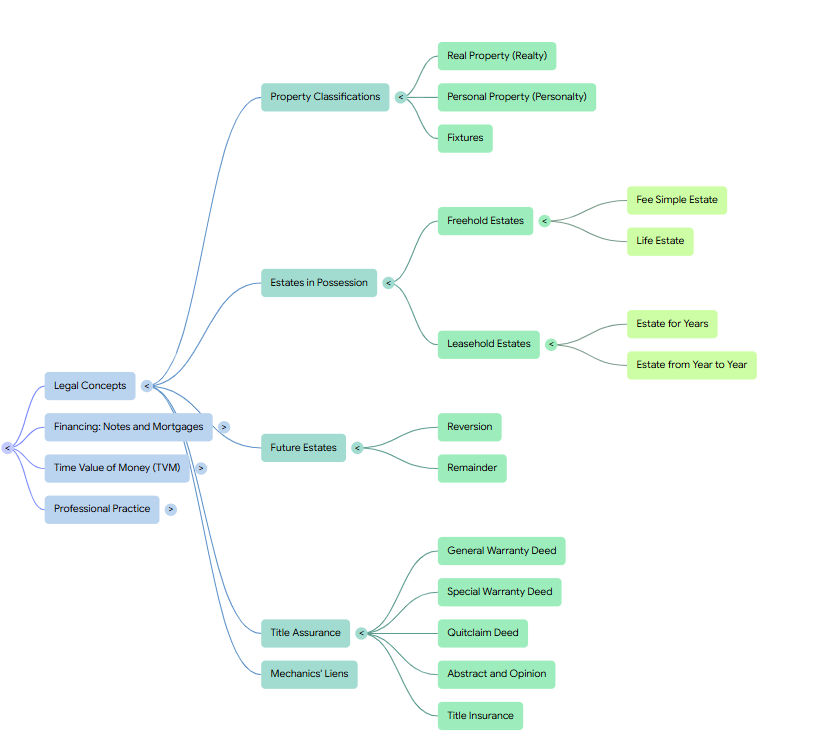
— Linden Lake
This series:
→ Book Review (1 of 4): Real Estate Finance and Investments – Legal Concepts
→ Book Review (2 of 4): Real Estate Finance and Investments – Financing: Notes and Mortgages
→ Book Review (3 of 4): Real Estate Finance and Investments – Time Value of Money(TVM)
→ Book Review (4 of 4): Real Estate Finance and Investments – Professional Practice
Leave a Reply