One joke I often hear is that there is no such thing as American food. When people are asked to name a typical American dish, the answer is often “McDonald’s” or some other form of fast food—usually only half-jokingly.
In many small American towns, the local dining scene often revolves around a Chinese buffet, a Mexican restaurant, and a neighborhood tavern. Yet at the same time, the United States offers an astonishing variety of cuisines brought by generations of immigrants. Beyond familiar fine-dining traditions such as French, Italian, and Japanese cuisine, it is common to find Vietnamese, Thai, Korean, Ethiopian, Peruvian, Indian, and countless other culinary traditions represented across the country.
My personal view is that there is no single dish that can truly be called “authentically American.” Rather, American cuisine is the collective result of all these influences coming together. The diversity itself is what makes the American food scene uniquely American.
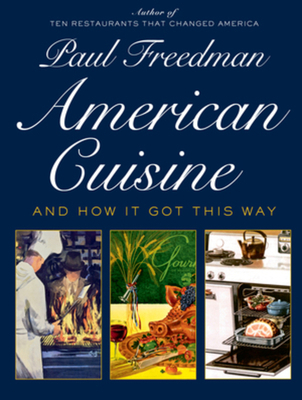
With that perspective in mind, I picked up American Cuisine by Paul Freedman in 2019. Among the many regional food traditions discussed in the book, two names immediately caught my attention: Cajun and Creole cuisine. At the time, I knew almost nothing about them, but I was fascinated by the blend of French, Spanish, African, Native American, and Caribbean influences that shaped these distinctive culinary traditions.
That book became my introduction not only to Cajun and Creole food, but also to New Orleans—a city whose history stretches back before the founding of the United States itself. What began as curiosity about food eventually grew into an interest in the culture, history, and identity of one of America’s most unique cities. In many ways, that was the starting point of the journey that would eventually take me there.
Taking the Train South
In December 2022, I boarded Amtrak’s City of New Orleans in Chicago for a journey of nearly nineteen hours.
Flying would have been faster, but the train offered something an airplane never could: the opportunity to watch America gradually change outside the window.
As we rolled south through Illinois, Tennessee, Mississippi, and Louisiana, winter slowly loosened its grip. The landscapes became greener. The air became warmer. Even the vegetation looked different.
Along the way, we passed through Memphis and Jackson, Mississippi—one of those places I knew only because of the Bruno Mars lyric:
“Jackson, Mississippi…”
The train ride itself became part of the adventure. Rather than simply arriving somewhere, I could feel myself entering another region of the country.
A City Unlike Any Other in America
I stayed in an apartel in the French Quarter, the historic heart of New Orleans.
My first impression was simple: this did not feel like any other American city I had visited.
The French Quarter’s narrow streets, colorful facades, hidden courtyards, and wrought-iron balconies reflected centuries of French and Spanish influence. Walking through the neighborhood felt more like being in parts of Europe or the Caribbean than in the United States.
One feature that particularly fascinated me was Canal Street.
Today it is a busy boulevard served by the city’s historic streetcars, but historically it also represented a cultural divide. On one side stood the French Quarter, shaped by French and Spanish colonial traditions. On the other side developed the newer American business district after the Louisiana Purchase.
Even the architecture changes noticeably as you cross the street.
It almost feels like two cities growing side by side.
I especially enjoyed riding the historic streetcars. Watching the city pass by through the windows offered a slower and more intimate way of experiencing New Orleans.
Beignets, Markets, and Historic Homes
One morning, I joined the crowd at Café du Monde for a plate of freshly made beignets dusted with powdered sugar.
Simple as they are, there is something special about enjoying beignets and café au lait while watching the city wake up around you.
Nearby, I wandered through the French Market, one of the oldest public markets in the United States. Filled with food vendors, local crafts, artists, and visitors from around the world, it felt like a continuation of the city’s long history as a trading crossroads.
I also joined a walking tour focused on New Orleans’ residential architecture.
From Creole cottages to shotgun houses and elegant townhomes, each building seemed to tell a story about the people who had lived there and the cultures that had shaped the city. For someone who enjoys history, it felt like walking through an open-air museum.
Confronting History
As I learned more about New Orleans, I gradually realized that many of the city’s most celebrated traditions—its food, music, architecture, and culture—could not be separated from the broader history of Louisiana itself.
To better understand that history, I joined a day trip to Oak Alley Plantation.
The plantation’s famous oak-lined avenue is undeniably beautiful. Yet walking the grounds was also a sobering experience.
The grandeur of the estate stood in stark contrast to the lives of the enslaved people whose labor made such wealth possible.
History is often uncomfortable. Places like Oak Alley remind us that beauty and tragedy can exist side by side, and that remembering difficult chapters of history is just as important as celebrating the achievements of the past.
Into the Bayou
Another highlight was a bayou tour.
As someone from the Midwest, the Louisiana wetlands felt almost exotic.
The cypress trees, winding waterways, marshes, and wildlife created a landscape unlike anything I had previously experienced.
Of course, seeing alligators was part of the attraction. But what interested me even more was learning about the people who have built lives in these wetlands for generations.
The bayou is not merely a tourist destination. It is a living ecosystem and a unique way of life.
The Food That Started It All
The original reason for the trip, however, was food.
One evening, I joined a dinner cruise on the Mississippi River featuring Cajun and Creole cuisine while enjoying nighttime views of the city skyline.
Among everything I tried, one dish stood above the rest:
Gumbo.
Rich, flavorful, and deeply satisfying, gumbo perfectly captured what had first attracted me to New Orleans. Every spoonful reflected the blending of cultures that shaped Louisiana’s history.
I enjoyed it so much that after returning home, I eventually learned how to cook it myself.
I also visited the historic Antoine’s Restaurant, one of the oldest continuously operating restaurants in the United States. Dining there felt like stepping into a piece of living history.
Jazz, Cemeteries, and the Mississippi
No visit to New Orleans would be complete without experiencing its music.
I spent an evening at Preservation Hall, listening to jazz in the city where the genre was born.
The venue itself is remarkably simple. There are no giant screens or elaborate stage productions. The focus remains entirely on the musicians and the music.
I also learned about New Orleans’ famous above-ground cemeteries, a practical adaptation to a city built below sea level.
Along the way, I encountered stories of Mardi Gras, French and Spanish colonial rule, hurricanes, and the Louisiana Purchase. Every corner of the city seemed to reveal another layer of history.
One fact I learned particularly stayed with me: an object entering the Mississippi River near its source in Minnesota may take approximately ninety days to reach the Louisiana bayous near the Gulf of Mexico.
As someone from the Great Lakes region, standing beside the end of a river system that begins over a thousand miles away felt strangely profound.
Heading Home
When it was finally time to return to the Midwest, I decided to take the local city bus to Louis Armstrong New Orleans International Airport rather than use a rideshare.
The ride offered a glimpse of everyday suburban New Orleans beyond the tourist districts.
What surprised me was how familiar it felt.
Away from the French Quarter, the streetcars, and the historic architecture, much of suburban New Orleans looked remarkably similar to suburbs in many other American cities. Shopping centers, chain stores, residential neighborhoods, and busy roads reminded me that beneath its unique cultural identity, New Orleans is also a modern American city where ordinary people live ordinary lives.
The airport itself left a surprisingly positive impression. The terminal felt modern, spacious, and thoughtfully designed, with abundant natural light and an open layout that seemed perfectly suited to Louisiana’s warm climate.
Among the airports I have visited in the United States, it remains one of my favorites.
More Than a Food Trip
By the time I left Louisiana, I realized the journey had become much more than a search for Cajun and Creole food.
What began with curiosity about gumbo had led me into a deeper exploration of American history, geography, architecture, music, and culture.
Looking back, the journey was never really about finding a bowl of gumbo.
It was about following a thread of curiosity and seeing where it led.
A book about American cuisine led to a train ride across half the country. A craving for Cajun and Creole food led to lessons in history, architecture, music, and the many cultures that helped shape America.
Like many worthwhile journeys, it began with something surprisingly simple: a craving.
— Linden Lake
Leave a Reply