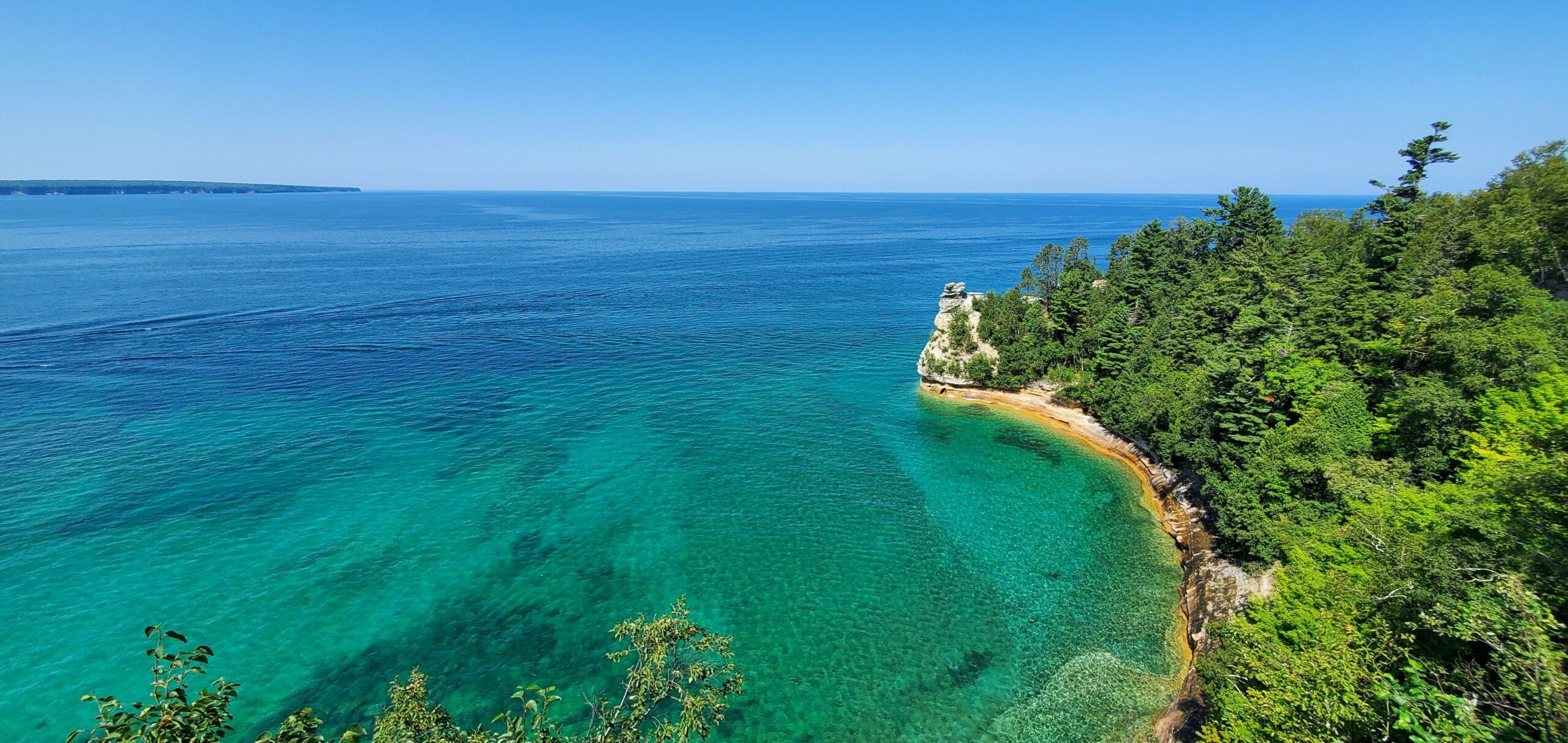
In May 2023, a wedding brought me to Devil’s Thumb Ranch in the Colorado Rockies. Since I was already traveling west, I turned the occasion into a short four-night journey through several very different sides of Colorado: the red-rock formations outside Denver, the snow-edged mountains around Fraser and Winter Park, the open ranchland of Devil’s Thumb, and finally the streets of downtown Denver.
It was not a long trip, but Colorado has a way of making even a few days feel expansive. Within a relatively short drive, the scenery shifted from a modern city to ancient sandstone, then to pine forests, broad valleys, grazing horses, and mountain ridges still holding on to winter.
The Day of Arrival
Located well west of the 100th meridian, Denver is known for its generally dry, semi-arid climate, so I had imagined that Colorado would greet us with abundant sunshine and a wide blue sky. Somehow, however, the weather had prepared a very different welcome. Rain fell steadily on the day of our arrival, covering the roads in a silvery sheen as long lines of cars and trucks moved slowly away from Denver International Airport. From inside our rental car, we watched the windshield wipers sweep back and forth beneath a heavy gray sky. Then, almost as soon as we left the airport, the Eagles’ “Desperado” began playing on the radio. What timing! We had barely arrived in Colorado, yet the music had already supplied the perfect soundtrack for our journey into the American West. Before we had seen the towering red formations of Red Rocks, the snowcapped peaks around Winter Park, or the open ranchland of Devil’s Thumb, Denver had welcomed us with rain, traffic, and a song that made the beginning of the trip feel almost cinematic.
First Stop: Red Rocks
We spent our first night near Red Rocks Park and Amphitheatre. Although the rain had followed us from the airport, it gave the landscape an unexpectedly vivid character. Water streamed down the rust-colored paths, while the surrounding hills appeared especially green beneath the heavy gray sky.
At Red Rocks, enormous slabs of sandstone rise from the earth at dramatic angles, creating a landscape that feels both geological and architectural. The amphitheatre rests naturally between them, with rows of seats descending toward the stage and the distant Denver skyline visible beyond it. The empty stage, rain-darkened benches, restless clouds, and monumental walls of stone made it feel less like a constructed attraction and more like a performance space discovered within the landscape.
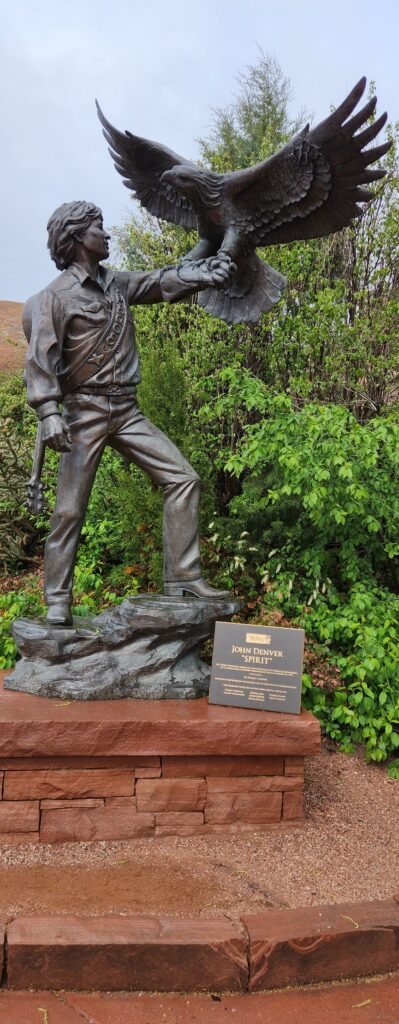
We also came across Spirit, a bronze statue depicting John Denver with a guitar at his side and an eagle landing on his outstretched arm. Few musicians are as closely associated with Colorado’s mountains and open skies, so seeing his likeness at Red Rocks felt especially appropriate.
The rain may not have matched the Colorado weather I had imagined, but it made the red earth, bright greenery, and towering sandstone even more striking. Denver may be a major American city, but at Red Rocks, the land is not merely a backdrop—it is the main stage.
Into the Mountains: Fraser and Winter Park
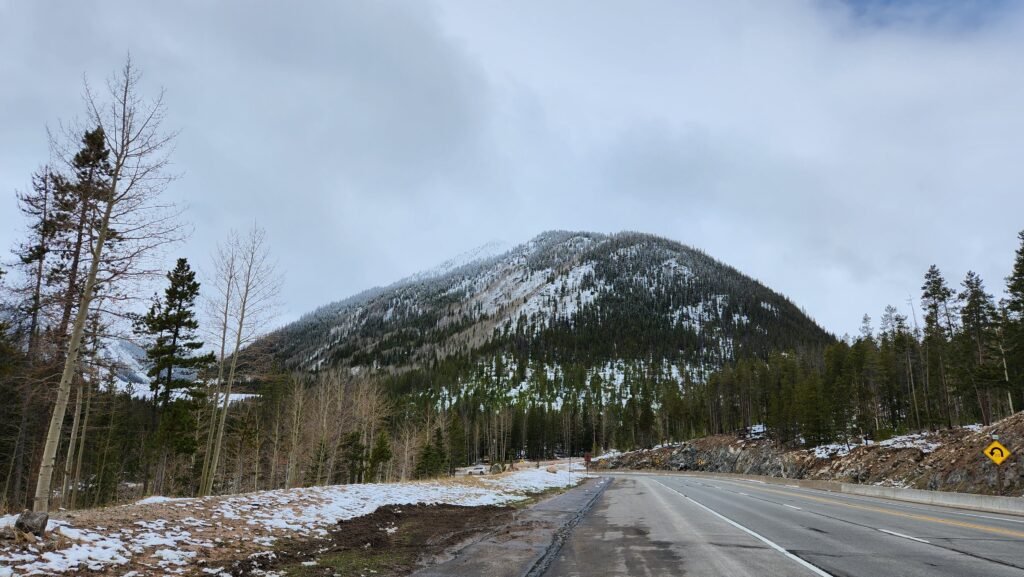
From Red Rocks, the journey continued west into the Rockies toward Fraser and Winter Park. In May, the lower elevations were already turning green, while snow still traced the higher peaks. The season seemed suspended between winter and spring.
Fraser and Winter Park offered a quieter, more intimate mountain atmosphere. Rustic interiors—wood-paneled rooms, stone fireplaces, worn leather, and warm lamplight—echoed the landscape outside. Beyond the windows were mountain roads, evergreen forests, and ridgelines partly hidden by low clouds.
The drive itself became part of the experience. Roads curved through valleys framed by snowcapped peaks, and every turn seemed to reveal another version of the Rockies: sometimes distant and blue, sometimes close enough to dominate the horizon.
Two Nights at Devil’s Thumb Ranch
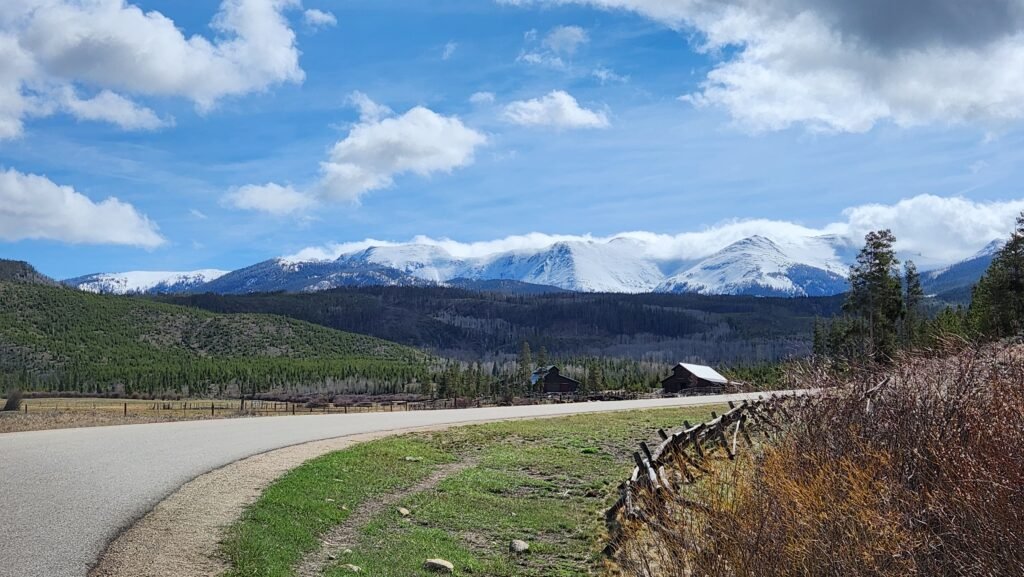
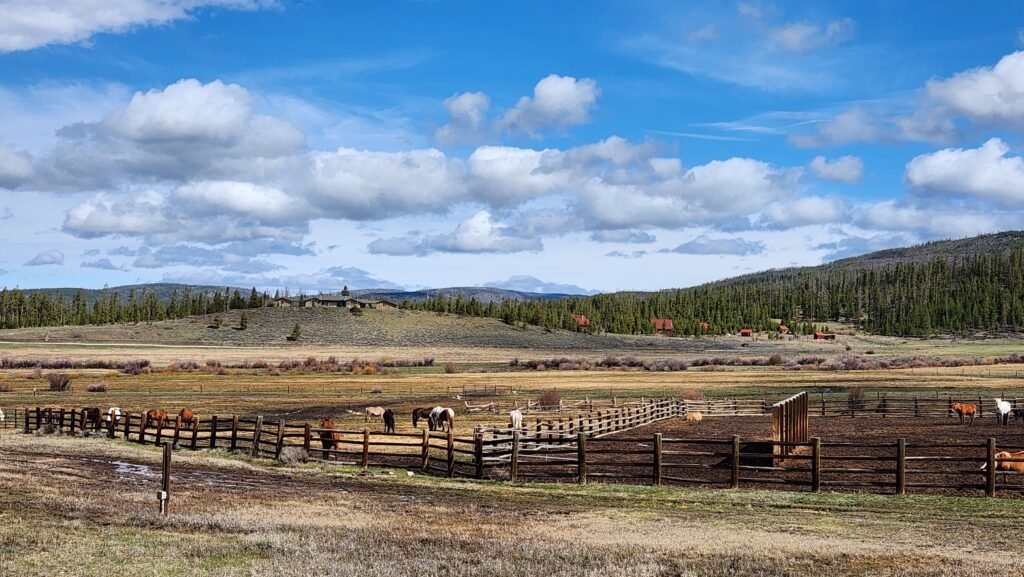
The wedding destination was Devil’s Thumb Ranch, where I stayed for two nights. The resort spreads across a wide valley beneath the Continental Divide, its ranch buildings and fenced pastures surrounded by forests and mountains.
Horses grazed across the open land, lending the place a peaceful Western character. Yet this was not the cinematic West of dry deserts and dusty streets. It was greener, colder, and quieter—a high-country West of pine trees, snowmelt, broad meadows, and evening light fading behind the mountains.
There was something grounding about the scale of the valley. The ranch structures appeared small against the surrounding landscape, and the horses smaller still. The effect was not loneliness, exactly, but perspective: a reminder of how much space exists beyond the routines of city life.
As daylight disappeared, the mountain silhouettes remained visible beneath the darkening sky. The wedding may have been the reason for coming, but the setting became an inseparable part of the memory.
Returning to Downtown Denver
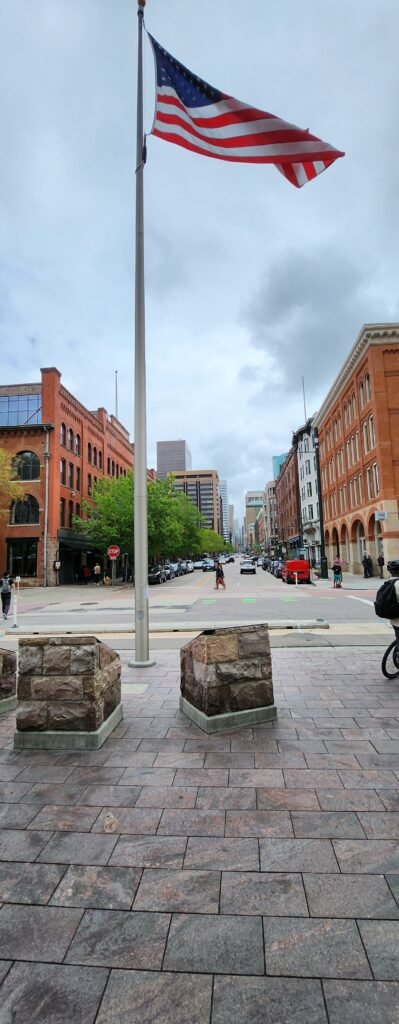
After two nights in the mountains, we returned to Denver for the final night of the trip. The transition was striking. Open ranchland, evergreen forests, and snowcapped peaks gradually gave way to highways, civic buildings, glass towers, public art, and walkable downtown streets. After the quiet expansiveness of Devil’s Thumb Ranch, Denver felt energetic and distinctly urban, yet it never seemed completely separated from the landscape surrounding it.
Around Civic Center, the Colorado State Capitol and neighboring government buildings reflected Denver’s role as both a modern state capital and a historic center of the American West. Their formal architecture, broad lawns, monuments, and public spaces gave this part of the city a dignified atmosphere. From the steps and plazas, the golden dome of the Capitol stood out beneath the cloudy Colorado sky.
Farther downtown, brick façades, American flags, outdoor dining areas, and preserved historic buildings revealed another layer of the city’s identity. These streets felt more closely connected to Denver’s frontier past, even as modern towers rose behind them. The combination gave downtown an interesting character—part Western city, part contemporary metropolitan center.
Denver also has a playful side. Outside the Colorado Convention Center, the enormous blue bear appeared to peer curiously through the glass façade, as though trying to see what was happening inside. Nearby, the rounded figures of Fernando Botero’s Man and Woman brought humor and warmth to a district otherwise shaped by offices, hotels, and monumental architecture. These unexpected works of public art kept downtown from feeling overly formal.
What stood out most was how closely the city remained connected to the natural world. Even among tall buildings and busy streets, Denver seemed oriented toward the mountains just beyond it. The Rockies were no longer filling the frame as they had in Winter Park and Devil’s Thumb, but their presence remained—sometimes visible in the distance and sometimes simply felt as part of the city’s identity.
Denver therefore seemed less like the endpoint of our journey than a threshold between two worlds. It offered the architecture, culture, and movement of a major city while keeping the openness of the American West within easy reach. After several days among red rocks, snowy peaks, forests, and ranchland, downtown Denver brought the journey to a memorable close.
A Gateway, Not Just a Destination
Denver is often called the Mile-High City, but on this visit, its elevation was less memorable than its position—between the settled city and the immense country to the west.
In only four nights, the trip moved from the red sandstone walls of Red Rocks to the snowy peaks around Winter Park, and from the horses and open meadows of Devil’s Thumb Ranch to the civic buildings and public art of downtown Denver. Each stop showed us a different Colorado, yet all of them felt connected by the same sense of openness.
Our departure from Denver was not the smoothest part of the journey. The airport appeared to have been outgrown by the enormous number of passengers it served, and we waited nearly three hours to pass through security. Fortunately, Denver International Airport is undergoing a massive expansion and modernization effort. Its Great Hall Program, designed in part to increase security capacity and improve passenger flow, is scheduled for completion by the end of 2027.
While waiting at the gate, I also learned about a regional carrier that was new to me: Mesa Airlines. Considering the mesas, mountains, and vast Western landscapes we had just traveled through, the name seemed wonderfully appropriate—almost as if the airline belonged naturally to this part of the country.
The journey began with a wedding invitation and became a brief encounter with the Wild West—not the mythologized frontier of old movies, but a living landscape where mountains, ranches, weather, art, and city life continue to meet. Even the flight home offered one final memorable view. Shortly before landing back in the Midwest, I looked down and saw what I believe was the Mississippi River winding across the landscape below. From the sky, it appeared broad, calm, and magnificent—a fitting landmark to welcome us home.
Denver had been our gateway. Beyond it, the West opened almost immediately; on the return journey, the Mississippi seemed to mark our passage back into the familiar Midwest.
— Linden Lake
Leave a Reply