
Studying money, banking, and financial markets provides a framework for understanding how the flow of trillions of dollars through the economy affects daily life, business profits, and the economic well-being of nations. The book emphasizes that these topics are central to the health of the economy because they influence personal wealth, the behavior of consumers and businesses, and the cyclical performance of the economy as a whole.
The Importance of Financial Markets
Financial markets, such as the bond and stock markets, are crucial for promoting economic efficiency by channeling funds from people who have excess funds to those who have productive investment opportunities.
- The Bond Market and Interest Rates: The bond market is significant because it enables corporations and governments to borrow funds and is the place where interest rates are determined. Interest rates affect personal decisions—such as whether to save or buy a home—as well as business investment decisions, which impact job creation.
- The Stock Market: This market trades claims on the earnings and assets of corporations. Fluctuations in stock prices affect the size of people’s wealth and their willingness to spend, while also influencing business investment by determining the amount of funds firms can raise through issuing new stock.
The Role of Financial Institutions and Banking
Financial institutions, particularly banks, are the entities that actually make financial markets work.
- Financial Intermediation: Instead of lending directly to a company, individuals often lend through financial intermediaries—institutions that borrow from savers and lend to those in need of funds.
- Innovation and Crises: The book explores how improvements in information technology have led to financial innovation, such as e-finance, which can lead to higher profits but sometimes results in financial disasters. Understanding these institutions is essential for analyzing financial crises, which are major disruptions characterized by sharp declines in asset prices and the failure of many firms.
Money and Monetary Policy
Money, or the money supply, is anything generally accepted as payment for goods and services.
- Business Cycles and Inflation: Evidence suggests that changes in the money supply are a driving force behind business cycles—the upward and downward movements of aggregate output. Furthermore, a positive association exists between the growth of the money supply and the inflation rate, supporting the idea that “inflation is always and everywhere a monetary phenomenon”.
- Monetary Policy: Because money affects critical variables like inflation and interest rates, the conduct of monetary policy—the management of money and interest rates by a central bank like the Federal Reserve—is of great concern to policymakers and the public.
International Finance and the Unifying Framework
The globalization of financial markets means that American companies frequently borrow in foreign markets, and fluctuations in the foreign exchange rate have major consequences for the domestic economy. To navigate these complex topics, the book utilizes a unifying analytic framework based on a few basic economic principles, such as the search for profits, the concept of equilibrium, and the impact of transaction costs and asymmetric information on financial structure. This “economic way of thinking” is intended to provide students with the tools to understand trends in the financial marketplace long after their formal studies are complete.
Financial Markets
In the book, financial markets are defined as the venues in which funds are transferred from people who have an excess of available funds to those who have a shortage. The study of these markets is critical because they are essential to promoting economic efficiency by channeling funds from individuals with no productive use for them to those who do have such opportunities. Well-functioning financial markets are identified as a key factor in producing high economic growth, while poorly performing markets are cited as a reason many countries remain in poverty. Activities within these markets directly affect personal wealth, the behavior of businesses and consumers, and the cyclical performance of the economy as a whole.
The Bond Market and Interest Rates
The book highlights the bond market as a particularly important area of study because it is where interest rates are determined. A bond is a debt security that promises periodic payments for a specified timeframe, and it is a vital tool for corporations and governments to borrow funds to finance their activities. Interest rates—the cost of borrowing or the price paid for the rental of funds—impact the economy on multiple levels. On a personal level, high interest rates might deter individuals from buying a home or a car, but they may also encourage more saving due to higher interest income. On a broader level, interest rates influence business investment decisions, such as whether a corporation will build a new plant to create more jobs.
The Stock Market
The stock market is described as the most widely followed financial market because it is a place where people can get rich or poor very quickly. A share of common stock represents a share of ownership in a corporation and is a claim on the firm’s earnings and assets. The book explains that studying the stock market is important because fluctuations in stock prices affect the size of people’s wealth, which in turn influences their willingness to spend. Furthermore, the stock market is a major factor in business investment decisions; a higher price for a firm’s shares allows it to raise more funds to buy equipment and production facilities.
The Foreign Exchange Market
The book emphasizes that the globalization of financial markets has made the study of the foreign exchange market indispensable. For funds to move between countries, they must be converted into the destination country’s currency in this market. This is where the foreign exchange rate—the price of one country’s currency in terms of another—is determined. Understanding this market is vital because fluctuations in exchange rates have major consequences for the economy, such as affecting the cost of foreign goods for domestic consumers and the competitiveness of domestic businesses abroad.
Core Economic Functions
Beyond individual market dynamics, the book explains that financial markets perform the essential function of moving funds from “lender-savers” to “borrower-spenders”. This process can occur through direct finance, where borrowers sell securities directly to lenders, or indirect finance involving financial intermediaries. These markets are critical for producing an efficient allocation of capital, which increases the overall production and efficiency of the economy. Additionally, well-functioning financial markets improve consumer well-being by allowing people to better time their purchases, such as enabling young people to buy homes before they have saved the entire purchase price. Finally, the book distinguishes between different market structures, such as primary versus secondary markets and money versus capital markets, to explain how liquidity and various financial instruments support these economic processes.
Bond Market and Interest Rates
In the book, the bond market and interest rates are presented as foundational components of financial markets, which serve the essential function of channeling funds from those with a surplus to those with a shortage. While financial markets encompass various venues for these transfers, the book identifies the bond market as particularly crucial because it is the primary mechanism through which corporations and governments borrow to finance their activities. Furthermore, the bond market is the site where interest rates are determined, making it one of the most closely watched segments of the economy.
The Nature and Importance of Bonds
A bond is defined in the book as a debt security that promises to make periodic payments to the holder for a specified timeframe. Although the average person may be more familiar with the stock market, the book notes that the debt market is often substantially larger; for instance, at the end of 2013, the value of debt instruments was $42 trillion compared to $21.3 trillion for equities. Bonds are classified into several categories based on their maturity: short-term (less than a year), intermediate-term (one to ten years), and long-term (ten years or longer).
The Mechanics of Interest Rates
Interest rates are described as the “price” paid for the rental of funds, typically expressed as a percentage. The book emphasizes a critical inverse relationship: bond prices and interest rates are negatively related. This means that when the equilibrium price of a bond rises, its interest rate falls, and when the interest rate rises, the price of the bond must fall.
To measure these rates accurately, the book highlights the “yield to maturity” as the most important concept. It is defined as the interest rate that equates the present value of all future cash flow payments received from a debt instrument with its value today. The book also distinguishes between nominal interest rates and real interest rates, the latter being adjusted for expected inflation to reflect the true cost of borrowing.
Determining Interest Rates through Supply and Demand
The book utilizes a supply and demand framework to explain how interest rates are determined in the bond market.
- Demand: The demand for bonds is influenced by the theory of portfolio choice, which considers wealth, expected returns relative to other assets, risk, and liquidity.
- Supply: The supply of bonds is driven by the expected profitability of investment opportunities, expected inflation, and government budget deficits.
- Equilibrium: Market equilibrium occurs at the intersection of the bond demand and supply curves, establishing the market-clearing price and its corresponding equilibrium interest rate.
The Risk and Term Structure of Interest Rates
Interest rates differ between various types of bonds due to their “risk structure” and “term structure”.
- Risk Structure: This explains why bonds with the same maturity have different rates based on default risk, liquidity, and tax treatment. For example, the book explains that corporate bonds have higher rates than default-free U.S. Treasury bonds because of their risk of default and lower liquidity. Municipal bonds, however, often have lower rates because their interest payments are exempt from federal income taxes.
- Term Structure: This relates to how interest rates vary for bonds with identical risk and liquidity but different terms to maturity. This relationship is illustrated by the “yield curve,” which typically slopes upward, indicating that long-term interest rates are usually higher than short-term rates.
Impact on the Broader Economy
The book concludes that activities in the bond market have a profound impact on everyone. High interest rates can deter consumers from buying homes or cars and may discourage business investment in new plants and equipment. Conversely, these rates may encourage individuals to save more by providing higher interest income. Because well-functioning financial markets, including the bond market, promote economic efficiency and high growth, their stability is essential to national economic health.
The Stock Market
In the book, the stock market is characterized as the most widely followed component of financial markets, primarily because it is a venue where individuals can experience rapid changes in their personal wealth. While other financial markets, such as the bond market, are essential for the transfer of funds, the stock market holds a unique place in the public consciousness, often being referred to simply as “the market”.
Definition and Function
A common stock represents a share of ownership in a corporation and constitutes a security that is a claim on the firm’s earnings and assets. For corporations, issuing and selling stock is a vital method for raising equity capital to finance their business activities. Within the structure of financial markets, the stock market serves as a secondary market where previously issued shares are traded among investors. The book notes that while the average person is highly aware of the stock market, it is often smaller in scale than the debt market; for instance, at the end of 2013, the value of equities was $21.3 trillion compared to the $42 trillion value of debt instruments.
Impact on the Broader Economy
The stock market exerts a significant influence on the economy through two primary channels:
- Consumer Spending: Sizable fluctuations in stock prices directly affect the size of people’s wealth. When stock prices rise, the resulting increase in financial wealth often leads to a greater willingness among consumers to spend.
- Business Investment: The price of a firm’s shares determines the amount of funds that can be raised by selling newly issued stock. A higher share price allows a firm to raise more capital, which can then be used to purchase production facilities and equipment. Conversely, a low share price can constrain a company’s ability to invest and grow.
Setting Prices and Valuation
The book explains that stock prices are established by the interaction of bidders in the market. The market price is generally set by the buyer who is willing to pay the highest price, often because that buyer has superior information or can put the asset to more productive use. To determine what a stock is worth, the book presents several models:
- The One-Period Valuation Model: This calculates the current price based on the discounted value of the next dividend plus the expected sales price at the end of one year.
- The Generalized Dividend Valuation Model: This extends the concept by stating that the value of a stock today is the present value of all its future dividend payments.
- The Gordon Growth Model: A simplified version that assumes dividends will grow at a constant rate indefinitely.
Market Behavior: Expectations and Efficiency
A central theme in the book’s discussion of the stock market is the Efficient Market Hypothesis (EMH), which applies the theory of rational expectations to financial markets. The hypothesis suggests that stock prices fully reflect all available information, and therefore, unexploited profit opportunities are quickly eliminated by arbitrageurs. A key implication of this theory is that stock prices should follow a “random walk,” meaning their future movements are essentially unpredictable.
However, the book also introduces Behavioral Finance, a field that uses psychology and other social sciences to explain why the stock market sometimes departs from the fundamental values suggested by the EMH. Concepts such as loss aversion, overconfidence, and social fads help explain the existence of stock market bubbles and why trading volumes are often much higher than traditional theories would predict.
Financial Institutions
In the book, financial institutions are defined as the entities—such as banks, insurance companies, and mutual funds—that act as financial intermediaries to make financial markets work. The study of these institutions is vital because they are the primary route for moving funds from “lender-savers” to “borrower-spenders,” often playing a more significant role in financing business activities than securities markets like the stock and bond markets.
The Role of Financial Intermediation
The book explains that financial institutions are essential because they perform the economic function of channeling funds from those who have a surplus of money to those who have a shortage. This process, known as financial intermediation, promotes greater economic efficiency by ensuring that funds are directed toward productive investment opportunities rather than sitting idle. Without these institutions, small savers might be frozen out of the market due to the high costs and complexities of direct lending.
Why Financial Institutions Are Necessary
According to the book, three key factors explain why financial intermediaries are so crucial to the financial system:
- Transaction Costs: Institutions reduce the time and money spent on financial transactions by developing expertise and utilizing economies of scale, such as lowering the per-loan cost of legal contracts.
- Risk Sharing: Intermediaries engage in “asset transformation” by creating and selling assets with risk characteristics that investors are comfortable with (like a savings account) and then using those funds to buy riskier assets. They also help individuals lower their risk through diversification.
- Asymmetric Information: Institutions help solve problems where one party has more information than the other. They reduce adverse selection by screening out bad credit risks before a loan is made and mitigate moral hazard by monitoring borrowers’ activities after the loan is issued.
Types of Financial Institutions
The book categorizes financial intermediaries into three main groups based on their primary sources and uses of funds:
- Depository Institutions (Banks): These include commercial banks, savings and loan associations, and credit unions. They primarily accept deposits and make various types of loans.
- Contractual Savings Institutions: These entities, such as life insurance companies and pension funds, acquire funds at periodic intervals on a contractual basis and tend to invest in long-term securities.
- Investment Intermediaries: This group includes finance companies, mutual funds, money market mutual funds, and hedge funds.
Broader Context: Regulation and Crises
The book emphasizes that studying these institutions is essential for understanding the health of the economy. Because they handle trillions of dollars and are central to the flow of credit, they are among the most heavily regulated sectors of the economy to ensure system stability and provide information to investors. Furthermore, when these institutions fail or the system “seizes up,” it produces financial crises—such as the global financial crisis of 2007–2009—which can lead to severe economic downturns like the Great Recession. Understanding how these institutions manage their assets and liabilities is therefore a key component of analyzing how to prevent or recover from such disasters.
Structure of the Financial System
In the book, the structure of the financial system is described as a complex network of private sector institutions, such as banks, insurance companies, and mutual funds, all of which are heavily regulated by the government. The fundamental purpose of this structure is to facilitate the flow of funds from “lender-savers” (those with excess funds) to “borrower-spenders” (those with productive investment opportunities).
Two Routes of Finance
The book explains that the financial system is structured around two primary routes for moving funds:
- Direct Finance: In this route, borrowers borrow funds directly from lenders in financial markets by selling them securities, which are claims on the borrower’s future income or assets. While these markets, such as the stock and bond markets, are highly visible, the book notes that direct finance actually accounts for less than 10% of the external funding for American businesses.
- Indirect Finance: This route involves a financial intermediary that stands between the savers and the borrowers. The intermediary borrows from the savers and then uses those funds to make loans to borrowers. This process, known as financial intermediation, is the primary route for moving funds in the financial system.
Categories of Financial Institutions
The structure of the financial system is comprised of three main categories of financial intermediaries, distinguished by their sources and uses of funds:
- Depository Institutions (Banks): These include commercial banks, savings and loan associations, and credit unions. They raise funds primarily by issuing deposits and use these funds to make various types of loans.
- Contractual Savings Institutions: These include life insurance companies and pension funds. They acquire funds at periodic intervals on a contractual basis and tend to invest in long-term securities like corporate bonds and mortgages because they can predict their future payouts with reasonable accuracy.
- Investment Intermediaries: This group includes finance companies, mutual funds, money market mutual funds, and hedge funds.
The Economic Rationale for the Structure
The book emphasizes that the financial system is structured this way because financial institutions perform essential functions that individuals cannot easily do on their own:
- Reducing Transaction Costs: Financial institutions use expertise and economies of scale to lower the time and money spent on financial transactions.
- Risk Sharing: They engage in “asset transformation,” turning risky assets into safer ones for investors while helping individuals diversify their portfolios.
- Managing Asymmetric Information: Institutions are better equipped than individuals to screen out bad credit risks (adverse selection) before a transaction and monitor borrowers’ activities (moral hazard) afterward.
Global Context and Regulation
Globally, the structure of financial systems shows that indirect finance is many times more important than direct finance, and banks remain the most important source of external funds for businesses. Furthermore, because the failure of these institutions can lead to a “financial panic” that causes serious economic damage, the financial system is among the most heavily regulated sectors of the economy. This regulation is designed to increase information availability to investors and ensure the overall soundness of the financial system.
Structure of the Financial System
In the book, the structure of the financial system is described as a complex network designed to perform the essential economic function of channeling funds from those who have saved surplus funds (lender-savers) to those who have a shortage of funds (borrower-spenders). This structure is primarily organized around two distinct routes for moving these funds: direct finance and indirect finance.
Two Primary Routes of Finance
- Direct Finance: In this route, borrowers obtain funds directly from lenders in financial markets by selling them securities (also known as financial instruments). These securities are assets for the person who buys them but liabilities (debts) for the individual or firm that sells them. While these markets, such as those for stocks and bonds, are highly visible, the book notes that direct finance actually accounts for less than 10% of the external funding for American businesses.
- Indirect Finance: This is the primary route for moving funds from lenders to borrowers and involves the use of financial institutions known as financial intermediaries. In this process, called financial intermediation, the intermediary stands between the lender-saver and the borrower-spender, borrowing from one to lend to the other.
The Role and Rationales for Financial Institutions
Financial institutions are what make financial markets work; without them, funds would not move effectively from savers to those with productive investment opportunities. The book identifies three key reasons why these institutions are so central to the structure of the financial system:
- Reduction of Transaction Costs: Small savers and borrowers are often frozen out of financial markets due to the high time and money costs of carrying out transactions. Institutions use expertise and economies of scale to lower these costs, enabling them to provide liquidity services that make it easier for customers to conduct transactions.
- Risk Sharing: Intermediaries engage in “asset transformation,” creating and selling assets with risk characteristics that people are comfortable with and using those funds to buy riskier assets. They also help individuals lower their risk through diversification.
- Management of Asymmetric Information: Institutions are better equipped than individuals to handle situations where one party has more information than the other. They reduce adverse selection by screening out bad credit risks before a loan is made and mitigate moral hazard by monitoring borrowers’ activities after the loan is issued.
Categories of Financial Intermediaries
The book classifies the institutions that comprise this structure into three main categories based on their sources and uses of funds:
- Depository Institutions (Banks): These include commercial banks, savings and loan associations, and credit unions. They primarily raise funds through deposits and use them to make various types of loans.
- Contractual Savings Institutions: These entities, such as insurance companies and pension funds, acquire funds at periodic intervals on a contractual basis. Because they can predict future payouts with reasonable accuracy, they tend to invest in long-term securities like bonds and mortgages.
- Investment Intermediaries: This group includes finance companies, mutual funds, money market mutual funds, and hedge funds.
Global Context and Regulation
Globally, indirect finance is many times more important than direct finance, and banks remain the most important source of external funds for businesses. Furthermore, because the failure of these institutions can lead to a “financial panic” that causes serious economic damage, the financial system is among the most heavily regulated sectors of the economy. This regulation is designed to increase the information available to investors and ensure the overall soundness and stability of the financial system.
Banks and Other Institutions
In the book, financial institutions are defined as the intermediaries that facilitate the flow of funds between savers and spenders, and they are broadly classified into three categories: depository institutions (banks), contractual savings institutions, and investment intermediaries,.
Banks (Depository Institutions)
Banks are the financial intermediaries with which the average person interacts most frequently. They are distinct from other institutions primarily because they accept deposits and make loans, and they play a unique role in the economy by being involved in the creation of deposits, which are a major component of the money supply.
- Role and Magnitude: Banks are the largest financial intermediaries in the U.S. economy. In the basic banking model, they engage in “asset transformation,” essentially “borrowing short” by accepting short-term deposits and “lending long” by making longer-term loans.
- Types of Banks:
- Commercial Banks: These are the largest group of depository institutions and hold the most diversified portfolios. Their primary liabilities are checkable, savings, and time deposits, which they use to fund commercial, consumer, and mortgage loans, as well as to purchase government securities.
- Savings and Loan Associations (S&Ls) and Mutual Savings Banks: Historically restricted to making residential mortgage loans, these “thrift institutions” have seen their regulatory boundaries blur over time, becoming more competitive with commercial banks.
- Credit Unions: These are typically small, tax-exempt cooperative lending institutions organized around a specific group (e.g., union members),. They primarily make consumer loans.
Other Financial Institutions
While banks are the largest intermediaries, the book notes that other financial institutions—specifically contractual savings institutions and investment intermediaries—have been growing at the expense of traditional banks in recent years,.
- Contractual Savings Institutions: These entities, including life insurance companies, fire and casualty insurance companies, and pension funds, acquire funds at periodic intervals on a contractual basis. Because their future payouts are reasonably predictable, they do not need to prioritize liquidity as highly as banks do; instead, they invest primarily in long-term securities like corporate bonds, stocks, and mortgages.
- Investment Intermediaries:
- Finance Companies: These raise funds by selling commercial paper and issuing stocks and bonds, then lend those funds to consumers for purchases like furniture and cars, or to small businesses.
- Mutual Funds: They allow small investors to pool their resources to take advantage of lower transaction costs and achieve greater diversification in stock and bond portfolios.
- Money Market Mutual Funds: These function similarly to mutual funds but offer deposit-like accounts on which shareholders can write checks, essentially acting as interest-paying checking accounts.
- Hedge Funds: These are specialized mutual funds organized as limited partnerships with high minimum investments, which subjects them to much weaker regulation than standard mutual funds.
- Investment Banks: Despite the name, these are not banks in the sense of taking deposits; rather, they serve as intermediaries that help corporations issue securities by advising on offerings and underwriting the sale of stocks and bonds.
The Broader Context of Intermediation
The fundamental reason both banks and these other institutions exist is to reduce transaction costs and manage asymmetric information,. Banks are particularly important in addressing the “free-rider” problem because they primarily make private loans rather than buying traded securities. However, as information technology has made it easier for investors to acquire information about firms, the traditional lending role of banks has declined, allowing other institutions and securities markets to play a larger role in the financial system,.
Financial Innovation
In the book, financial innovation is described as a form of “financial engineering” driven by the desire of financial institutions to maximize their profits. When changes in the economic environment create new needs or make old ways of doing business less profitable, institutions innovate to survive and grow. These innovations generally fall into three categories: responses to changes in demand, responses to changes in supply, and attempts to avoid existing regulations.
Drivers of Innovation
- Response to Demand (Interest-Rate Volatility): Significant increases in interest-rate volatility since the 1960s led to higher interest-rate risk. To meet the new demand for risk reduction, institutions developed products like adjustable-rate mortgages and financial derivatives.
- Response to Supply (Information Technology): Rapid advances in computer and telecommunications technology lowered the cost of processing transactions and made it easier for investors to acquire information. This spurred the creation of bank credit and debit cards, electronic banking (such as ATMs and home banking), and the junk bond market.
- Avoidance of Regulation (“Loophole Mining”): Burdenome regulations, specifically reserve requirements and interest rate ceilings (like Regulation Q), acted as a “tax” on bank profits. In response, institutions engaged in “loophole mining” to create products like money market mutual funds and sweep accounts, which allowed them to offer higher interest rates and bypass reserve costs.
The Shadow Banking System and Securitization
One of the most significant structural changes driven by innovation is the rise of the shadow banking system. This system relies on securitization—the process of bundling small, illiquid financial assets (like mortgages or auto loans) into marketable securities. Unlike traditional banking, where a single institution handles the entire asset transformation process, the shadow banking system utilizes an “originate-to-distribute” model where various institutions specialize in different stages: loan origination, servicing, bundling, and distribution.
Impact on Traditional Financial Institutions
The book notes that financial innovation has led to a dramatic decline in the traditional banking business—the process of “borrowing short and lending long”. Innovations have eroded the cost advantages banks once had in acquiring funds (due to the decline in low-interest checkable deposits) and their income advantages in lending (as borrowers turned to junk bonds and commercial paper).
To remain profitable, many banks have shifted their focus toward:
- Riskier Lending: Expanding into areas like commercial real estate and leveraged buyouts.
- Off-Balance-Sheet Activities: Generating fee income through activities like loan sales and financial guarantees.
While these innovations can increase economic efficiency and profits, the book warns that they can also result in financial disasters. For example, the mismanagement of subprime mortgage securitization was a primary factor leading to the global financial crisis of 2007–2009.
Financial Crises
In the book, financial crises are defined as major disruptions in financial markets characterized by sharp declines in asset prices and the failure of many financial and nonfinancial firms. These crises occur when financial frictions—barriers to the efficient allocation of capital, such as asymmetric information—increase so sharply that financial markets stop functioning, leading to a collapse in economic activity. Financial institutions are central to these events because they are the entities that make financial markets work by channeling funds from savers to productive investors.
The Role of Financial Institutions in the Dynamics of a Crisis
The book outlines a three-stage framework for how financial crises unfold, with the health of financial institutions being a primary factor in each stage:
- Stage One: Initial Phase: Crises often begin with a credit boom and bust. Financial liberalization or innovation can prompt institutions to engage in a lending spree. Eventually, loan losses mount, driving down the net worth (capital) of these institutions. To protect their remaining capital, institutions engage in deleveraging, cutting back on lending, which results in a credit freeze.
- Stage Two: Banking Crisis: Deteriorating balance sheets can lead to bank panics, where multiple institutions fail simultaneously. Because of asymmetric information, depositors may be unable to tell if their specific institution is sound, leading them to withdraw funds from both good and bad banks (the contagion effect). This forces institutions into fire sales—rapidly selling assets at depressed prices to raise cash—which further erodes their net worth.
- Stage Three: Debt Deflation: If a crisis leads to a sharp decline in the price level, the real value of an institution’s liabilities rises while its assets do not, further weakening its balance sheet and intensifying the crisis.
Impact on the Broader Economy and Institutional Failure
When financial institutions fail or stop lending, the information they have collected about the creditworthiness of borrowers is lost, which drastically increases adverse selection and moral hazard problems. The book highlights several high-profile institutional failures during the global financial crisis of 2007–2009 to illustrate this impact:
- Bear Stearns and Lehman Brothers: The collapse of these major investment banks was driven by losses in subprime mortgage-backed securities and a run on their short-term funding.
- The Shadow Banking System: This network of non-depository financial firms (like hedge funds and investment banks) experienced a massive “run” as lenders required larger haircuts (collateral) for loans, forcing massive deleveraging throughout the system.
- AIG: The insurance giant suffered a liquidity crisis due to hundreds of billions of dollars in credit default swaps—insurance contracts on bonds that it could not pay out when the underlying assets defaulted.
Regulation and the Government Safety Net
Because the failure of financial institutions can be so damaging, they are subject to a government safety net, such as deposit insurance provided by the FDIC. However, the book notes that this safety net can create a “too-big-to-fail” problem: regulators may be reluctant to close large, interconnected institutions for fear of triggering a systemic collapse. While intended to prevent panics, this policy can increase moral hazard by encouraging large institutions to take on excessive risk, knowing they will likely be bailed out by taxpayers. In the wake of the 2007–2009 crisis, new international standards like Basel 3 were developed to force institutions to hold more capital and maintain higher liquidity buffers to prevent future collapses.
Money and Monetary Policy
In the book, money and monetary policy are presented as essential areas of study because they are linked to economic variables that directly affect the health of the economy and the daily lives of individuals. The book defines money, or the money supply, as anything generally accepted as payment for goods and services or in the repayment of debts.
Money and Business Cycles
The book highlights evidence suggesting that money plays a significant role in generating business cycles—the upward and downward movements of aggregate output produced in an economy. Historically, the rate of money growth has often declined before recessions, indicating that changes in the money supply may be a driving force behind these cyclical fluctuations. Understanding this relationship is vital because business cycles affect everyone; for instance, rising output generally makes it easier to find a job, while falling output makes it more difficult.
Money and Inflation
A central theme in the book is the connection between money and inflation, defined as a continual increase in the aggregate price level. The book notes that the U.S. price level increased more than tenfold between 1950 and 2014, and data indicates that the price level and money supply generally rise together. To support this, the book cites Milton Friedman’s famous statement, “Inflation is always and everywhere a monetary phenomenon,” noting a positive international association between high inflation rates and high money growth rates.
The Conduct of Monetary Policy
Because money affects critical variables like inflation, interest rates, and aggregate output, the book emphasizes that policymakers and the public care deeply about the conduct of monetary policy. This is the management of money and interest rates, and the organization responsible for it is the central bank. In the United States, this role is filled by the Federal Reserve System, often referred to as “the Fed”.
Interaction with Fiscal Policy
The book also discusses the importance of studying fiscal policy—decisions regarding government spending and taxation—because it can influence monetary policy. For example, a budget deficit (when government expenditures exceed tax revenues) must be financed by borrowing, which can lead to a higher rate of money growth, higher inflation, and higher interest rates.
Conclusion
Ultimately, the book argues that studying money and monetary policy is crucial because these factors have a major influence on the cyclical performance of the economy and the general price level. By understanding these concepts through the book’s “economic way of thinking,” students can better grasp how the Federal Reserve’s actions might affect their future job prospects or the prices they pay for goods.
Money and Business Cycles
The book defines business cycles as the upward and downward movements of aggregate output produced within an economy. Evidence suggests that money, or the money supply, plays a significant role in generating these cycles. Historical data indicates that the rate of money growth has declined before most recessions—periods of declining aggregate output—suggesting that changes in the money supply may be a driving force behind cyclical fluctuations. However, the book notes that this relationship is not perfectly consistent, as not every decline in the rate of money growth is followed by a recession.
Understanding the relationship between money and business cycles is critical because these fluctuations affect individuals directly; for instance, when output is rising, it is generally easier to find a job, whereas falling output makes finding employment more difficult. In the larger context of monetary policy—the management of money and interest rates by a central bank like the Federal Reserve—the influence of money on the economy is a primary concern for policymakers and politicians. The study of how money and monetary policy affect aggregate economic activity and inflation is known as monetary theory.
The book also emphasizes that money is linked to other critical variables beyond business cycles, such as inflation and interest rates. While the quantity theory of money suggests a strong long-run positive association between money growth and inflation, this link is less clear in the short run. Additionally, the conduct of fiscal policy, involving government spending and taxation, can impact monetary policy; for example, persistent budget deficits may lead to higher rates of money growth and inflation. Consequently, the book utilizes a unifying analytic framework to help students understand how these complex interactions between money and policy affect the overall health of the economy.
Money and Inflation
The book defines inflation as a continual increase in the aggregate price level, which is the average price of goods and services in an economy. The study of inflation is a central component of monetary theory because changes in the money supply are directly linked to changes in the price level.
The Link Between Money and Inflation
According to the book, data from the United States and other countries indicate that the price level and the money supply generally rise together, suggesting that a continuing increase in the money supply is an important factor in causing inflation .
- The Quantity Theory of Inflation: This theory posits that the inflation rate equals the growth rate of the money supply minus the growth rate of aggregate output.
- Long-Run vs. Short-Run: The book emphasizes that while the quantity theory is a good explanation for inflation in the long run, the relationship is not as strong in the short run . Over long periods, however, the international evidence strongly supports Milton Friedman’s famous statement that “inflation is always and everywhere a monetary phenomenon”.
- Hyperinflation: The book discusses hyperinflation—extreme inflation exceeding 50% per month—which is typically caused by governments printing money at a rapid rate to finance massive budget deficits. A prime example cited is the Zimbabwean hyperinflation of the 2000s, where the government’s use of the printing press to cover expenditures led to an official inflation rate exceeding two million percent.
The Context of Monetary Policy
The conduct of monetary policy involves the management of money and interest rates by a central bank, such as the Federal Reserve. Because inflation affects the health of the economy and personal wealth, price stability—low and stable inflation—has become the primary long-run goal of monetary policy worldwide.
- The Role of a Nominal Anchor: To achieve price stability, central banks often use a nominal anchor, such as a specific inflation target. This helps tie down inflation expectations and mitigates the time-inconsistency problem, where policymakers might be tempted to pursue short-term gains in employment that lead to higher long-term inflation.
- Sources of Inflationary Policy: The book identifies two primary types of inflation that can result from activist monetary policy:
- Cost-Push Inflation: This occurs when a negative supply shock or a push by workers for higher wages causes the short-run aggregate supply curve to shift upward. If policymakers respond by increasing aggregate demand to prevent a rise in unemployment, a spiraling increase in inflation can result .
- Demand-Pull Inflation: This results when policymakers set an unemployment target that is lower than the natural rate, leading them to pursue expansionary policies that continually shift the aggregate demand curve to the right, driving inflation higher .
The book concludes that while the Fed was successful in its “preemptive strikes” against inflation in the 1990s, the “Great Inflation” from 1965 to 1982 demonstrated the dangers of pursuing a high employment target without a credible nominal anchor.
Money and Interest Rates
The book identifies the relationship between money and interest rates as a cornerstone of monetary policy, highlighting that while a central bank can influence rates by managing the money supply, the ultimate impact is complex and depends on several competing economic effects.
The Supply and Demand for Money
The book utilizes the liquidity preference framework to explain how interest rates are determined in the market for money. In this model:
- Demand for Money: Individuals hold money for transactions and as a store of wealth. As interest rates rise, the opportunity cost of holding money increases (because one sacrifices the interest that could be earned on bonds), so the quantity of money demanded falls.
- Supply of Money: The book assumes the money supply is controlled by the central bank, such as the Federal Reserve.
- Equilibrium: The equilibrium interest rate is found where the quantity of money demanded equals the quantity supplied. If the interest rate is above this level, people try to get rid of excess money by buying bonds, which drives bond prices up and interest rates down.
Competing Effects of Money on Interest Rates
The book explains that while it is often assumed that an increase in the money supply will lower interest rates, this “liquidity effect” is only part of the story. There are four primary effects that occur when the money supply increases:
- Liquidity Effect: An increase in the money supply (everything else being equal) leads to an immediate decline in interest rates.
- Income Effect: Higher money growth stimulates the economy, raising national income and wealth. This increases the demand for money, which shifts the demand curve to the right and puts upward pressure on interest rates.
- Price-Level Effect: An increase in the money supply leads to a higher overall price level. To maintain the same level of real money balances, people demand more nominal money, again shifting the demand curve to the right and raising interest rates.
- Expected-Inflation Effect: Higher money growth leads people to expect higher inflation in the future. According to the Fisher effect, this causes a rise in nominal interest rates to compensate for the expected decline in the currency’s purchasing power.
The Net Impact and Monetary Policy
The book notes that the overall effect on interest rates depends on which of these effects is largest and how quickly they take hold. For example, if the liquidity effect dominates, interest rates will fall; however, if the expected-inflation effect is powerful and people adjust their expectations quickly, an increase in money growth could actually cause interest rates to rise immediately. Historically, the book points out that periods of high money growth, such as the 1960s and 1970s, were associated with higher, not lower, interest rates because the liquidity effect was overwhelmed by the income, price-level, and expected-inflation effects.
In the larger context of monetary policy, the book explains that the Federal Reserve targets a specific policy rate—the federal funds rate—and manages the supply of reserves to hit this target. To maintain economic stability, the book highlights the Taylor Principle, which suggests that the Fed should respond to rising inflation by raising nominal interest rates by more than the increase in inflation, thereby raising the real interest rate to cool the economy. This relationship is illustrated by the monetary policy (MP) curve, which shows that central banks automatically raise real interest rates as inflation increases.
Conduct of Monetary Policy
In the book, the conduct of monetary policy is defined as the management of the money supply and interest rates by a central bank, such as the Federal Reserve in the United States. This conduct is a critical area of study because money and monetary policy have a major influence on aggregate economic activity, business cycles, and inflation.
The Goals of Monetary Policy
The book identifies six primary goals that central banks pursue through their conduct of monetary policy:
- Price Stability: Increasingly viewed as the most important goal, this involves maintaining low and stable inflation.
- High Employment and Output Stability: Central banks aim to keep unemployment near its natural rate and output near its potential level.
- Economic Growth: Monetary policy seeks to provide a stable environment that encourages firms to invest in facilities and equipment.
- Stability of Financial Markets: Central banks act to prevent financial crises that could disrupt the flow of funds to productive investment opportunities.
- Interest-Rate Stability: Reducing fluctuations in interest rates helps consumers and businesses plan for the future.
- Stability in Foreign Exchange Markets: Stabilizing the value of the domestic currency is vital for international trade competitiveness.
Strategies for Conducting Policy
To achieve these goals, central banks utilize different strategies and frameworks. A central element of successful policy is the use of a nominal anchor—a variable like the inflation rate or money supply—to tie down the price level and anchor inflation expectations. This helps solve the time-inconsistency problem, where policymakers are tempted to pursue short-run expansionary goals that lead to poor long-run inflation outcomes.
One of the most prominent strategies is inflation targeting, which involves the public announcement of medium-term numerical targets for inflation and an institutional commitment to price stability. The book notes that the Federal Reserve long utilized an implicit nominal anchor (a “just do it” strategy) before officially adopting a flexible form of inflation targeting—specifically a 2% goal for the PCE deflator—in 2012.
Tactics and Policy Instruments
The actual execution of policy involves choosing a policy instrument (or operating instrument), such as the federal funds rate.
- The Monetary Policy (MP) Curve: This curve illustrates how the central bank sets the real interest rate in response to the inflation rate. It follows the Taylor Principle, where nominal interest rates are raised by more than the rise in inflation to ensure real interest rates rise, thereby cooling the economy.
- The Taylor Rule: This is a specific formula that suggests the federal funds rate should be set based on the inflation gap and the output gap. While the Fed does not follow this rule on “autopilot,” it uses it as a guide for its deliberations.
Conventional vs. Nonconventional Tools
In normal times, the Fed uses conventional monetary policy tools to influence the economy: open market operations (buying and selling bonds), discount lending (lending to banks), and reserve requirements.
However, when the economy faces extraordinary circumstances, such as the global financial crisis of 2007–2009, conventional tools may become ineffective if interest rates hit the zero lower bound. In such cases, central banks resort to nonconventional monetary policy tools:
- Liquidity Provision: Expanding lending facilities to provide liquidity to financial markets.
- Large-Scale Asset Purchases (Quantitative Easing): Purchasing long-term government or private securities to lower long-term interest rates and credit spreads.
- Forward Guidance: Committing to keeping the policy rate at zero for an extended period to manage expectations and lower long-term rates.
Ultimately, the book argues that while the quantity theory of money shows that inflation is a monetary phenomenon in the long run, the short-run conduct of policy is a complex “art” requiring careful analytics and human judgment to stabilize both prices and economic activity.
Fiscal Policy
In the book, fiscal policy is defined as the set of decisions regarding government spending and taxation. While distinct from monetary policy—which is the management of money and interest rates by a central bank—the book emphasizes that fiscal policy has profound implications for the conduct and effectiveness of monetary policy.
The Link to Money Supply and Inflation
A critical connection between fiscal and monetary policy is the government budget constraint, which stipulates that a budget deficit (where government spending exceeds tax revenue) must be financed either by issuing bonds to the public or by creating money.
- Monetizing the Debt: If a government deficit is financed by the central bank purchasing newly issued government bonds, it is known as “monetizing the debt” or, more colloquially, “printing money”. This process directly increases the monetary base and the money supply.
- Inflationary Pressures: The book concludes that while a one-time deficit might not cause significant issues, the financing of persistent, large budget deficits through money creation is a primary driver of sustained, high inflation and hyperinflation.
Impact on Aggregate Demand and Interest Rates
In the book’s macroeconomic framework, fiscal policy is a major factor that shifts the IS curve and, consequently, the aggregate demand (AD) curve.
- Government Purchases: An increase in government spending adds directly to total planned expenditure, shifting the AD curve to the right.
- Taxes: A rise in taxes reduces households’ disposable income, which lowers consumption expenditure and shifts the AD curve to the left.
- Interest Rates: Increased government borrowing to fund deficits increases the supply of bonds in the market. According to supply and demand analysis, this rightward shift in the bond supply curve drives down bond prices and raises interest rates.
The Activist vs. Nonactivist Debate
The book highlights a long-standing debate regarding how actively fiscal policy should be used to stabilize the economy.
- Activists: Proponents argue that fiscal policy is a necessary tool to eliminate high unemployment, especially when monetary policy hit a “zero lower bound” and can no longer lower nominal interest rates. An example provided is the 2009 Fiscal Stimulus Package, intended to shift the IS and AD curves to the right during the Great Recession.
- Nonactivists: Critics point to significant policy lags—specifically legislative and implementation lags—which are often much longer for fiscal policy than for monetary policy. They argue that by the time a fiscal stimulus actually impacts the economy, the original problem may have already resolved, potentially leading to unnecessary volatility.
Credibility and Monetary Policy Effectiveness
Finally, the book notes that fiscal policy affects the credibility of a central bank’s anti-inflationary efforts. If a government runs large, persistent budget deficits, the public may find a central bank’s commitment to low inflation less credible, fearing that the government will eventually pressure the bank to monetize the debt. This lack of credibility can make it more difficult and “costly” (in terms of lost output) for monetary policy to successfully reduce inflation.
International Finance
The book explains that the study of international finance is a vital component of understanding money, banking, and financial markets because the world’s financial markets have become increasingly integrated. Trillions of dollars flow through these global markets, affecting business profits, the production of goods and services, and the economic well-being of many nations.
The Globalization of Financial Markets
The book highlights that the pace of globalization has accelerated significantly in recent years. American companies now frequently borrow in foreign financial markets, while foreign companies likewise borrow in U.S. markets. Additionally, major financial institutions have become truly international, with operations spanning numerous countries throughout the world.
The Importance of the Foreign Exchange Market
A central focus within international finance is the foreign exchange market, which is instrumental in moving funds between countries because it is where one currency is converted into another. The book notes that this market is where the foreign exchange rate—the price of one country’s currency in terms of another’s—is determined.
The book emphasizes that fluctuations in these rates have major consequences for the domestic economy:
- Impact on Consumers: Changes in the exchange rate directly affect the cost of imports. For example, a weaker dollar makes foreign goods more expensive for Americans and increases the cost of vacationing abroad.
- Impact on Businesses: Exchange rate volatility affects the competitiveness of domestic industries. A weaker domestic currency makes a country’s goods cheaper for foreigners to buy, which can make domestic businesses more competitive in global markets.
The International Financial System
The book also discusses the importance of studying the international financial system, noting that the massive increase in capital flows between nations has heightened the system’s impact on individual domestic economies. Key areas of study in this context include:
- How a country’s decision to fix its exchange rate to an anchor currency shapes its ability to conduct independent monetary policy.
- The impact of capital controls that restrict the movement of funds across national borders on economic performance.
- The role that international financial institutions, such as the International Monetary Fund (IMF), should play in maintaining global financial stability.
Ultimately, the book argues that understanding these international factors is essential for grasping the “economic way of thinking” required to interpret modern trends in the financial marketplace.
Foreign Exchange Market
The book presents the foreign exchange market as a vital component of the international financial system, acting as the mechanism through which funds are moved between countries by converting one currency into another. Its primary function is to determine exchange rates—the price of one currency in terms of another—which have profound effects on the relative prices of domestic and foreign goods, business profits, and the overall health of the economy.
Fundamental Concepts and Transactions
The book distinguishes between two main types of exchange rate transactions:
- Spot Transactions: These involve the immediate exchange of bank deposits (typically within two days) at the current spot exchange rate.
- Forward Transactions: these involve the exchange of deposits at a specified future date at a forward exchange rate. When a currency increases in value, it is said to appreciate; when it falls, it depreciates. These fluctuations are critical because they dictate competitiveness: a stronger dollar makes foreign goods cheaper for Americans but makes U.S. exports more expensive for foreigners, potentially hurting domestic industries .
Determinants of Exchange Rates in the Long Run
To explain long-term trends, the book utilizes the theory of purchasing power parity (PPP), which suggests that exchange rates adjust to reflect changes in relative price levels between nations. If one country’s price level rises relative to another’s, its currency will tend to depreciate. However, because goods are not always identical and many services are not traded across borders, the book identifies four major factors beyond price levels that affect long-run rates :
- Relative Price Levels: A rise in a country’s relative price level leads to depreciation.
- Trade Barriers: Increasing tariffs or quotas leads to currency appreciation by increasing demand for domestic goods.
- Preferences for Goods: Increased demand for a country’s exports causes its currency to appreciate; increased demand for imports causes it to depreciate .
- Productivity: As a country becomes more productive relative to others, its currency tends to appreciate.
Short-Run Dynamics: The Asset Market Approach
In the short run, the book explains that exchange rates are determined by the supply and demand for domestic assets (bank deposits, bonds, and equities). This asset market approach views the exchange rate as the price of domestic assets in terms of foreign assets.
- The Demand Curve: Slopes downward because a lower current exchange rate (with a constant expected future rate) implies a greater expected appreciation, raising the relative expected return on domestic assets.
- The Supply Curve: is vertical because the quantity of domestic assets is generally fixed in the short run.
- Interest Rates: The book emphasizes that a rise in the domestic real interest rate leads to appreciation, while a rise in interest rates due to expected inflation leads to depreciation .
The Context of International Finance and Intervention
The foreign exchange market is not entirely free; central banks frequently engage in foreign exchange intervention to influence rates.
- Unsterilized Intervention: Occurs when a central bank buys or sells its own currency, which directly affects the monetary base and the money supply.
- Sterilized Intervention: Involves an offsetting open market operation to leave the monetary base unchanged, which the book notes has almost no effect on the exchange rate .
Finally, the book places these market dynamics within the “policy trilemma” (or the impossible trinity), which asserts that a nation cannot simultaneously maintain a fixed exchange rate, free capital mobility, and an independent monetary policy. This framework explains why countries must choose between exchange rate stability and the ability to use monetary policy to address domestic economic concerns.
International Financial System
In the book, the international financial system is described as the global network that facilitates the flow of funds between nations, a process that has accelerated significantly due to the rapid globalization of financial markets. This system is central to international finance because fluctuations in exchange rates and the movement of capital across borders have profound effects on domestic business profits, economic growth, and the ability of central banks to conduct monetary policy.
Foreign Exchange Intervention
A key feature of the international financial system is foreign exchange intervention, where central banks buy or sell international reserves (assets denominated in foreign currencies) to influence their domestic exchange rates.
- Unsterilized Intervention: If a central bank buys its own currency by selling foreign assets without taking other actions, the domestic monetary base and money supply fall, typically causing the currency to appreciate.
- Sterilized Intervention: To avoid affecting the domestic money supply, a central bank can perform an offsetting open market operation. The book notes that while this leaves the monetary base unchanged, it generally has almost no long-term effect on the exchange rate.
Evolution of Exchange Rate Regimes
The structure of the international financial system has evolved through several distinct regimes:
- The Gold Standard (Pre-WWI): A fixed exchange rate regime where currencies were directly convertible into gold, ensuring fixed rates between them but making domestic money supplies vulnerable to gold production levels.
- The Bretton Woods System (1945–1971): This system established the International Monetary Fund (IMF) and the World Bank. It used the U.S. dollar as a reserve currency, with other countries pegging their currencies to the dollar while the dollar was convertible to gold at a fixed price.
- Managed Float (The Current System): Following the collapse of Bretton Woods, the world moved to a hybrid system where exchange rates primarily respond to market forces, but central banks still intervene (a “dirty float”) to prevent excessive volatility or maintain competitiveness.
Fixed Exchange Rates and Speculative Attacks
The book explains that in a fixed exchange rate regime, a central bank must act to keep its currency at a “par” value. If a currency is overvalued, the central bank must sell foreign reserves and buy its own currency to maintain the peg. If reserves run low, the currency becomes vulnerable to a speculative attack, where massive sales by speculators force a devaluation, often resulting in a full-scale financial crisis.
The Policy Trilemma
A fundamental concept in the international financial system is the policy trilemma (or the impossible trinity). The book states that a country cannot simultaneously pursue:
- Free capital mobility
- A fixed exchange rate
- An independent monetary policy. Countries must choose two; for example, the United States chooses capital mobility and independent policy (foregoing a fixed rate), while China has historically limited capital mobility to maintain a fixed rate while retaining policy control.
International Institutions and Capital Controls
- The IMF: Originally designed to monitor fixed rates, the IMF now frequently acts as an international lender of last resort during crises. While this can prevent economic contagion, the book warns it can create moral hazard by encouraging governments and creditors to take excessive risks, expecting a bailout.
- Capital Controls: To avoid the instability caused by rapid capital flight, some emerging market countries implement restrictions on capital outflows. However, the book points out that these are often ineffective, can lead to corruption, and may discourage necessary domestic reforms.
Impact on Domestic Monetary Policy
International considerations significantly constrain domestic policy. For non-reserve currency countries, persistent balance-of-payments deficits can force the adoption of contractionary monetary policies to protect international reserves. Even for the United States, despite the dollar’s status as the primary reserve currency, exchange rate movements are a major concern for the Federal Reserve because they impact the cost of imports and the global competitiveness of American businesses.
Aggregate Output and Price Level
In the book, aggregate output and the price level are presented as fundamental measures of an economy’s performance, and understanding them is a primary motivation for studying money, banking, and financial markets. These variables directly affect the health of the economy, the success of businesses, and the daily lives of individuals.
Aggregate Output and the Business Cycle
The book defines aggregate output most commonly as gross domestic product (GDP): the market value of all final goods and services produced in a country during a year. It is considered equivalent to aggregate income, as the payments for final goods and services eventually flow back to the owners of the factors of production.
A critical distinction is made between nominal and real magnitudes:
- Nominal GDP: Calculated using current prices; it can be misleading because it may rise simply due to price increases rather than actual production growth.
- Real GDP: Measured using constant prices from a base year, expressing values in terms of actual physical quantities of goods and services.
The study of aggregate output is vital because its fluctuations—upward and downward movements known as business cycles—have an immediate impact on everyone. When output is rising, finding a job is generally easier; when it falls during a recession, employment becomes much more difficult to secure. Evidence suggests that changes in the money supply are a major driving force behind these cycles.
The Aggregate Price Level and Inflation
The aggregate price level (or simply the price level) is the average price of goods and services in an economy. The book identifies three common measures:
- GDP Deflator: Nominal GDP divided by Real GDP.
- Consumer Price Index (CPI): The cost of a specific “basket” of goods and services purchased by a typical urban household.
- PCE Deflator: Similar to the GDP deflator but applied only to personal consumption expenditures.
The study of the price level is inseparable from the study of inflation, defined as a continual increase in the price level. Inflation is a significant social and political concern because it erodes the value of money and affects personal wealth.
The Role of Money and Monetary Policy
The book emphasizes that aggregate output and the price level are deeply linked to the money supply and monetary policy.
- Output: Historical data indicates that the rate of money growth often declines before recessions, suggesting that changes in the money supply influence the business cycle and aggregate output .
- Prices: There is a clear positive association between money growth and inflation; the price level and money supply generally rise together . This supports the famous economic principle that “inflation is always and everywhere a monetary phenomenon”.
Ultimately, the book argues that we study money, banking, and financial markets to understand how monetary policy—the management of money and interest rates—can be used to influence these critical variables and promote the overall well-being of the nation.
Gross Domestic Product (GDP)
In the book, Gross Domestic Product (GDP) is identified as the most commonly reported measure of aggregate output, defined as the market value of all final goods and services produced within a country over the course of a year. This measure specifically excludes purchases of goods produced in the past, such as a house built twenty years ago or a Rembrandt painting, as well as financial assets like stocks and bonds, because they do not represent current production. It also excludes intermediate goods—those used up in the production of final goods—to avoid the error of double counting.
GDP as Aggregate Output and Income
The book explains that aggregate output is best thought of as being equivalent to aggregate income, which is the total income of factors of production (land, labor, and capital). This equivalence exists because payments for final goods and services eventually flow back to the owners of these production factors as income. For instance, if an economy produces $10 trillion in aggregate output, it also generates $10 trillion in total income payments.
Real versus Nominal GDP
A critical distinction is made between nominal and real magnitudes to ensure that GDP serves as a reliable measure of economic well-being:
- Nominal GDP: This is calculated using current prices. The book warns that nominal variables can be misleading; for example, if all prices doubled but production remained the same, nominal GDP would double without providing any actual benefit to consumers.
- Real GDP: This measure expresses values in terms of constant prices from a base year (currently 2005). Real variables measure actual physical quantities of goods and services and are only affected by changes in those quantities, not by price fluctuations. Because of this, the book uses “aggregate output” and “real GDP” interchangeably.
GDP and the Aggregate Price Level
GDP is also fundamental in determining the aggregate price level, which represents average prices in the economy. One of the three common measures of this level is the GDP deflator, calculated by dividing nominal GDP by real GDP. For example, if nominal GDP is $10 trillion and real GDP is $9 trillion, the GDP deflator is 1.11, indicating that prices have risen 11% since the base year. This deflator can then be used to calculate the inflation rate, which is defined as the growth rate of the aggregate price level.
Economic Significance
The level of real GDP is central to the study of business cycles, which are the upward and downward movements of aggregate output. The book notes that fluctuations in GDP have immediate impacts on individuals; when real GDP is rising, it is generally easier to find employment, whereas periods of declining aggregate output, known as recessions, make finding a job more difficult. Furthermore, evidence suggests that changes in the money supply are a major driving force behind these fluctuations in GDP.
Real vs Nominal Magnitudes
In the book, the distinction between real and nominal magnitudes is presented as a fundamental requirement for accurately measuring an economy’s performance, particularly when evaluating aggregate output and the price level.
The Core Distinction
The book explains that when the total value of final goods and services (aggregate output) is calculated using current prices, the resulting measure is nominal GDP. However, nominal variables can be misleading indicators of economic well-being because they can rise simply due to price increases, even if the actual production of goods and services remains unchanged.
To provide a more reliable measure, economists use real GDP, which expresses values in terms of constant prices from a base year (currently 2005). Real variables measure actual physical quantities and only change if the quantities of goods and services produced have changed, not because prices have fluctuated. Because of this reliability, the book notes that discussions of aggregate output or aggregate income typically refer to real measures.
The Role of the Aggregate Price Level
The relationship between real and nominal magnitudes is captured by the aggregate price level, which is a measure of average prices in the economy. The book identifies three common measures used to manage these magnitudes:
- GDP Deflator: Defined as nominal GDP divided by real GDP. It indicates how much prices have risen since the base year; for instance, if the deflator is 1.11, prices have risen 11%.
- PCE Deflator: Calculated as nominal personal consumption expenditures divided by real personal consumption expenditures.
- Consumer Price Index (CPI): A measure of the cost of a “basket” of goods and services purchased by a typical urban household.
These price indexes are used to “deflate” nominal magnitudes into real ones by dividing the nominal value by the price index.
Significance in Economic Context
In the larger context of studying money and banking, these distinctions are vital for understanding growth and inflation:
- Growth Rates: The media and economists focus on the growth rate of real GDP to determine how much the economy’s actual production has expanded.
- Inflation Rate: This is defined as the growth rate of the aggregate price level. If the GDP deflator rises from one year to the next, the percentage increase represents the inflation rate.
By separating price changes (inflation) from quantity changes (real growth), the book argues that students and policymakers can better understand the health of the economy, the impact of the business cycle, and the true purchasing power of income.
Inflation Rate
In the book, the inflation rate is defined as the growth rate of the aggregate price level, representing the percentage change in the average price of goods and services over a specified period. To understand the inflation rate, it must be viewed within the broader context of aggregate output (the total production of goods and services) and the aggregate price level.
Measuring Inflation and the Price Level
The book identifies the aggregate price level as the average price of goods and services in an economy. The inflation rate is most commonly calculated by measuring the percentage change in one of three price indexes:
- GDP Deflator: Defined as nominal GDP divided by real GDP, indicating how much prices have risen relative to a base year.
- Consumer Price Index (CPI): Derived by pricing a “basket” of goods and services typically purchased by an urban household.
- PCE Deflator: Calculated as nominal personal consumption expenditures divided by real personal consumption expenditures.
If a price index like the GDP deflator rises from 111 in one year to 113 in the next, the inflation rate is calculated as approximately 1.8%.
The Context of Aggregate Output
A fundamental distinction in the book is between nominal and real magnitudes. While nominal GDP measures aggregate output using current prices, it can be a misleading indicator because it rises with price increases even if actual production remains stagnant. To measure true economic production, the book emphasizes real GDP (or aggregate output), which expresses values in terms of constant prices from a base year. The aggregate price level serves as the link between these two, as it is used to “deflate” nominal magnitudes into real ones.
The Relationship Between Money, Output, and Inflation
The book utilizes the Quantity Theory of Money to explain the long-run determination of inflation. This theory posits that the inflation rate equals the growth rate of the money supply minus the growth rate of aggregate output. Mathematically, if aggregate output is growing at 3% and the money supply grows at 5%, the resulting inflation rate will be 2%.
Data cited in the book supports this long-run relationship, showing that decades with higher money growth rates typically experience higher average inflation. However, this link is notably weaker in the short run; for instance, there have been many years where money growth was high while inflation remained low.
Policy Implications and Tradeoffs
Understanding the inflation rate is vital for the conduct of monetary policy. The book notes that while there is no long-run tradeoff between inflation and employment, a conflict often exists in the short run.
- Hierarchical Mandates: Some central banks, like the European Central Bank, prioritize price stability (low and stable inflation) above all other goals.
- Dual Mandates: The Federal Reserve operates under a dual mandate to achieve both price stability and maximum employment (output stability).
The book concludes that maintaining price stability is the primary long-run goal of monetary policy because high or unstable inflation creates uncertainty that hampers economic growth and complicates decision-making for consumers and businesses.
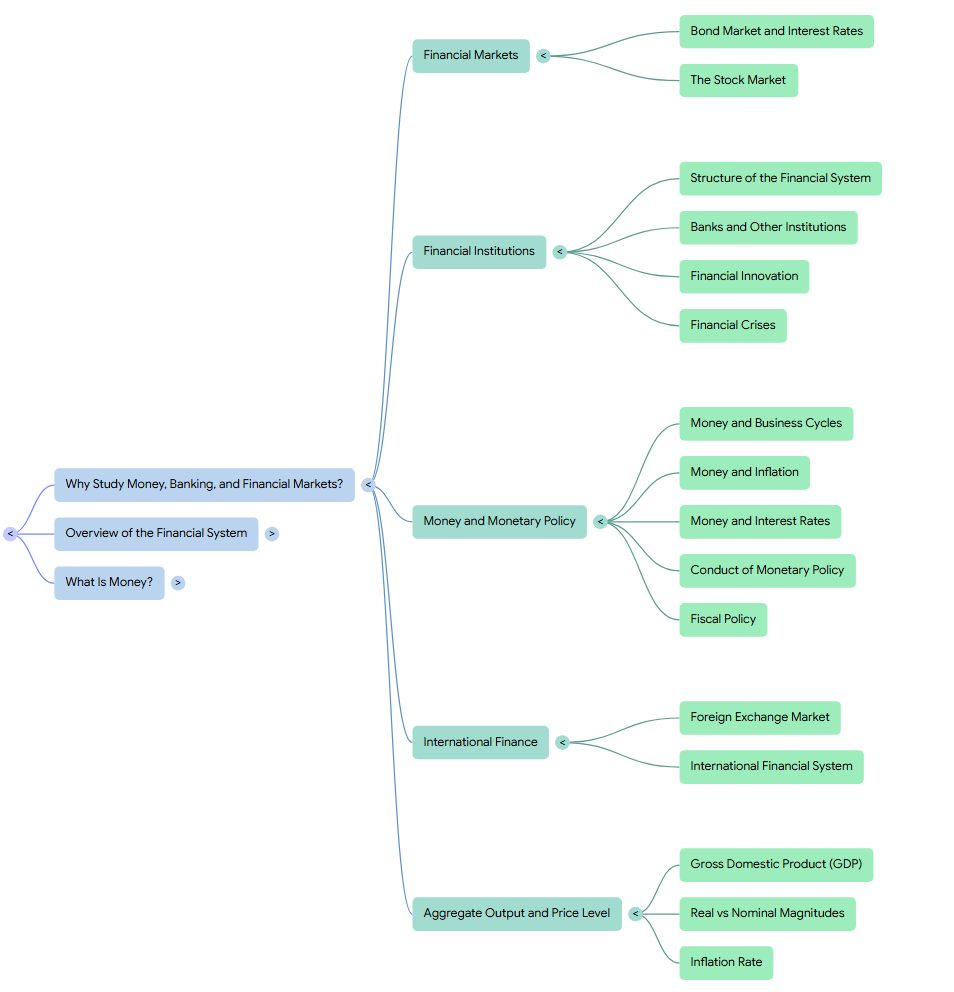
— Linden Lake
This series:
→ Book Review (1 of 3): The Economics of Money, Banking, and Financial Markets – Why Study This Topic?
→ Book Review (2 of 3): The Economics of Money, Banking, and Financial Markets – Overview the Financial Systems
→ Book Review (3 of 3): The Economics of Money, Banking, and Financial Markets – What is Money?
Leave a Reply